
Control and transitions
Arm Drag
Reachable from more positions than almost anything else in the library, because it solves the same problem everywhere: how to get to somebody's side.
An arm drag does not move you around your opponent. It moves your opponent past you. That distinction is why the same technique appears standing, in closed guard, in butterfly guard and in half guard, and why it belongs to wrestling, judo and Brazilian Jiu Jitsu equally.
Getting to somebody’s back or side is the central problem of grappling. You can travel around them, which is slow and which they can follow. Or you can take an arm and pull them across your own centre, which is fast and which they cannot easily follow, because their own limb is being used against their balance.
Where it comes from
Six positions in this model — standing, closed guard bottom, half guard bottom, butterfly guard, de la Riva guard and seated open guard — which makes it one of the most widely available entries in the whole library.
That breadth is not a coincidence. Everywhere that you are in front of somebody and want to be beside them, the arm drag is the shortest route, and the mechanics barely change between positions.
The grip
The classic version is a two-on-one on the arm: your near hand grips their wrist, your far hand grips high on the back of the same arm, at the tricep or the elbow. In the gi the second grip is often on the sleeve at the elbow.
Two details:
Grip high, not low. A hand on their wrist alone lets the elbow bend and the arm fold; the pull goes nowhere. The second grip has to be above the elbow so you are moving the whole arm and, through it, their shoulder.
Clear their other hand first. A two-on-one on one arm while their other hand still has a grip on you is an incomplete position — they simply pull back with the free side. Stripping or occupying that hand is part of the setup.
The mechanics
The pull is across your body, not towards you.
Pulling their arm straight back at yourself brings them into you, which is a position they are usually happy with. Dragging the arm across your centre line rotates their shoulders, turns their hips, and puts their back to you — which is the entire point.
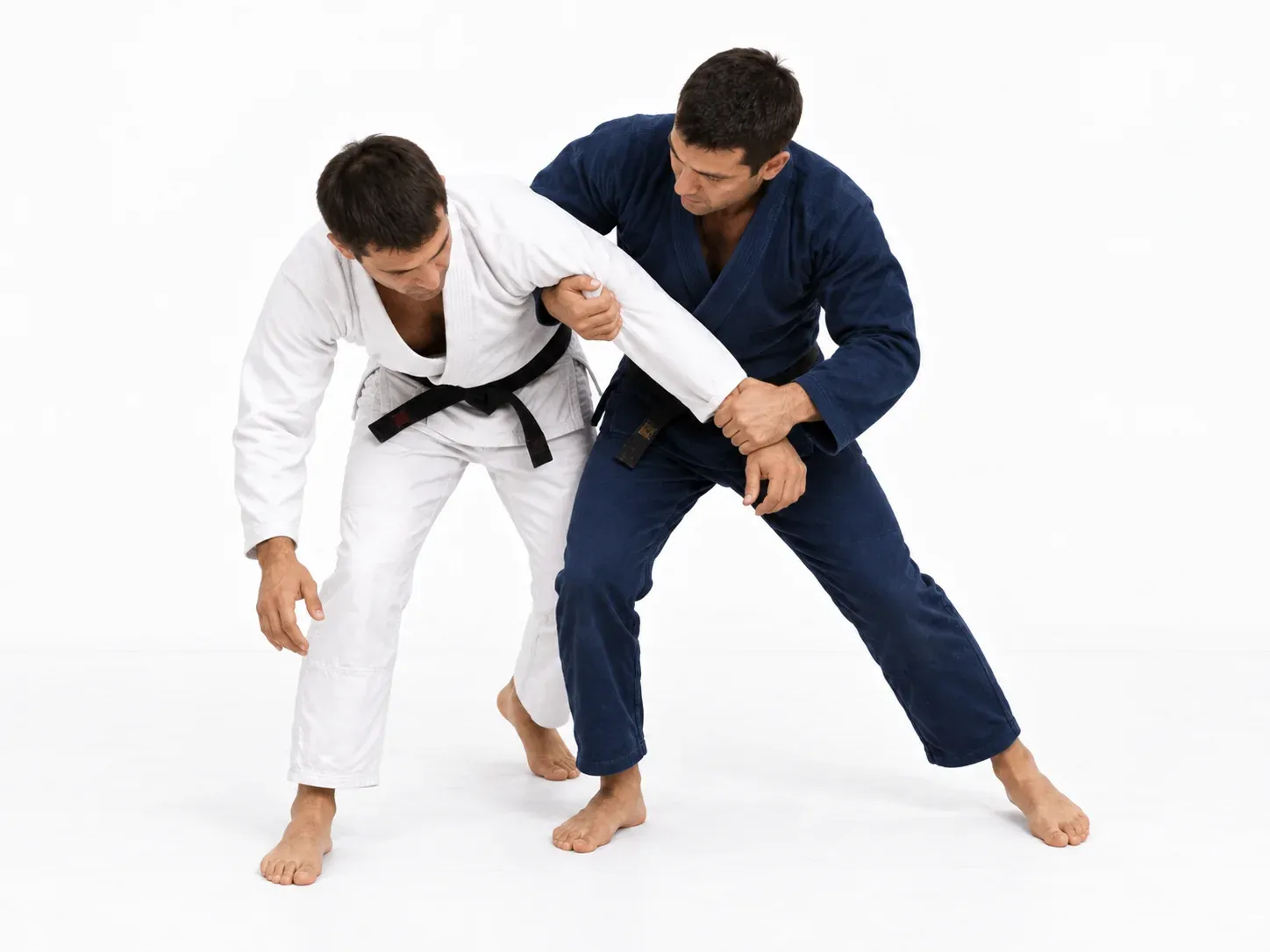
Add your other hand or your shoulder behind their armpit or triceps as they travel, and you are no longer pulling; you are steering somebody past you.
Angle matters more than power. A drag executed square-on is a strength contest. A drag where you have already created a small angle — stepped offline standing, or turned onto your hip seated — is almost effortless, because you are pulling them along a line their base does not cover.
What it opens
The arm drag is a transition, not an end. What it leads to depends on the position it came from, and this is where the technique earns its place:
- From standing — the back, a body lock, or a single leg on the now-exposed near leg.
- From butterfly or seated guard — the back is the classic, because a dragged opponent is already turning away and your hooks are in place. This library records the arm drag to back as a separate entry for that reason, and records the drag as the setup for it.
- From closed guard — usually a sweep or a scramble to the back, because the drag turns their shoulders while your legs still control their hips.
- From half guard — coming up to the dogfight or taking the back as they turn.
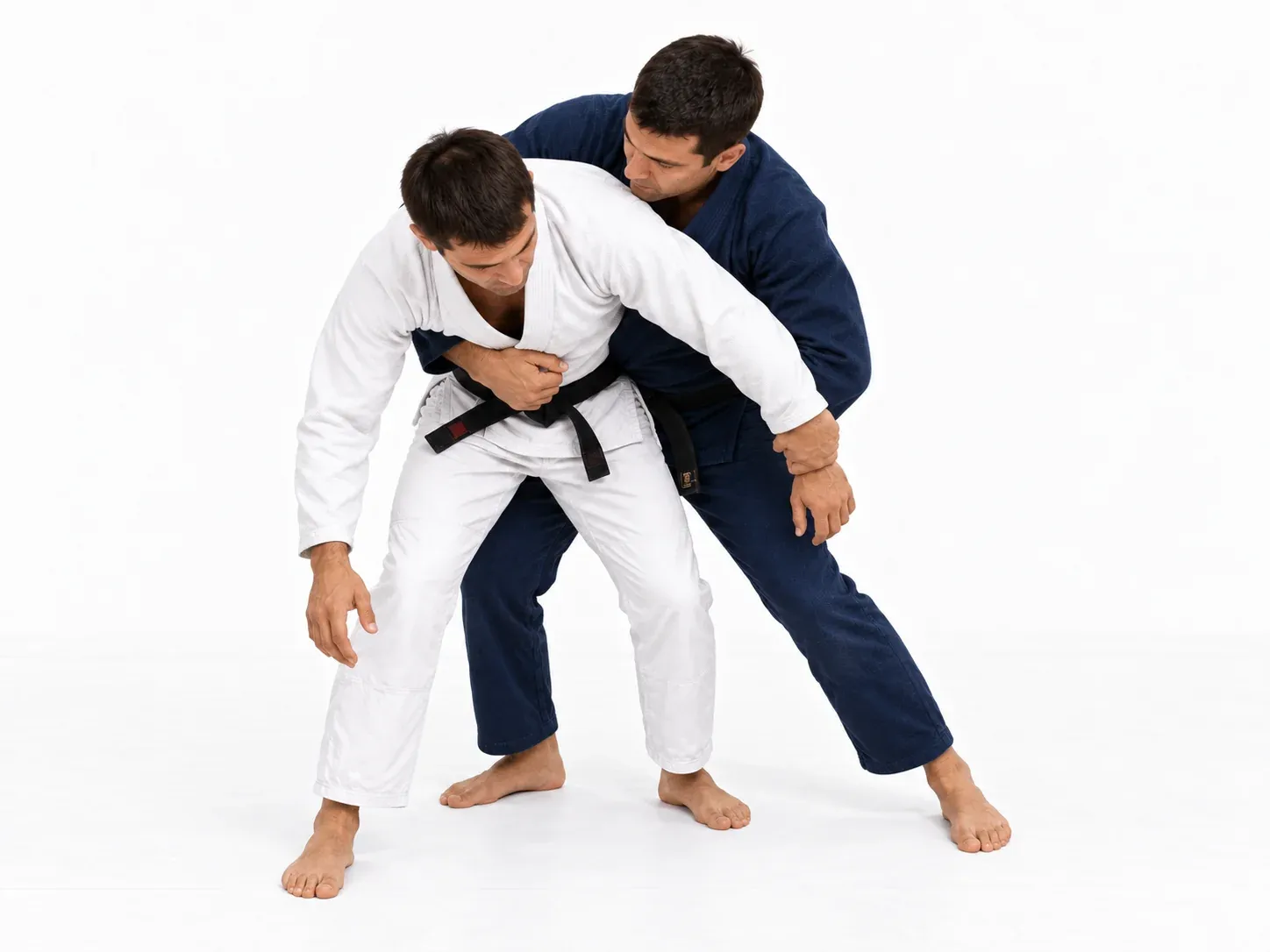
Notice that “take the back” appears in nearly all of them. That is the drag’s main job.
A technique whose entire value is what it connects to is exactly the sort of thing a game gets built out of, rather than a move you collect on its own.
Why it fails
- You pulled towards yourself instead of across. They arrive in your chest, which changes nothing.
- The second grip is too low. Their elbow bends, the arm folds, and the connection to their shoulder is lost.
- Their other hand still has a grip. They post or pull back on the free side.
- No angle. Square on, it becomes a tug of war you will often lose.
- You did not follow. The drag opens the door and then somebody has to walk through it. A drag that is not immediately followed by a movement to the back or the side gives them time to turn back in.
- You telegraphed it. Grabbing an arm and then pausing to think about it is easy to defend. The grip and the drag should be close together.
How it is defended
Mostly by the same principles it uses.
Do not give the arm. Reaching, posting a straight arm and leaving a wrist available are what make the drag possible. Good posture with elbows connected to the body gives much less to grab.
Re-post immediately. If your arm is dragged, the fastest answer is to return it — square back up and get the arm back in front of you before they can move to your side.
Turn into them. Following the drag with your hips rather than resisting with the arm often neutralises it, because you arrive facing them rather than being spun past.
Gi and no-gi
One of the more transferable entries in the library, which is why it shows up so much in both.
In the gi, the sleeve gives you a secure high grip and the drag is more controlled; you can hold the two-on-one for a while and work for the angle.
In no-gi, the arm is slippery and the drag has to be sharper and faster — it becomes a snatch-and-go rather than a held position. Wrestling’s version, off hand fighting from a standing tie-up, is the model there.
Identical in principle and completely different in feel is a fair summary of how much the jacket changes across the sport.
Drilling it
Drill the grip fight first: two people standing or seated, both trying to establish a two-on-one while stripping the other’s grips. No drags. This is the part that decides whether the technique is available at all.
Then drill the drag itself with attention to the direction — across rather than towards — using a partner who simply stands and lets you feel the difference between the two pulls.
Then drill drag-to-back as one continuous movement, because the drag alone is worth very little.
The standing version is wrestling’s, and it rewards the same hand fighting described in improving your wrestling for jiu jitsu.
Safety
One of the lowest-risk techniques in this batch. Nothing loads a joint, and the movement is a pull rather than a throw.
Two small things: be careful with wrist grips in no-gi, where a hard snatch on a dry wrist can tweak somebody’s thumb or wrist, and be aware that from standing, a successful drag can put your partner on the floor faster than they expect.
Technique varies with your body and your training partner. Ask your coach or instructor to check your pulling direction — across versus towards is nearly invisible from the inside and obvious from the outside.
Common questions
What is an arm drag? A transition where you take a two-on-one grip on the opponent’s arm and pull it across your body, turning them so their back or side is exposed.
Why does it work from so many positions? Because it solves a problem that exists everywhere — how to get to somebody’s side — and the mechanics do not change much between standing, guard and butterfly.
Which way should I pull? Across your centre line, not towards yourself. Pulling them into you does not rotate them.
Where should my grips be? One on the wrist, one high on the arm above the elbow. Gripping low lets the elbow fold and breaks the connection to their shoulder.
What do I do after the drag? Move immediately — to the back most often, or to a single leg standing, or to a sweep from guard. A drag that is not followed gives them time to square back up.
How do I defend an arm drag? Keep your elbows in and avoid offering a straight arm; if it happens, re-post the arm quickly or turn your hips into them rather than fighting with the arm alone.