
Sweeps
Scissor Sweep
One of the first sweeps taught from closed guard, and a clear lesson in what off-balancing actually means.
A sweep is not a push. It is the removal of a base that is already loaded. The scissor sweep teaches that better than almost anything else in the beginner curriculum, because it fails completely and obviously if you skip the loading part and try to muscle it.
The name describes the finish: your legs move in opposite directions, like the blades of a pair of scissors — one shin cutting across their body, the other leg chopping low behind their base.
Where it comes from
Closed guard, bottom. One source in this model, and that is where it belongs: you need your legs around them and the ability to open the guard on your own terms.
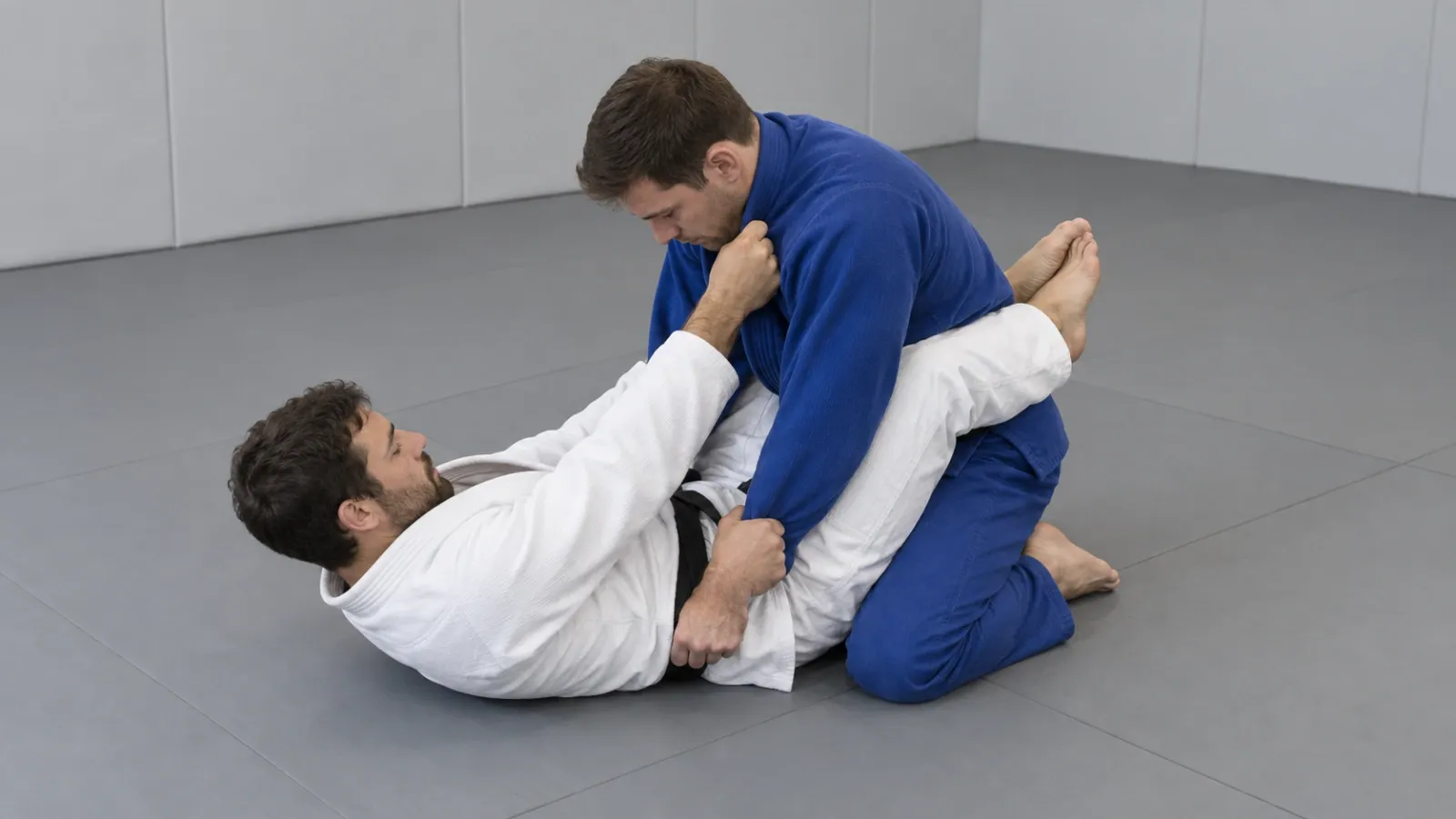
The technique is usually taught in the first few months, alongside the hip bump sweep and the armbar from guard, because closed guard is where a beginner spends most of their time on the bottom.
The three things it needs
Off-balance them forwards
Before anything with the legs, their weight has to be coming towards you. A kneeling opponent sitting back on their heels has a wide, stable base behind them; nothing you do with your shins will tip that. Breaking their posture down and pulling them onto you loads their weight over their knees, which is the only state from which the sweep is available.
In judo terms this is kuzushi, and it is the half of the technique that beginners skip.
The shin across
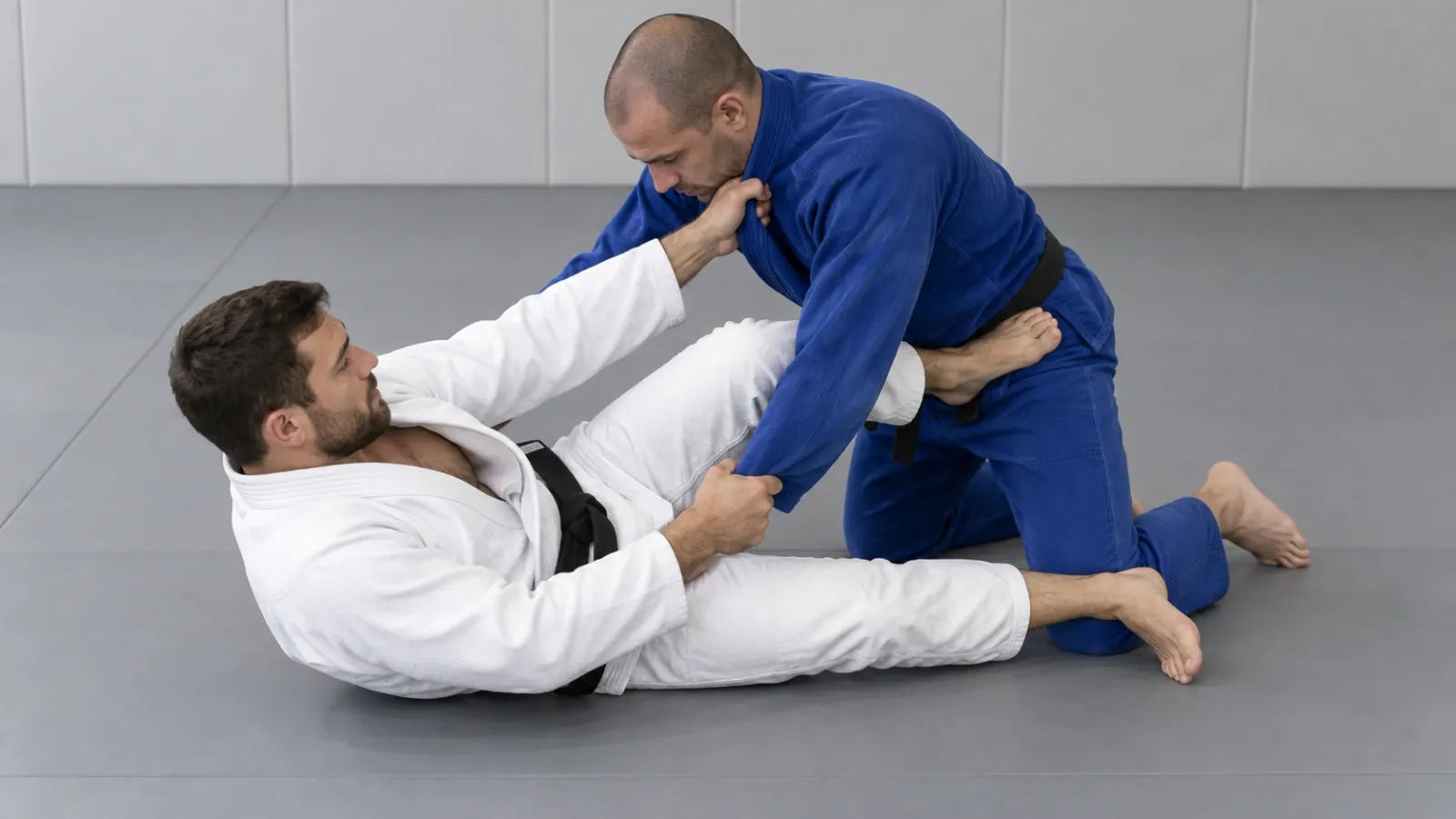
Your shin — the sweeping-side one — comes across their midsection, roughly at belt height, knee pointing across their body. This is the first blade. It is a block, not a lever: it stops their torso from following their base when the base moves.
A shin too high sits on the chest and pushes them away. A shin too low rests on the hip and does nothing. Across the stomach is the working position.
The other leg low
Your other leg goes flat and low, across their shin or behind their knee. This is the second blade, and it is what takes the base away. As the shin drives across the top, the low leg chops the bottom in the opposite direction, and there is nothing left holding them up.
If both legs move the same way you have a push. Opposite directions is what makes it a scissor.
Grips
In the gi, the standard pair is cross collar and same-side sleeve:
- The collar grip breaks and controls their posture, which is what does the off-balancing. It also stops them from posturing back up mid-sweep.
- The sleeve grip kills their post on the sweeping side. Without it they simply put a hand down and stop.
The sleeve grip is the one people neglect, and it is the difference between a sweep that lands and one where they post and you end up flattened.
No-gi is a different problem, covered below.
The sequence
- Break their posture and load their weight forwards.
- Open your guard and get your knee across — knee to your own opposite shoulder, shin across their stomach.
- Drop the other leg low, behind or across their base.
- Pull with the collar, kill the post with the sleeve, and scissor: top knee drives across, bottom leg sweeps back.
- Follow them over and come up into mount. Come up — do not stay lying down and expect to arrive on top by momentum.
Why it stalls
- You did not off-balance them first. The most common one by a distance. Their weight is back, their base is wide, and the scissor has nothing to take away.
- No sleeve control. They post the hand and it is over.
- Shin in the wrong place. Too high and you are pushing them off; too low and it is not blocking anything.
- You pushed instead of scissoring. Both legs in one direction.
- You did not come up. Even a successful sweep leaves you in a scramble if you stay flat.
- They are standing. The scissor sweep wants a kneeling opponent. Against somebody standing in your guard, a different sweep applies.
Where it sits among the closed guard sweeps
This library records the scissor sweep and the hip bump sweep as interchangeable — both are first attacks from closed guard bottom, and the taxonomy’s own note about the hip bump is that it needs no grips at all.
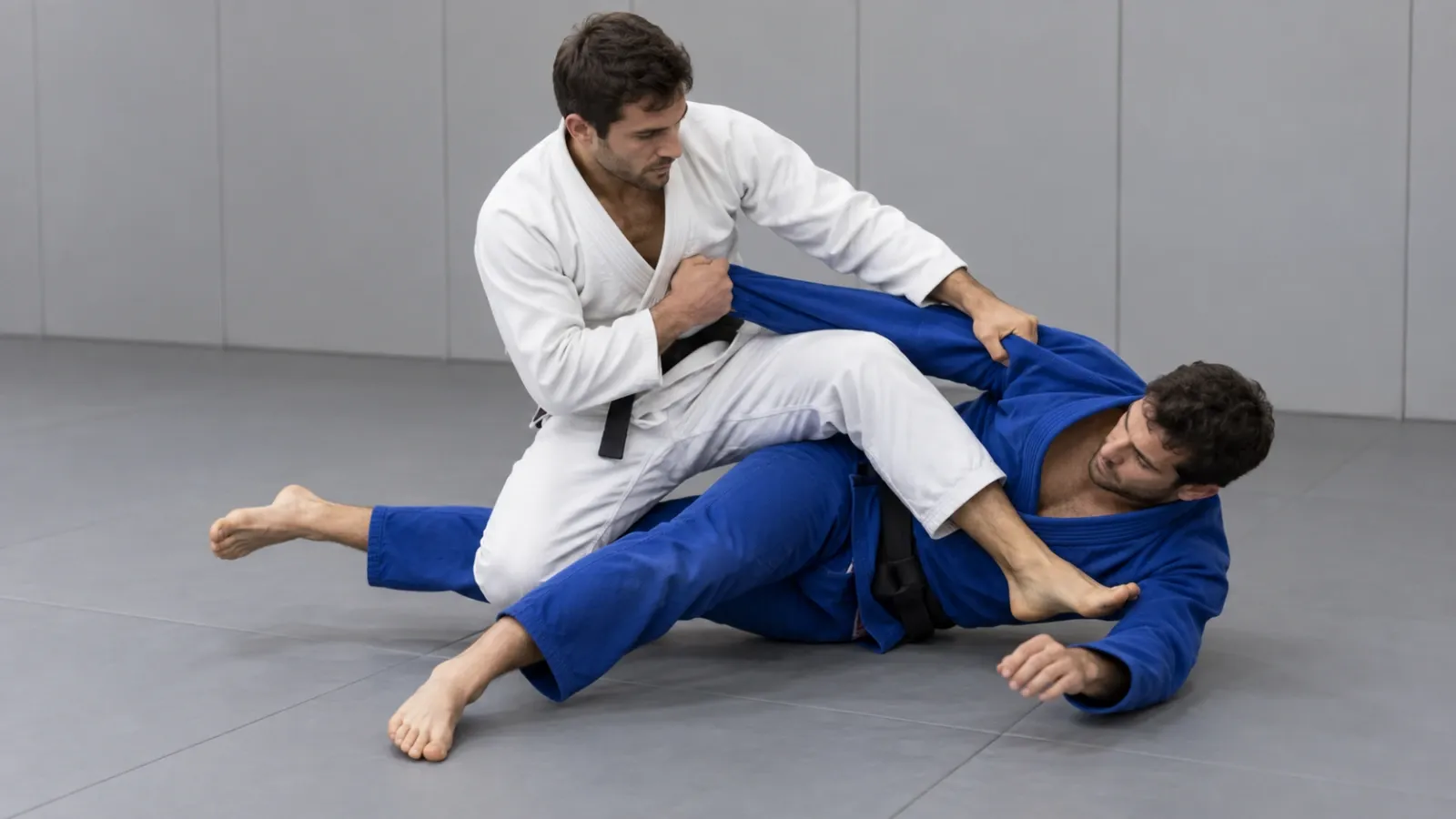
That is precisely the choice between them. The scissor is a grip-dependent, control-first sweep: you build the position and then take the base. The hip bump is explosive and gripless: you sit up and drive. Against a posture-broken opponent you have collar and sleeve on, the scissor is there. Against somebody who has just postured up out of your grips, the hip bump often is.
Threatening one to get the other is a more reliable game than committing to either.
Learning the closed guard sweeps as a set of shared reactions rather than separate techniques is the approach taken in sweeps as one subject.
Gi and no-gi
This is one of the clearest cases in the beginner curriculum where the jacket really matters.
In the gi, the collar-and-sleeve pair does two thirds of the work: the collar breaks posture and holds it broken, the sleeve removes the post. The sweep is comparatively high-percentage.
In no-gi, both grips are gone. The equivalents — a collar tie or an over-hook for posture, a wrist grip or two-on-one for the post — are real but far less secure, and a sweaty arm slides out of a wrist grip under load. The consequence is that the classic scissor sweep is much less common in no-gi, and players tend to use the shin-across position as an entry to something else rather than as a sweep in its own right.
That is worth saying plainly rather than pretending the technique transfers unchanged.
Saying plainly that a technique does not transfer is more useful than pretending it does, and gi and no-gi compared takes the same line.
Drilling it
Drill the off-balance separately. Have a partner kneel in your closed guard and practise only breaking their posture and loading their weight forward — no sweep. If you cannot do that, the rest of the technique is theoretical.
Then drill the finish from the shin-across position, already set, with a partner giving light resistance, focusing on the two legs moving in opposite directions and on coming up to mount.
It is also the sweep most often used to show that leverage beats effort, which is the argument in technique versus strength.
Safety
A low-risk technique — nothing here loads a joint. The two things to watch are your partner’s landing (do not drive them onto their head or shoulder as they go over) and your own knee: the shin-across position under a heavy opponent can put a twisting load through the knee if you let them settle their weight onto it while your foot is trapped.
As always, technique varies with your body and your training partner. Ask your coach or instructor to check your shin position in particular.
Common questions
Why does my scissor sweep not work? Nearly always because their weight is not coming forwards. Break their posture and load them onto you first — the legs only remove a base that is already committed.
Where exactly should my shin be? Across their midsection, roughly belt height, knee pointing across their body. High on the chest pushes them away; low on the hip blocks nothing.
Which grips do I need? In the gi: cross collar for posture, same-side sleeve to kill their post. The sleeve is the one people forget and the one that stops them basing out.
Does the scissor sweep work in no-gi? Much less reliably. The grips that make it work do not exist there, and the no-gi equivalents are far less secure. It appears more often as an entry than as a finished sweep.
What if they stand up in my guard? It is not the right technique. The scissor sweep wants a kneeling opponent; a standing opponent is a different problem.
Scissor sweep or hip bump sweep? Whichever their posture gives you. The scissor needs grips and a broken posture; the hip bump needs neither and works against somebody who has just postured up.