
Takedowns
Double Leg
The most recognisable takedown in grappling, and the one where almost all the technique happens before your hands touch anything.
The grab is not the technique. The level change is. Almost every failed double leg is a reach — somebody bending at the waist, arms out, head down, trying to catch two legs from too far away. The successful version looks almost like squatting under somebody and then standing back up in a different place.
Where it comes from
Standing, neutral. One source in this model, and that is right: this is a takedown from a neutral standing exchange, not from a clinch or a scramble.
It is wrestling’s signature attack, and it arrives in Brazilian Jiu Jitsu with wrestling’s assumptions, some of which do not transfer cleanly to a gi ruleset. That is worth understanding rather than glossing over.
Takedowns are the part of jiu jitsu most people postpone longest; improving your wrestling for jiu jitsu is about starting earlier than that.
The three phases
The level change
You lower your hips by bending your knees, keeping your back straight and your head up. This is the part people skip.
Bending at the waist to reach for the legs does three bad things at once: it puts your head below your hips where it can be snapped down, it presents your neck for a guillotine or a front headlock, and it puts you too far away to actually finish. A proper level change keeps your chest up and your eyes forward — you should be able to see their face at the bottom of it.
The penetration step
Your lead leg steps deep between their feet, knee towards the mat, while your hips drive forward. This closes the distance in one movement rather than in a reach.
The measure of a good penetration step is where your lead foot ends up: between and roughly level with their feet, not a stride short of them. From there your shoulder is on their thigh or hip and your arms are wrapping behind their knees — but the arms are the last thing to arrive, not the first.
The finish
Several standard ones, and which is available depends on what they do:
- Drive through. Head on the outside, shoulder into the thigh, run your feet and put them down backwards. The simplest.
- Turn the corner. Pull one leg and drive the far shoulder, pivoting them down sideways. Useful when driving straight is being stuffed.
- Lift. Elevate and put them down. Effective, and worth restraint in training — see safety.
Head position
Worth its own heading, because it decides more than it looks like it should.
Head outside — on the outside of their hip — is the standard for a driving finish and keeps your neck away from their arms.
Head inside — between their legs or against their stomach — appears in some finishes but exposes the neck badly and is where guillotines come from. In a no-gi or grappling context, a head-inside double is an invitation.
Either way, the head is up. A head-down shot is the one that gets sprawled on and front-headlocked.
Why it fails
- You reached instead of changing levels. The defining error.
- Your head went down. Snapped down, guillotined, or front-headlocked.
- The penetration step was short. You arrive at arm’s length and there is nothing to drive against.
- No forward drive after contact. Holding two legs while standing still is a stalemate they can break by sprawling.
- Telegraphed entry. A shot from out of range with no setup is easy to defend. Real entries come off a grip, a reaction, a fake or a level change they have already responded to.
- You shot from too far away. Distance is the whole precondition. The shot happens from in range, not into range.
The sprawl, and what it means
This library records the sprawl as the defence to both the double leg and the single leg, and it is the reason the takedown is a commitment.
A sprawl drops the defender’s hips onto the attacker’s shoulders and kicks the legs back, which puts all their weight on somebody who is already low and forward. The attacker’s options at that point are limited and mostly bad: the front headlock is there, the guillotine is there, and giving up the back is a real possibility.
The practical consequence: a double leg is either finished or abandoned quickly. Hanging onto a sprawled-on shot is where the damage happens.
Gi and no-gi, and the ruleset
This is one of the techniques where the context genuinely changes the technique.
In no-gi and wrestling, the double leg is a primary attack. There is nothing to grip, distance is managed with hand fighting, and the shot is the standard way to close it.
In the gi, two things change. The opponent has your jacket, which means they can control your posture before you shoot and can often simply hold you up. And the guard pull exists — an opponent who does not want to wrestle can sit down, which removes the takedown exchange entirely.
There is also a rules dimension worth knowing rather than guessing at: some competition rulesets restrict certain takedown finishes, particularly anything resembling a slam or a takedown that lands an opponent on their head or neck, and restrictions differ by organisation, belt level and age division. Check the ruleset you are competing under rather than assuming a wrestling finish is legal.
The jacket changing an exchange this much is a good illustration of why gi and no-gi are close to two sports.
Drilling it
Level changes, solo. Hundreds of them. Chest up, hips down, head up. This is the part that becomes automatic or does not.
Penetration steps, solo, across the mat, focusing on the depth of the lead foot.
Entries off reactions, with a partner: they push, you change levels; they reach, you shoot. A double leg drilled only from a static stance is a double leg that works only against a static opponent.
And drill the sprawl, from both sides. Understanding what a good sprawl does to a bad shot is the fastest way to improve the shot.
Safety
The highest-risk technique in this batch, for both people.
Do not slam. Lifting a training partner and driving them into the mat causes serious injuries and is prohibited in most rulesets. If you lift, you put them down.
Protect their head and neck on the landing. The finishing drive should put them on their back or their side, never on the crown of the head.
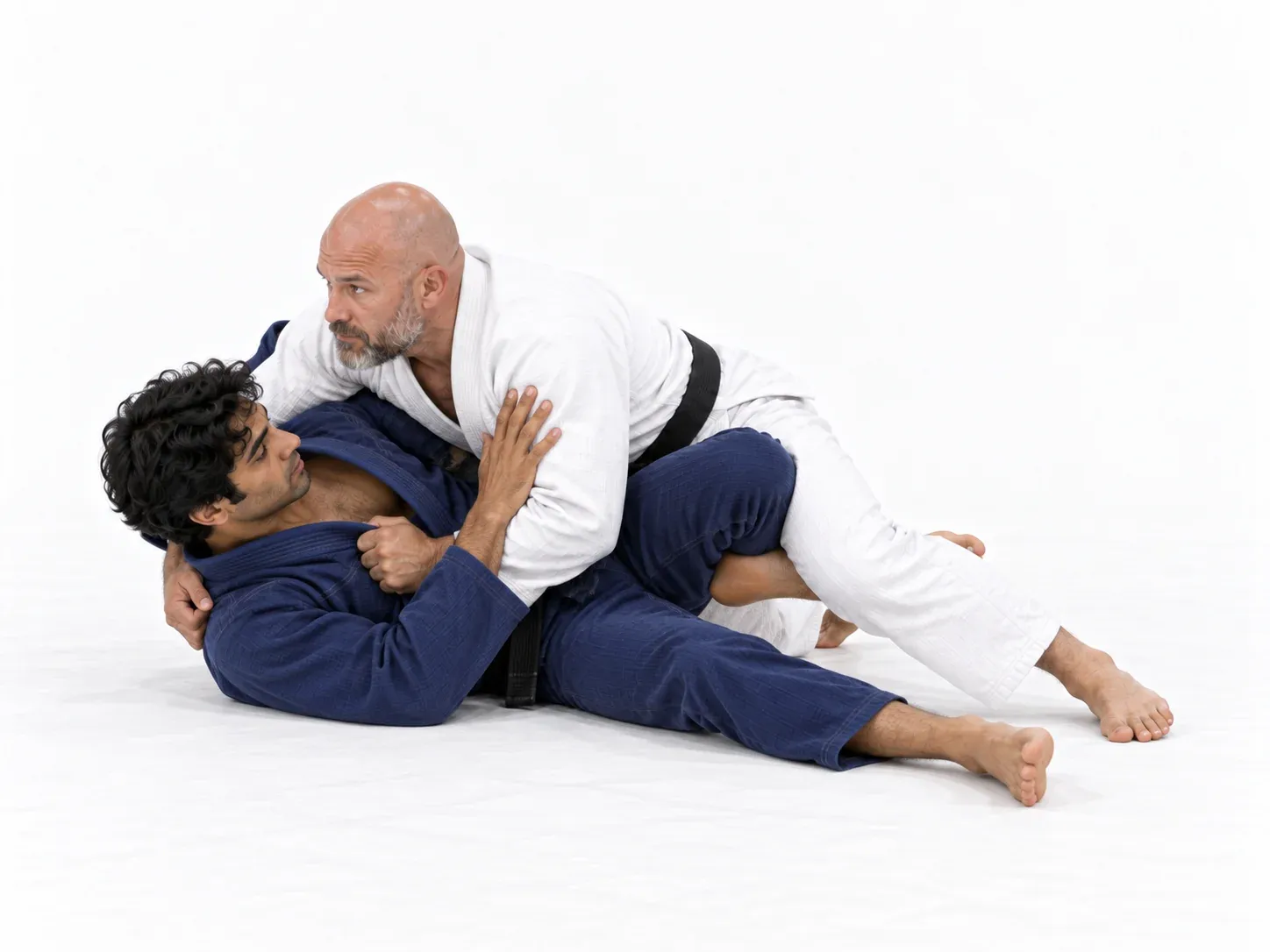
Protect your own neck. A shot with your head down against a live opponent is how neck injuries and front-headlock chokes both happen.
Learn to fall before you learn to throw. If your partner cannot breakfall, take them down slowly, or drill the entry and stop before the finish.
Technique varies with your body and your training partner. Takedowns in particular reward supervision — ask your coach or instructor to watch your entries and to pair you appropriately.
Weight differences matter more standing up than anywhere else, and that is dealt with from both sides in training with bigger, stronger partners.
Common questions
What makes a double leg work? The level change and the penetration step. By the time your arms reach their legs, the distance should already be closed and your hips should already be driving.
Should my head be inside or outside? Outside, for the standard driving finish and to keep your neck away from their arms. Head-inside entries expose you to the guillotine.
Why do I keep getting sprawled on? Usually because you shot from out of range, or bent at the waist instead of changing levels, or telegraphed the entry with no setup.
How do I finish when they stop my drive? Turn the corner instead — pull one leg and drive the far shoulder to take them down sideways rather than continuing to push straight into their base.
Is the double leg as useful in the gi? It works, but the jacket gives them posture control you do not have in no-gi, and the guard pull means many opponents decline the exchange entirely.
Is it legal in competition? Straight double legs are standard, but slams and finishes that land somebody on the head or neck are restricted in most rulesets, and details vary by organisation, belt and age division. Check the rules you are competing under.
Practise one defined version
Practise one collar-tie release and side finish with separate entry, leg-control and landing checkpoints in the double-leg training guide.