
Takedowns
Single Leg
Easier to enter than a double and harder to finish — which makes it a takedown about what you do after you have the leg.
Getting the leg is the easy part. That sentence is the whole difference between the single leg and the double. A double leg is largely decided at the entry; a single leg is decided in the ten seconds after you already have hold of something, standing on one foot, with an opponent who is still very much upright.
This is why the single leg is often the first takedown that actually works for a Brazilian Jiu Jitsu player, and also why so many people hold one for thirty seconds and end up on the bottom.
Where it comes from
Two sources in this model: standing, neutral and the dogfight — the half guard scramble position where both players are up on a knee and fighting for the leg. That second one is worth noticing, because the single leg in Brazilian Jiu Jitsu appears in scrambles at least as often as it does from a clean standing exchange.
Takedowns are the most commonly skipped part of a jiu jitsu game, and getting better on your feet is about not skipping them.
Getting the leg
The entry is the same family of movement as the double: change levels, step in, and take the leg. The differences:
You only need one leg, so the entry can be shallower and can come off an angle rather than straight through the middle. Single legs are available from positions where a double is not — off a misdirected grip, off their step, off a failed double.
Take the leg high. Gripping around the thigh or behind the knee gives you far more control than grabbing at the ankle. A low single is a real technique but a harder one, and beginners taking the leg low mostly end up being hopped away from.
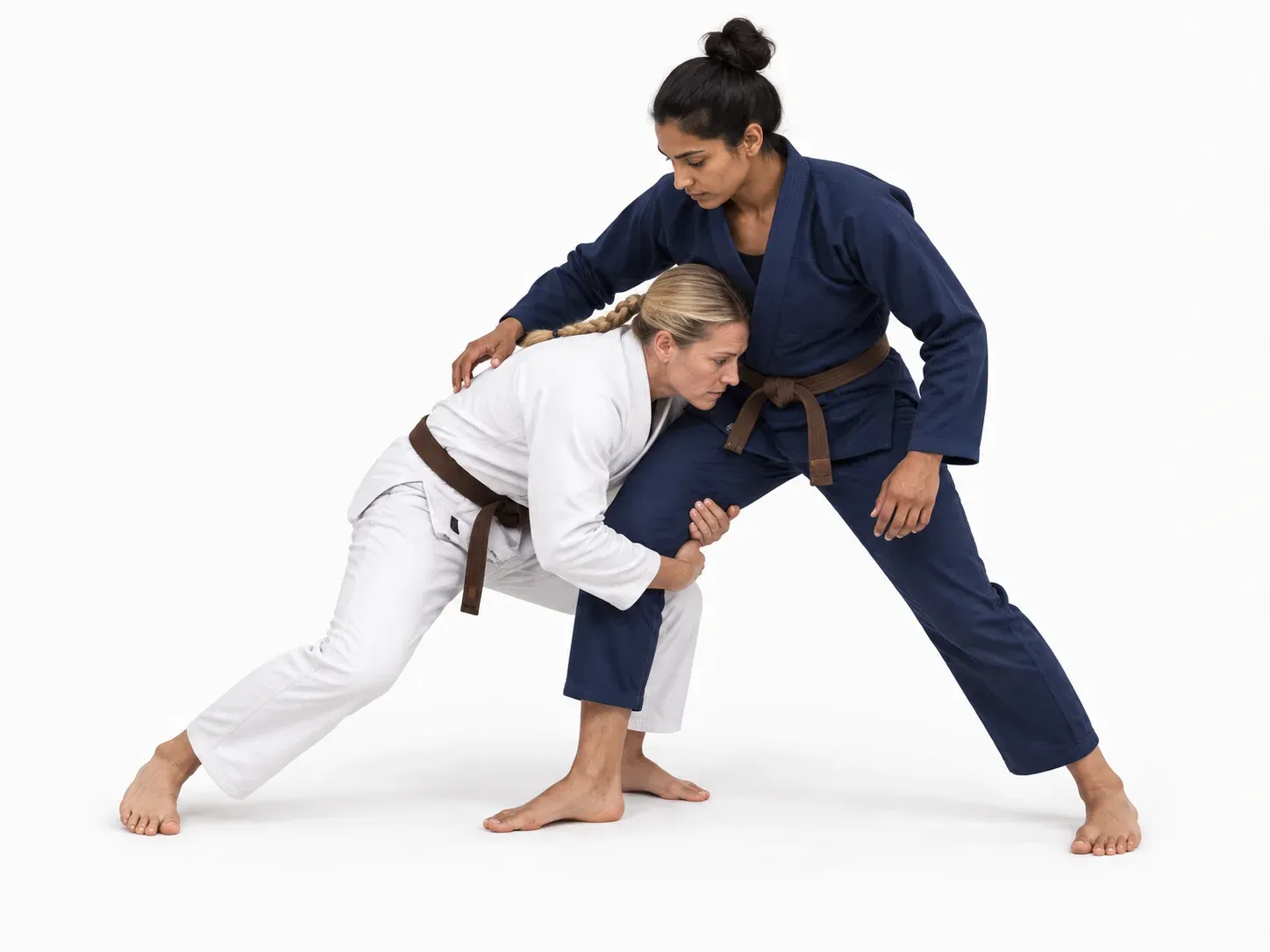
Choose the head position for the version you are practising and keep your chest tight. Pulling their knee to your chest removes their ability to base on that leg. A single leg held at arm’s length is not control; it is two people holding hands.
The three finishes
Which one is available is mostly decided by where their weight is and where your head is.
Run the pipe
Their leg is in, you turn the corner and drive them down in the direction the trapped leg is pointing. Works when their weight is coming towards you or they are square.
The outside trip
Your own leg reaps their standing leg while you drive them over it. Effective when they are basing hard on the far leg and will not simply be run over.
The high crotch / lift
Elevating the trapped leg and stepping through, or lifting them outright. Available when they have posted back and their weight is over the trapped side, and it is the finish that requires the most care in training.
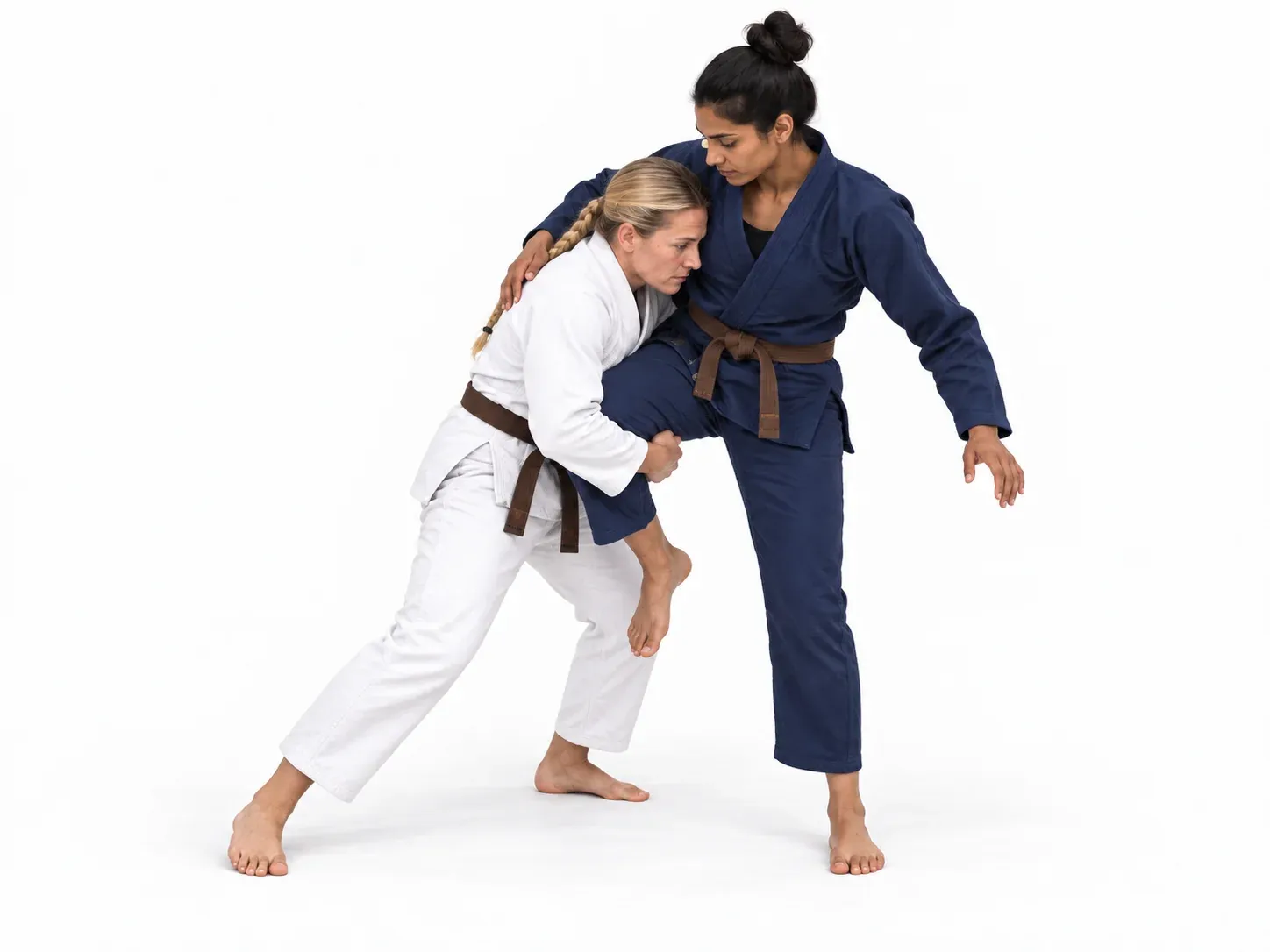
None of these is the correct finish. Being able to change between them when the first is stuffed is the actual skill, and it is what separates a single leg that scores from one that stalls.
Head position decides a lot
Head inside is the version demonstrated in the USA Wrestling high-single lesson: forehead against the ribs, hips beneath the attacker and a controlled backward-circling finish. It is also the beginner version discussed in the Evolve single-leg lesson.
Head-outside entries are other variations; neither head position makes the neck immune to a headlock. Use the position your coach teaches for that entry and finish, rather than moving the head outside by default. Reset a cooperative drill if the neck is trapped, and use your taught defence or tap during a live exchange.
Head up, either way. Head down means snapped down, which in Brazilian Jiu Jitsu usually means the front headlock and quite often the back.
The whizzer, and other defences
This library records the sprawl as the defence to both leg attacks, but against a single leg specifically there is one more answer worth naming, because you will meet it constantly.
The whizzer — an over-hook on your attacking-side arm — is the standard single leg defence. It lets them drive their weight down onto your shoulder, kill your ability to stand up with the leg, and eventually spin out or take the front headlock.
The usual answers are to change direction into the whizzer rather than away from it, to switch to a different finish, or to let the leg go and take the scramble on your terms rather than theirs. What does not work is holding the leg and grinding — that is the situation the whizzer is designed for.
Other things you will meet: limp-legging the trapped leg out, hopping to the far side, and simply sitting down to guard, which in sport Brazilian Jiu Jitsu is a legitimate answer that takes the takedown exchange away entirely.
Why it stalls
- The leg is too low. An ankle gives you almost no control of their hips.
- The leg is not tight to your chest. Held away from you, they can hop, base and turn.
- You are standing still. A single leg is a dynamic position; stopping to think gives them the whizzer and the sprawl.
- You committed to one finish. They defend the run-the-pipe and you keep trying it.
- You took too long. The single leg has a time limit, and it is short.
Single leg or double leg?
This library records the two as interchangeable, and the taxonomy’s own note is the useful one: the position graph records both from the same standing source, and which is available is decided by the opponent’s stance at the moment of contact.
In practice:
- Square stance, weight even — both legs are reachable. The double is usually the better option.
- Staggered stance, one leg forward — the lead leg is available and the back one is not. Single.
- Failed double — switching to a single on whichever leg you still have is the standard recovery.
Learning them as a pair with a switch between them is much more useful than learning either alone.
Gi and no-gi
The mechanics are the same; the context is not.
In the gi, they can grip your jacket to control your posture before you enter, and the friction makes a leg easier to hold once you have it. Gi single legs are often slower and more grip-dependent.
In no-gi, sweat makes holding the leg genuinely difficult and the whole exchange is faster. The compensation is that hand fighting gives you more entries.
As with any takedown, the sport ruleset matters: slams and finishes that land somebody on the head or neck are restricted in most organisations, with details varying by belt level and age division. Check the rules you are competing under.
Rulesets diverging this much between the two versions of the sport is part of what separates gi from no-gi.
Drilling it
Drill the finishes, not the entry. Most people can get a leg long before they can do anything with one. Start from the position — leg trapped, chest tight, standing — and work running the pipe, the trip and the lift against progressive resistance.
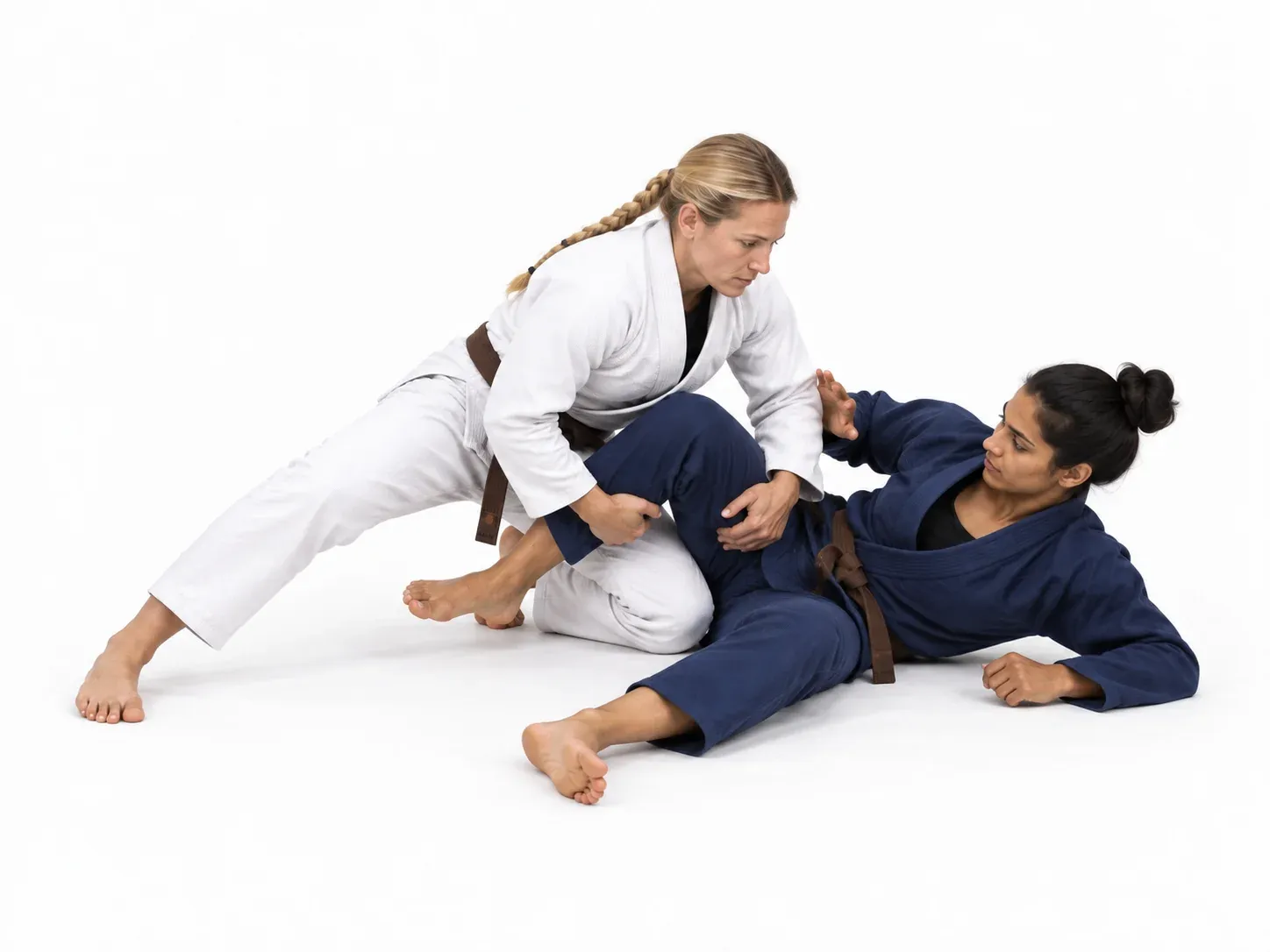
Then drill the switches: they defend the pipe, you trip; they whizzer, you change direction. That decision-making is the technique.
And drill the whizzer defence from the other side, so you understand what you are up against.
Safety
Takedowns carry the most injury risk of anything in this batch.
Do not slam. Control the landing so your partner arrives on their back or side rather than their head. Lifting finishes in particular should be practised slowly and with partners who can fall.
Protect your own neck: keep posture and the intended head connection. A trapped neck needs a taught defence or a tap, regardless of which side your head started on.
Technique varies with your body and your training partner. Takedowns reward supervision more than anything else here; ask your coach or instructor to watch your entries and your finishes.
Landing somebody safely matters more as the weight difference grows; rolling with a size difference covers both sides of that.
Common questions
Why can I get the leg but not finish? Because the single leg is decided after the grab. Usually the leg is too low, not tight enough to your chest, or you have committed to one finish and kept trying it while they defended.
What are the main finishes? Running the pipe, the outside trip, and the high crotch or lift. Which is available depends on where their weight is.
What is a whizzer and how do I beat it? An over-hook on your attacking arm, and the standard single leg defence. Change direction into it, switch finishes, or release the leg and take the scramble deliberately.
Where should my head be on a single leg? For the high-single run-the-pipe version linked above, inside against the ribs. Other entries differ; keep your head up and use the placement taught for the specific finish.
Single leg or double leg? Decided by their stance at contact — square means the double is available, staggered usually means the single. A failed double commonly becomes a single.
Are single leg finishes restricted in competition? The takedown is standard. Slams and finishes landing somebody on the head or neck are restricted in most rulesets, and the details vary by organisation, belt and age division.
Practise one defined version
The head-inside single-leg training guide isolates a right-leg high capture, backward circling finish and supervised landing drills.