
Submissions

Guillotine
A front headlock choke available the moment an opponent's head drops — and one of the few submissions that punishes you for holding it too long.
“Guillotine” names two different chokes, and most of the confusion beginners have about it comes from being taught one and then shown the other. One restricts blood, one restricts air, they are finished in different directions, and knowing which one you have is the difference between a finish and a tired arm.
What they share is the entry: their head is in front of you, below your chest, and your arm is around their neck.
The two families
High-elbow (blood choke). Only the head is inside; their near arm is outside your arm. Your forearm blade sits against the side of their neck, your elbow is high and tight, and the finish is a compression of the carotid on that side. This is the version most modern instruction favours, because it is a true strangle and works without much of a strength advantage.
Arm-in (air choke, roughly). Their head and one arm are inside. There is more to squeeze around, the pressure is largely across the front of the throat and into the shoulder, and the finish usually needs more of a body-driven crunch — arching, turning the hips, closing the guard. It is less efficient as a strangle and more forgiving to get.
There are further named variations, and there is no need to treat any single one as the correct guillotine. The useful habit is to identify which family you are in before deciding how to finish.
Where it comes from
This model records three sources: the front headlock (attacking), closed guard (bottom), and butterfly guard. The common thread is an opponent whose head has dropped in front of you — which happens constantly:
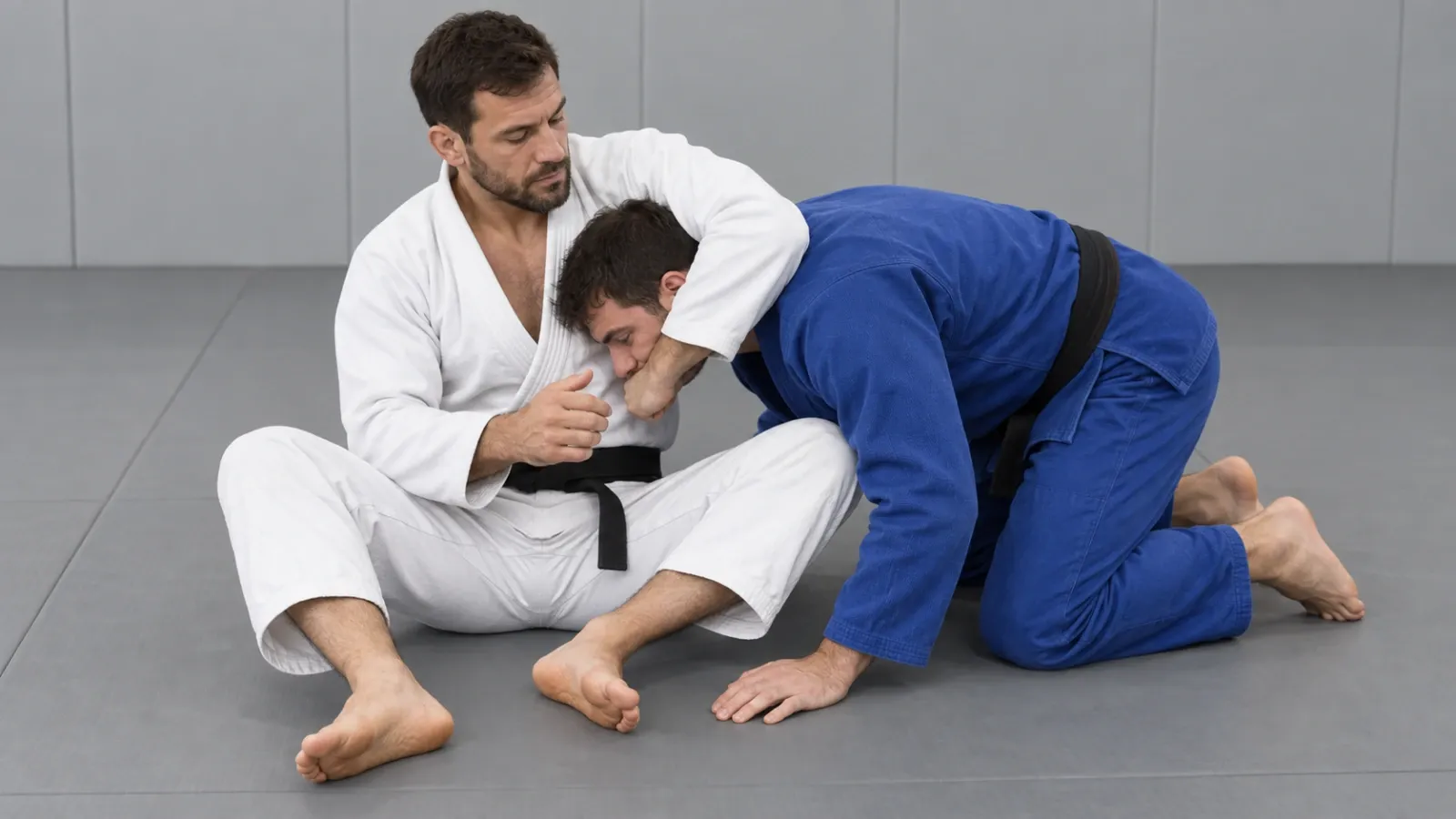
- They shoot a takedown and you sprawl. Their head is right there.
- They try to stand up in your closed guard and duck their head forward as they do.
- They posture down to flatten you out from guard.
- They turtle and you take a front headlock.
That availability is the technique’s real strength. It is not something you engineer so much as something you recognise.
It is the standard punishment for a badly-timed shot, which is one reason it comes up so often in wrestling entries and what they cost.
Finishing it
Three things decide whether it works, regardless of family:
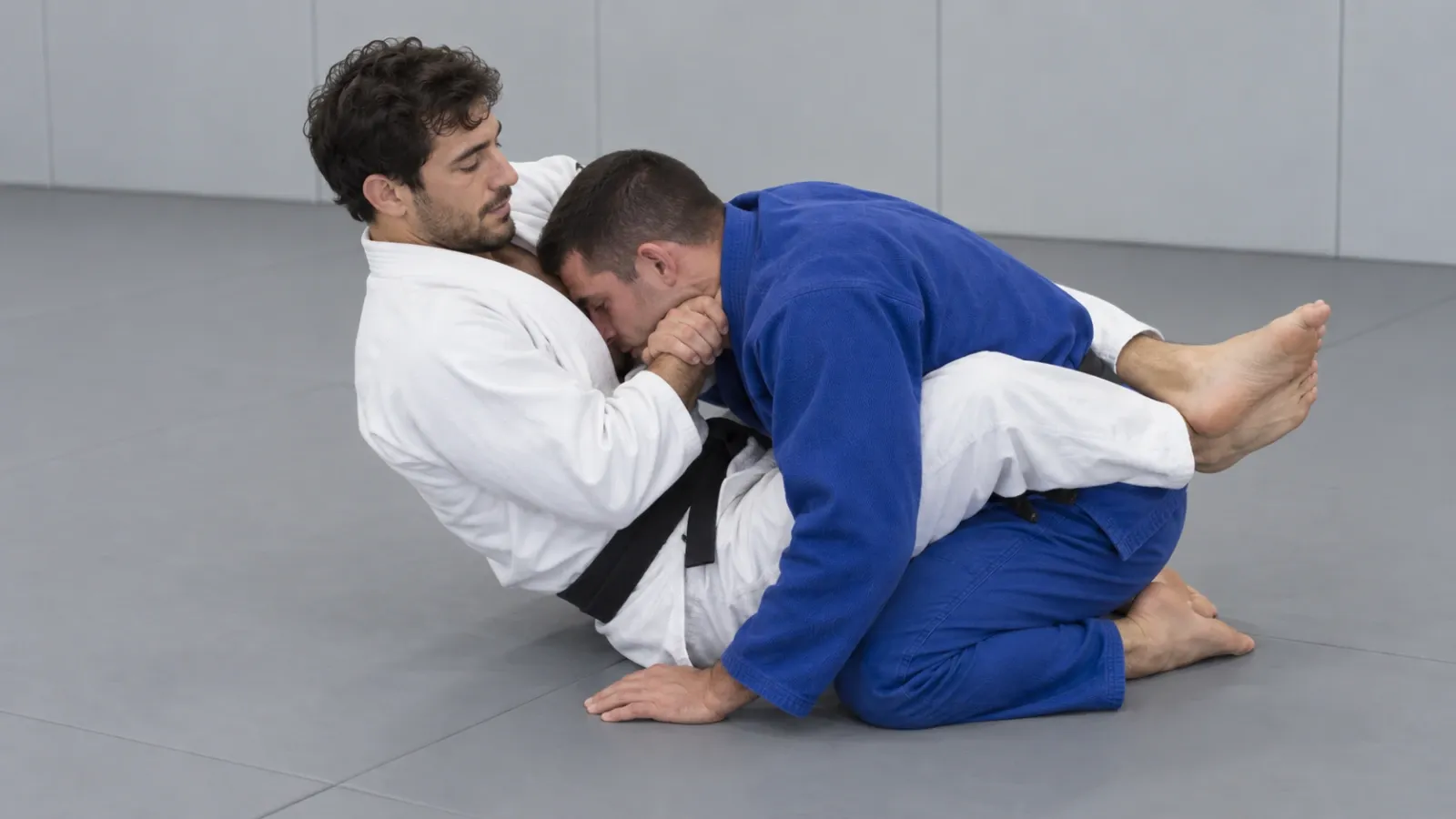
The neck line. Your forearm has to be on the neck, not on the jaw or the top of the chest. A guillotine on the chin is a face crank; it is uncomfortable, people sometimes tap to it, and it is not the technique.
The elbow. High and tight to your own body. A dropped elbow opens a gap between your forearm and their neck, which is all they need.
Something to pull against. From guard this is your legs — closing the guard or putting a leg on the hip gives you the base to extend against. Standing, it is your hips turning away. An arms-only guillotine against a resisting opponent almost never finishes.
Why holding it too long is dangerous
The guillotine is one of the few submissions that has a specific, named punishment for overcommitting: the Von Flue choke.
If you hold a guillotine from the bottom and they simply pass to side control on the choking-arm side, they can drive their shoulder into your exposed neck and choke you with it. Your own arm, still wrapped around their neck, is what holds you in place for it. This library records the Von Flue explicitly as a counter to the guillotine, and its own description puts it plainly: it is the reason holding a guillotine too long is dangerous.
The practical rule that follows is to commit or let go. A guillotine you are “keeping in case” while they pass is a submission you are supplying to the other person.
Common mistakes
- Pulling with the arms only. Without the legs or hips involved you are arm-wrestling their entire body.
- Squeezing on the jaw. Uncomfortable, not a choke.
- Letting the elbow drop. Creates the gap they escape through.
- Not knowing which family you are in. Finishing an arm-in guillotine with high-elbow mechanics or the reverse is the usual reason a beginner’s guillotine stalls.
- Holding it while they pass. See above.
Defending it
The recorded defence here is the guillotine defence, and its content is specific: drive your shoulder into the side of their neck, take your head to the far side of their body, and pass towards the choking arm. Stepping to the free side is what removes the angle; staying square lets them finish.
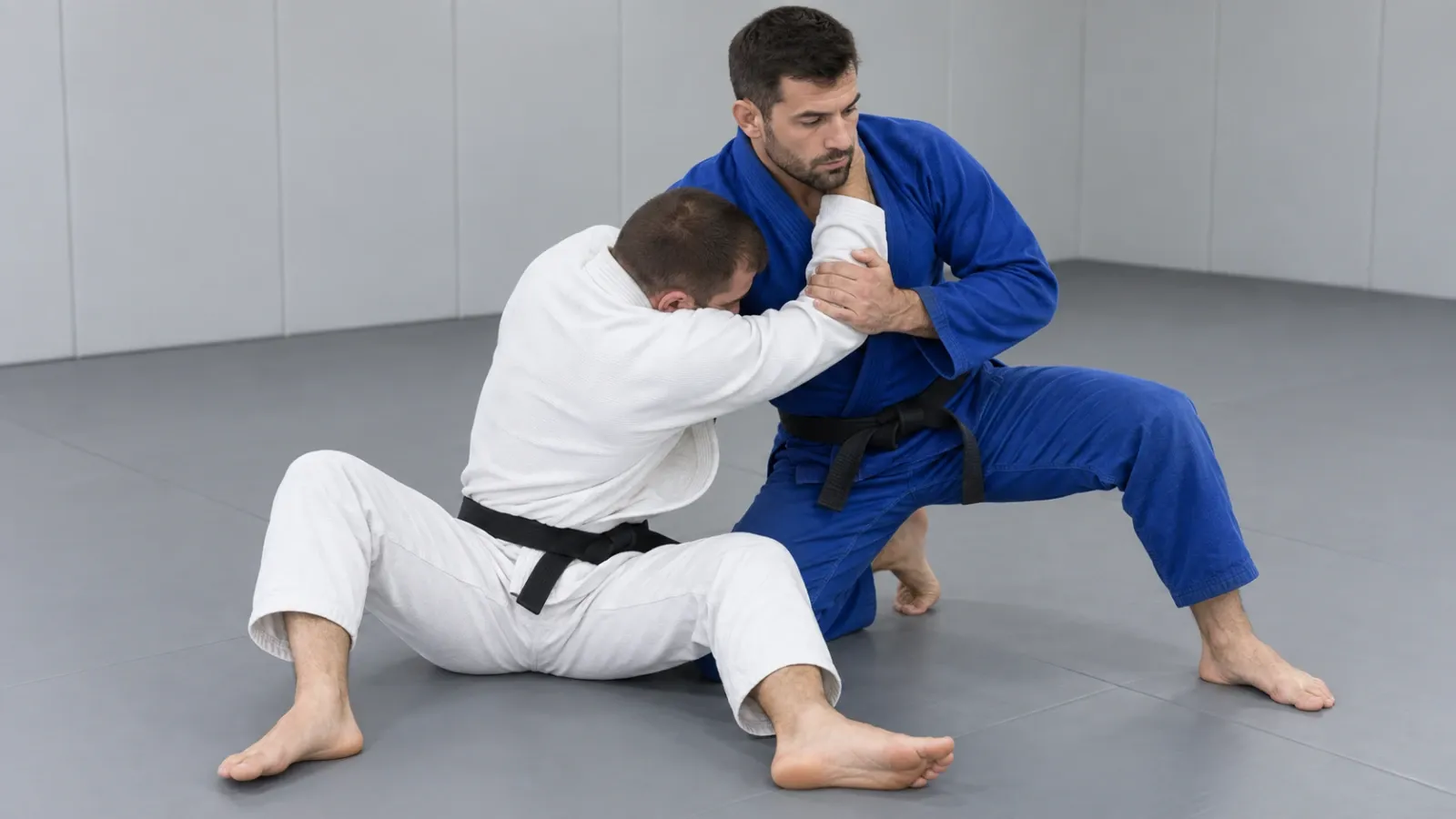
Hand fighting alone rarely works once the choke is locked, because their arm is stronger than your grip. The escape is positional — change where your head is — rather than a battle over the grip.
If you are caught standing, the first priority is usually to get your head to the outside and your hips forward, not to pull the arm.
Safety
An arm-in guillotine in particular can put a lot of pressure across the front of the throat. Apply it gradually, and stop immediately on the tap. Do not add a squeeze after the tap.
If you are defending, tap early. Air chokes are genuinely unpleasant and there is nothing to be gained from riding one out, and a guillotine cranked hard on the neck is not the kind of pressure worth proving anything against.
An air choke is exactly the case that tapping rather than proving a point is written about.
Gi and no-gi
Broadly the same, with one practical difference: in no-gi a sweaty neck and no collar make the high-elbow version more slippery to hold and more common to see, and the whole exchange is faster. In the gi the opponent has more to grip on you while defending, and you have more control over their posture on the way in.
The guillotine’s popularity in no-gi is partly because so much of no-gi involves wrestling entries, and a shot with the head down is the single most common way the choke becomes available.
Wrestling entries being more common without a jacket is one of the ways the two rulesets pull technique in different directions.
Common questions
What is the difference between an arm-in and a high-elbow guillotine? High-elbow traps only the head and strangles the carotid on one side. Arm-in traps the head and one arm, and finishes with more of a body-driven compression. They are different chokes sharing a name.
Why will my guillotine not finish? Usually one of three: the forearm is on the jaw rather than the neck, the elbow has dropped, or you are pulling with your arms without a base to pull against.
Where can you get a guillotine from? This model records front headlock, closed guard and butterfly guard. In practice it is available any time their head drops in front of you — most often off a sprawled takedown or a posture break.
Is it dangerous to hold a guillotine? It can be, to you. If they pass to side control on the choking-arm side while you hold it, they can finish a Von Flue choke on your exposed neck.
How do you escape a guillotine? Shoulder into the side of their neck, head to the far side, and pass towards the choking arm. Fighting the grip alone rarely works.