
Sweeps
Butterfly Sweep
The elevation sweep from butterfly guard, and a clear demonstration that a leg can lift what two arms cannot.
The hook lifts. The arms only decide where they land. Beginners reverse that, try to throw somebody with an over-hook and a heave, and conclude that butterfly guard does not work for smaller people. It works particularly well for smaller people, once the lifting is done by a leg.
Where it comes from
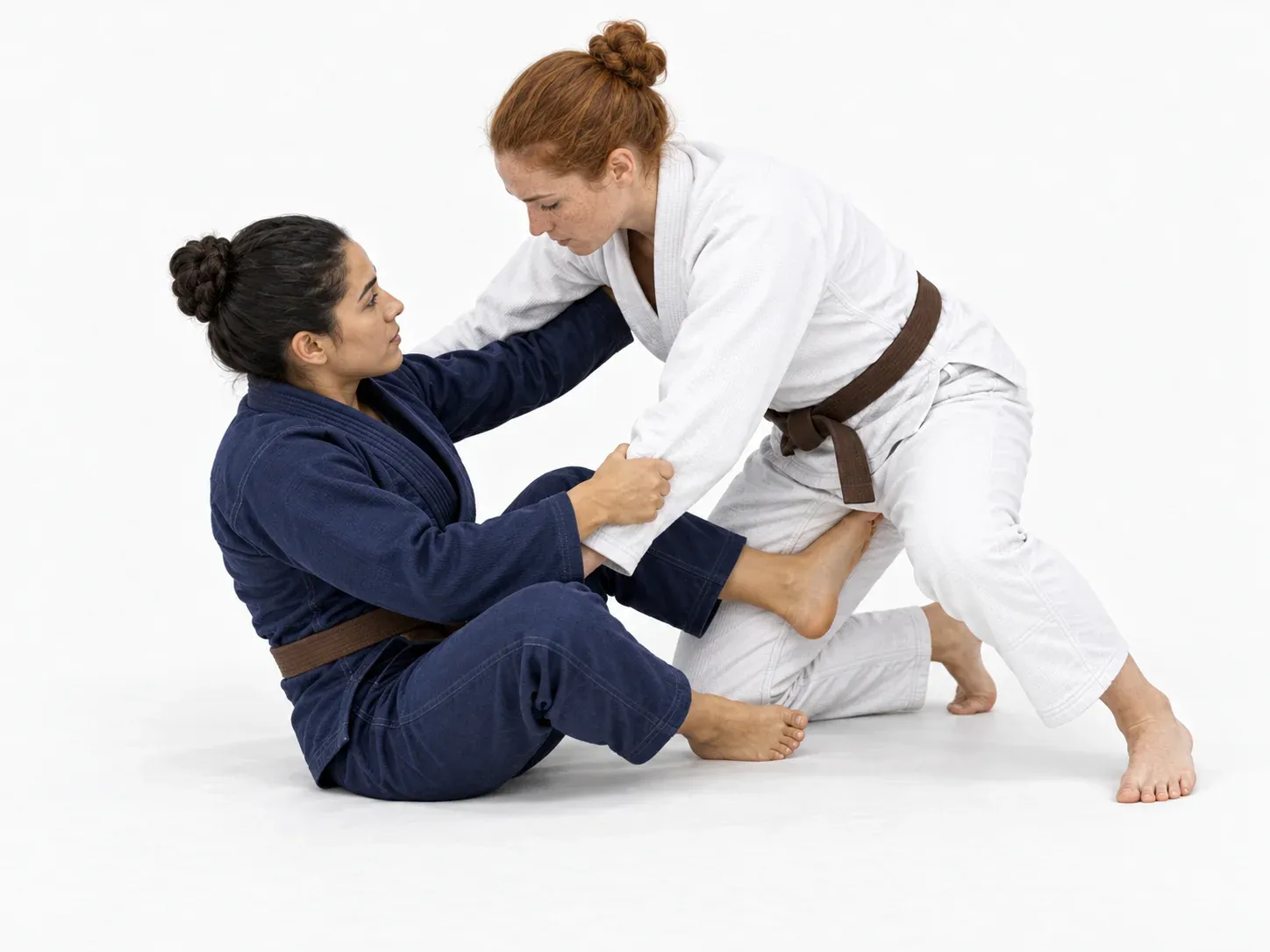
Butterfly guard, bottom. You are seated, not lying down, with the soles of your feet hooked inside the opponent’s thighs — the hooks that give the guard its name.
The seated posture is the first thing to get right. Butterfly guard is not a supine guard with your feet in an unusual place; it is an upright, chest-to-chest position where you are effectively wrestling from a seat. Flat on your back, the hooks lose most of their lifting power because your hips cannot get underneath.
Butterfly is one of several guards worth understanding as a family rather than one at a time; the main types of guard sets out the rest of them.
The three ingredients
The hook
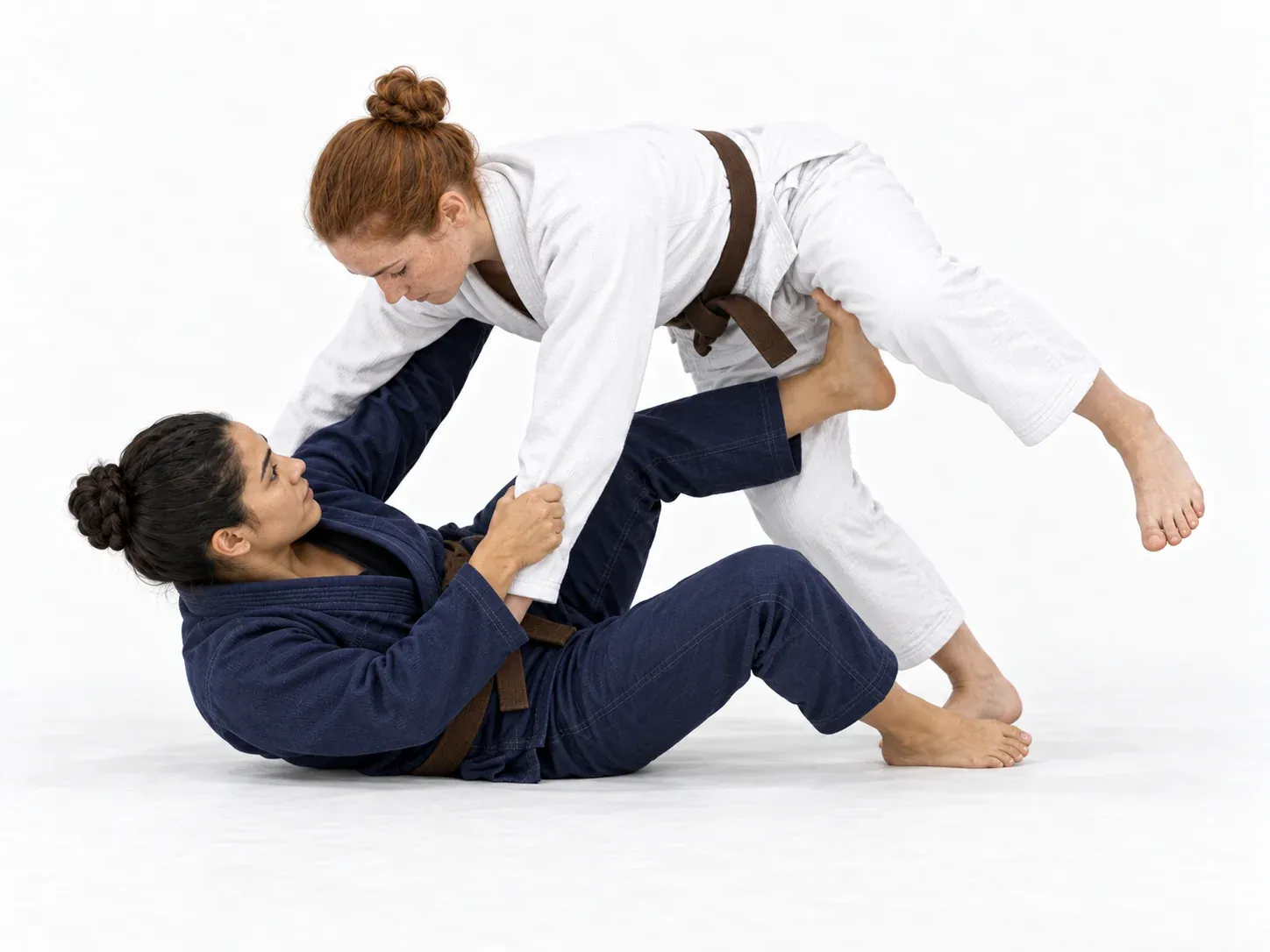
One foot, instep hooked behind their knee or high on the inside of their thigh. When you fall to that side and lift, the hook carries their leg with it. That is the elevation — it is a leg lifting a leg, which is a fair fight, rather than arms lifting a torso, which is not.
The hook has to be inside and high enough to catch weight. A foot resting against their shin is not a hook.
The upper body connection
Something has to stop their upper body from staying behind while their legs go up. The two standard answers:
- The underhook. Your arm under their armpit on the sweeping side, with your head on the outside of their shoulder. This is the classic and the stronger of the two; it controls their posture and their ability to base out.
- The over-hook or a two-on-one on the arm. Used when the underhook is not available, and often a signal to sweep the other direction instead.
Without one of these you lift their hips and they simply post a hand and sit back down.
The off-balance, sideways
This is the part that distinguishes a butterfly sweep from a butterfly attempt.
You are not trying to lift them upwards. You are breaking their base sideways — pulling them onto the diagonal over your shoulder, so that their weight is already travelling in the direction you intend to send it. The hook then only has to finish what the off-balance started.
Practically, that means the sweep begins with a pull and a slight fall to your side, not with a lift.
The sequence
- Sit up, chest to chest, hooks in.
- Get the underhook, head to the outside.
- Break their posture sideways — pull them across you, load their weight onto the sweeping side.
- Fall to that side, lifting with the hook as you go.
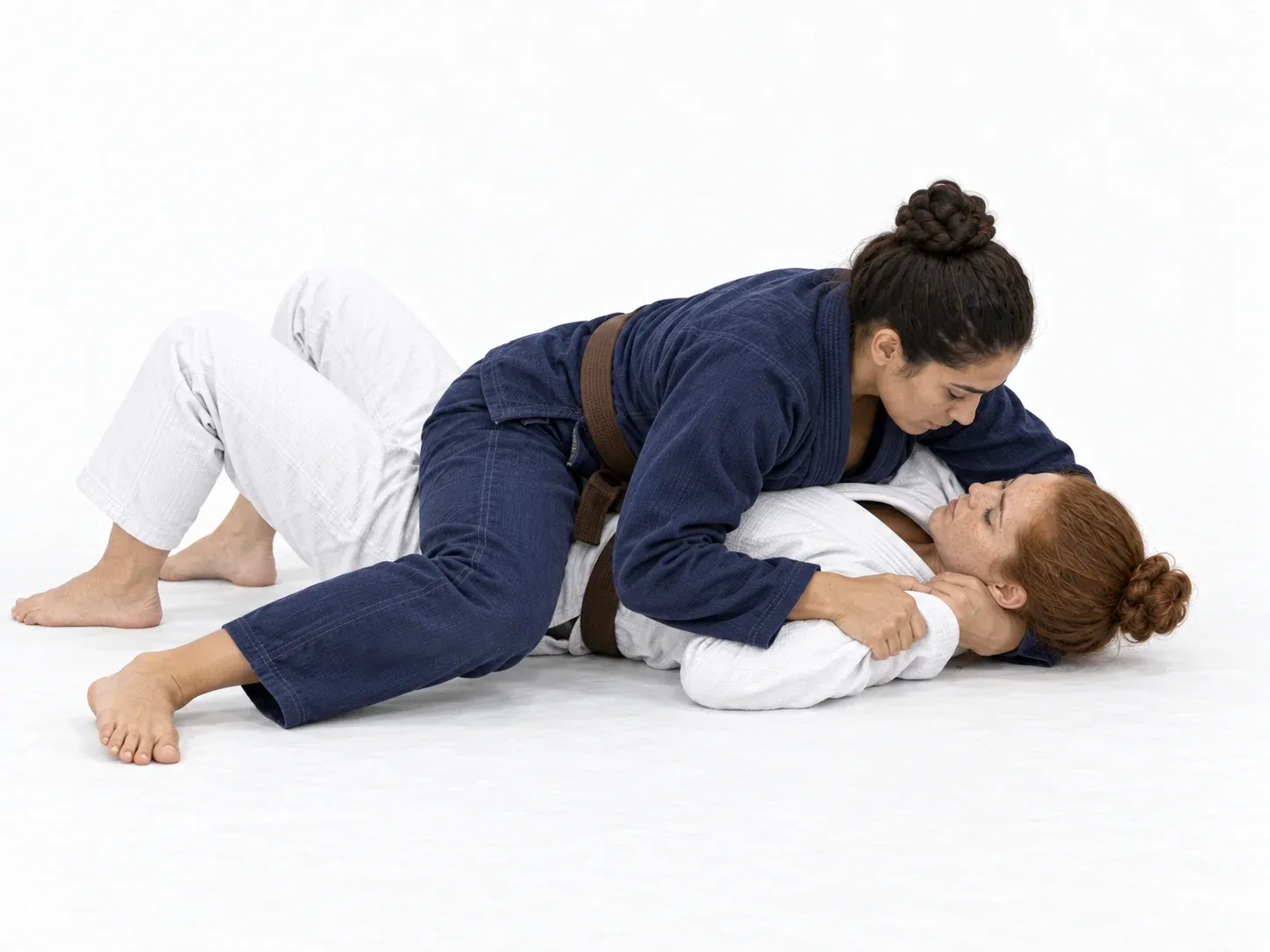
- Come up on top, following their momentum. You should arrive in side control or mount rather than merely on top of a scramble.
Step five is where a lot of otherwise-good butterfly sweeps become a scramble instead of a position: the sweep is only half the movement, and the come-up is the other half.
Why it fails
- You tried to lift with your arms. The most common. Arms are for connection, not elevation.
- You are flat on your back. Hips are underneath you where they can do nothing. Sit up.
- The hook is too shallow or too low. A foot on the shin does not carry weight.
- No underhook and no substitute. Their upper body stays put while their legs go up.
- You lifted straight up instead of sideways. A person lifted vertically comes straight back down in the same place.
- They flattened you out or killed the hooks. The standard defences, and both are answered by getting back to a seated, chest-to-chest position before attempting anything.
- They have a strong whizzer. An over-hook on your underhooking arm is the classic counter. Sweeping the other direction is usually faster than fighting it.
Relationship to the rest of the guard
Butterfly guard is a wrestling position more than a lying-down one, and the sweep sits inside a small family of shared reactions:
- If they posture back and away to kill the sweep, the arm drag and the back take become available — they have moved their weight backwards and their arm is reachable.
- If they drive forward to flatten you, the elevation gets easier, not harder; a forward-committed opponent is exactly what the hook wants.
- If they base wide to the sweeping side, the sweep in the other direction opens.
This library records the butterfly sweep from butterfly guard alongside the other attacks available there, and the practical skill is reading which of those reactions you are getting rather than committing to one plan.
Gi and no-gi
One of the more gi-neutral sweeps, and correspondingly popular in no-gi.
The underhook does not depend on clothing, the hook does not, and the off-balance is a body mechanic. In the gi you gain a useful extra: a belt or a lapel grip on the far side makes the sideways off-balance much easier to establish and hold. In no-gi you rely more on head position and on the underhook being genuinely deep, because a shallow one slips when they are sweating.
Butterfly guard’s prominence in no-gi and in submission grappling is partly because so little of it depends on grips.
Depending on so little clothing is exactly why it travels between the two, which is not true of much else in the sport.
Drilling it
The seated posture first. Sit up with hooks in against a partner who is trying to flatten you, and just maintain chest-to-chest. If you cannot stay seated, the sweep is not available.
The elevation in isolation. Partner kneeling in front of you, no resistance, hooks in — practise falling to the side and lifting with the hook alone, with your hands behind your head or crossed on your chest. It feels impossible at first and then suddenly does not, which is the lesson.
Then add the underhook and the come-up, and finish the sweep in a position rather than stopping at the top.
Sweeps generally reward this order — position first, then elevation, then the come-up — and how sweeps actually work makes the same case across the family.
Safety
Low risk. Two things to watch: your partner’s landing, since they arrive with some speed and often sideways, and your own knee, which can take a twist if their weight settles onto a hooked leg while your foot is trapped. Sit up and keep the hook mobile rather than jamming it and holding.
Technique varies with your body and your training partner. Ask your coach to check your hook depth and your posture — those are the two that are hard to self-diagnose.
Common questions
What makes the butterfly sweep work? The hook behind their knee does the lifting. Your arms connect the upper bodies so they cannot stay behind; they do not supply the elevation.
Why can I not lift my opponent? You are probably trying to lift with your arms, or lying flat so your hips are not underneath them, or the hook is too shallow to carry weight.
Do I need the underhook? You need something controlling their upper body, and the underhook is the strongest option. Without it, their hips go up and their shoulders stay put.
Should I lift them straight up? No. Break their base sideways first and fall to that side. Vertical lifting puts them back down where they started.
What beats a butterfly sweep? Flattening you out, killing the hooks, or a strong whizzer on your underhooking arm. The answer to the last one is usually to sweep the other way rather than to fight it.
Does it work in no-gi? Yes — it is one of the better sweeps for no-gi, because almost none of it depends on grips.