
Movement
Hip Escape
The shrimp — the single movement more of Brazilian Jiu Jitsu is built on than any other, and the one most people do slightly wrong for years.
This is the most important thing in the beginner curriculum and it is not a technique. It is a movement — the way a person on their back moves their hips away from somebody. Almost every escape from underneath, most guard recoveries and a good number of sweeps are this movement with something added.
It is usually called shrimping, because of the shape your body makes. The formal name in this library is the hip escape.
Where it appears
Three sources in this model — side control bottom, mount bottom, half guard bottom — but that undersells it. The shrimp is the motor inside the elbow-knee escape, inside guard recovery, inside the escape from knee on belly and north–south, and inside the process of getting your legs back in any scramble where you are underneath.
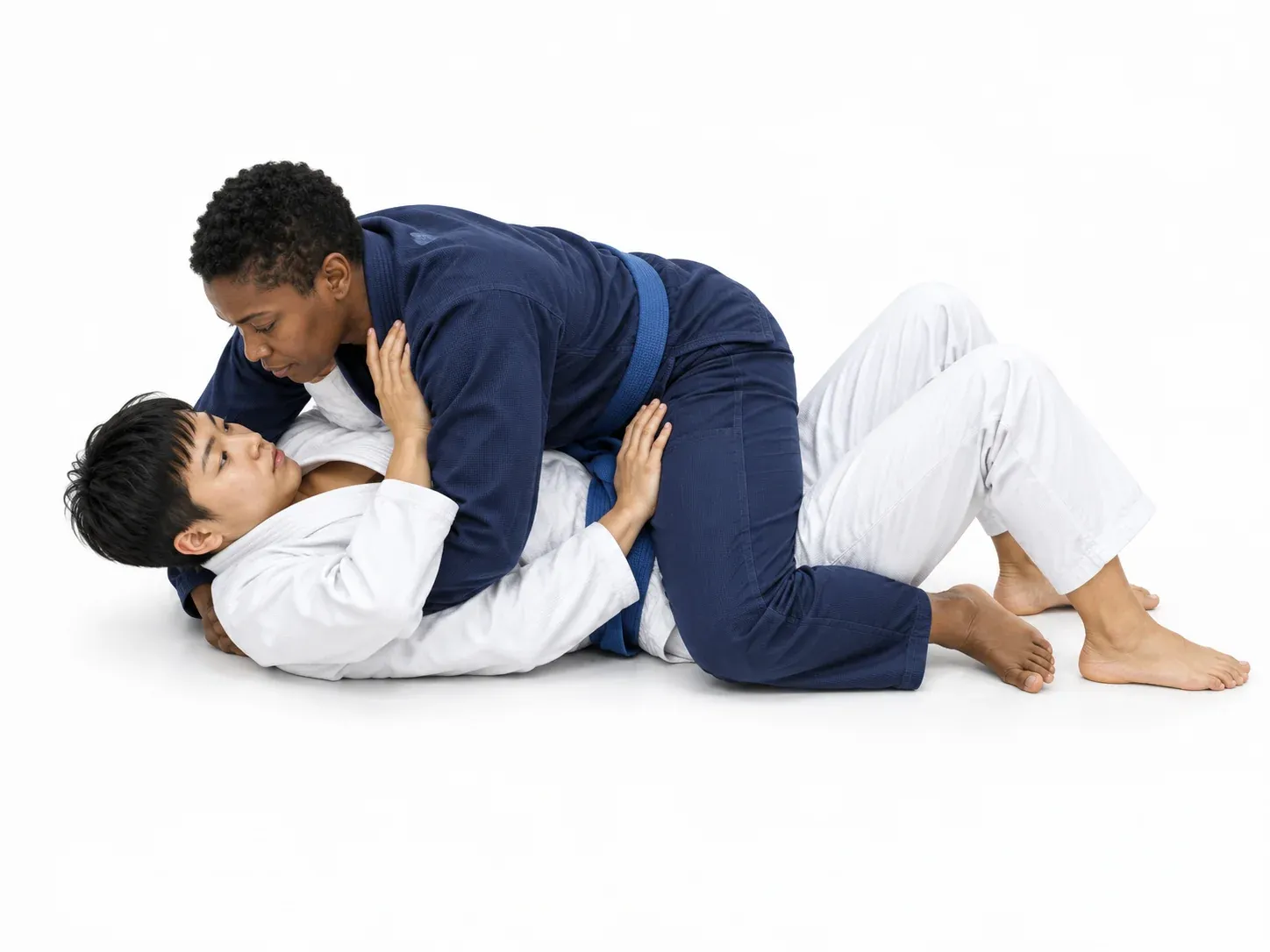
Learn it properly and a dozen techniques improve at once. Learn it badly and every one of them has a weak component you cannot see.
Recovering guard rather than losing it outright is the whole subject of why your guard keeps getting passed.
What it actually is
The mechanics, in order, because each one is skipped by somebody:
Turn onto your side. Flat on your back, your hips are pinned by your own bodyweight and you have no leverage. You have to be on a hip before anything else happens.
Plant a foot. The foot on the side you are turning towards goes flat on the mat, knee bent, heel reasonably close to your own hip. This foot is the engine.
Push off that foot. Your hips travel away from the direction you are facing. You are pushing the mat, not wriggling. The power comes from the leg, the same way it does when you stand up.
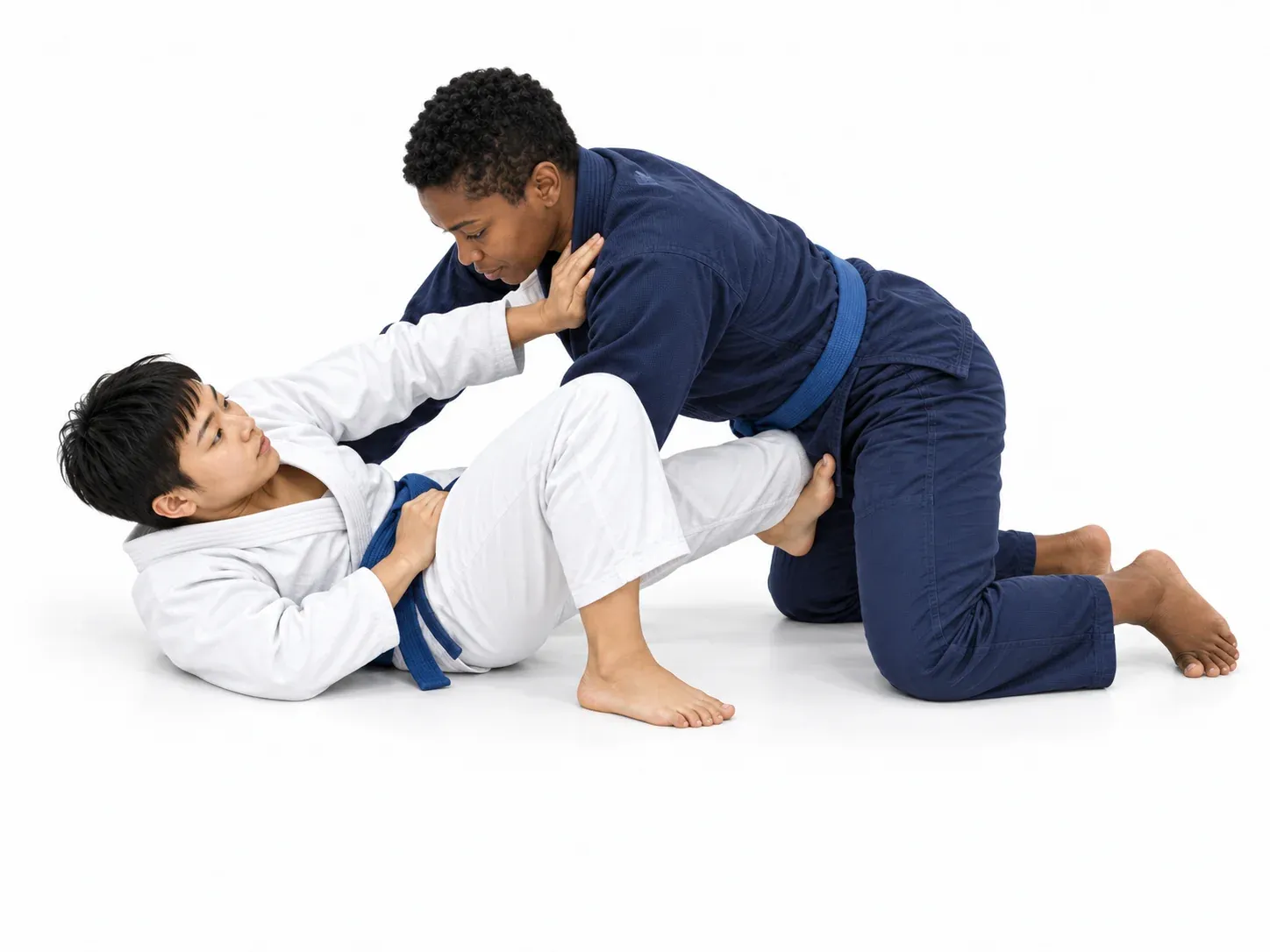
Frame as you go. Your forearms hold the distance you are creating. Without them the space you make gets taken back immediately by whoever is on top of you.
Land on your side, ready to repeat. One shrimp rarely finishes anything. Two or three small ones beat one enormous one every time.
The faults
These are worth naming individually because each one is common and each one is invisible to the person doing it.
Wriggling instead of pushing. The most widespread. If your shoulders are doing the work and your planted foot is not pushing hard, you are moving a few centimetres and burning energy. The test: your hips should move further than your shoulders do.
Staying flat. No hip available, no leverage, no escape.
Pushing with the arms. Arms frame; they do not create the distance. This is also how straight arms get given away to armbars — see the elbow-knee escape for the longer version of this point.
Moving straight backwards. A shrimp goes on a diagonal, away and to the side. Straight back into somebody’s pressure achieves very little.
Not resetting. People shrimp once, land flat on their back, and are worse off than when they started. Finish on your side.
Going too fast, too big. A large fast shrimp against a heavy opponent mostly moves you into the mat. Small, repeated, with frames maintained is the version that works against resistance.
Why it matters more than the techniques built on it
Because the techniques are the same movement with a specific addition, and if the movement is weak, every one of them has the same weakness.
The elbow-knee escape is a shrimp plus a frame plus a knee. Guard recovery is a shrimp plus getting a leg in. The escape from mount when the upa is not available is a shrimp under a heavier load. Somebody whose shrimp is a wriggle will be told to “use your hips more” for years without anybody identifying which hips and how.
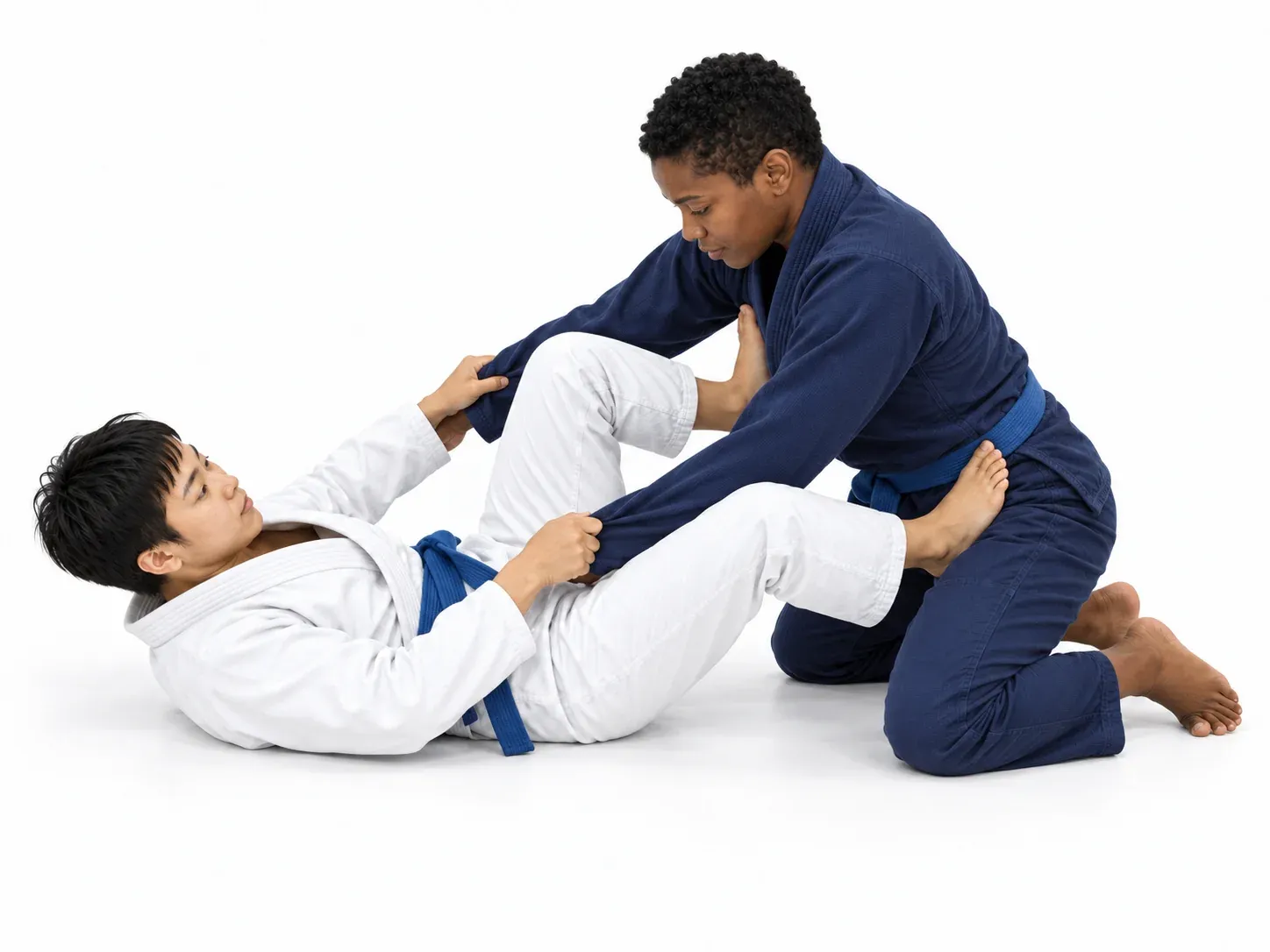
It is also why gyms warm up with it. Shrimping the length of the mat is not filler.
It is also the single most useful thing to be good at early, which is why it sits near the top of what to focus on as a white belt.
Drilling it properly
Most people drill this on day one and then never think about it again. That is a waste of the cheapest improvement available.
Solo, with attention. Shrimp across the mat both directions, and watch whether your hips are outrunning your shoulders. Film it once if you can — the gap between what it feels like and what it looks like is usually surprising.
Solo, without hands. Arms crossed over your chest. It becomes immediately obvious whether the movement is coming from the planted foot or from the arms pushing off the mat.
Against a wall or a partner’s knee. Something to push into, to feel where the pressure goes.
Under load. A partner in side control giving light, constant pressure, with you shrimping to maintain space rather than to escape. This is the version that matters and the one hardly anybody drills.
With frames, always. A shrimp without frames is half the movement.
It is one of the few things that genuinely improves without a partner, and training on your own is mostly movements like this one.
Gi and no-gi
The movement is the same. Two practical differences.
In the gi, friction works against you — a jacket on a mat slides much less well than skin, and a top player with grips can pin you more effectively. Shrimps are shorter, more deliberate, and breaking grips becomes part of moving at all.
In no-gi, sweat makes sliding easier and the movement faster, but the top player’s control does not rely on grips, so the frames and the head position matter more.
Neither changes the mechanic. It changes how many repetitions you get and how far each one takes you.
Mechanics that do not care about the jacket are the exception rather than the rule in gi and no-gi.
Safety
The lowest-risk item in this batch — it is a solo movement and there is nothing to injure anybody with.
The only things worth mentioning are your own neck and lower back: keep your head off the mat rather than grinding it, and do not force the twist if your back is tight. Under a heavy partner, shrimp rather than bridge-and-twist; the latter is where people tweak lower backs.
Technique varies with your body and your training partner. Ask your coach or instructor to watch one — the fault is nearly always in the planted foot, and it is much easier to see than to feel.
Common questions
What is a hip escape in Brazilian Jiu Jitsu? A movement where you turn onto your side, plant a foot, and push your hips away from your opponent to create space. It is usually called shrimping.
Why is it so important? Because most escapes from underneath are this movement with something added — a frame, a knee, a grip. Improving it improves all of them at once.
Am I doing it wrong if I am tired afterwards? Possibly. If you are wriggling with your shoulders rather than pushing off a planted foot, you are doing a lot of work for very little distance.
Which direction should I move? Away and on a diagonal, not straight backwards into their pressure. Turn onto the hip you are moving away from.
Should I push them with my hands? No. Hands and forearms frame to hold the space; the space itself comes from your hips moving. Pushing with straight arms is both ineffective and how arms get given away.
How do I practise it on my own? Shrimp the length of the mat with your arms crossed over your chest, so the movement has to come from the planted foot. Then add frames and repeat under a partner’s light pressure.