
Guide
How to train with bigger, stronger partners
Size is real and it is not the whole story. The adjustments that make a heavier partner manageable are the same ones that make your Brazilian Jiu Jitsu better against everyone.
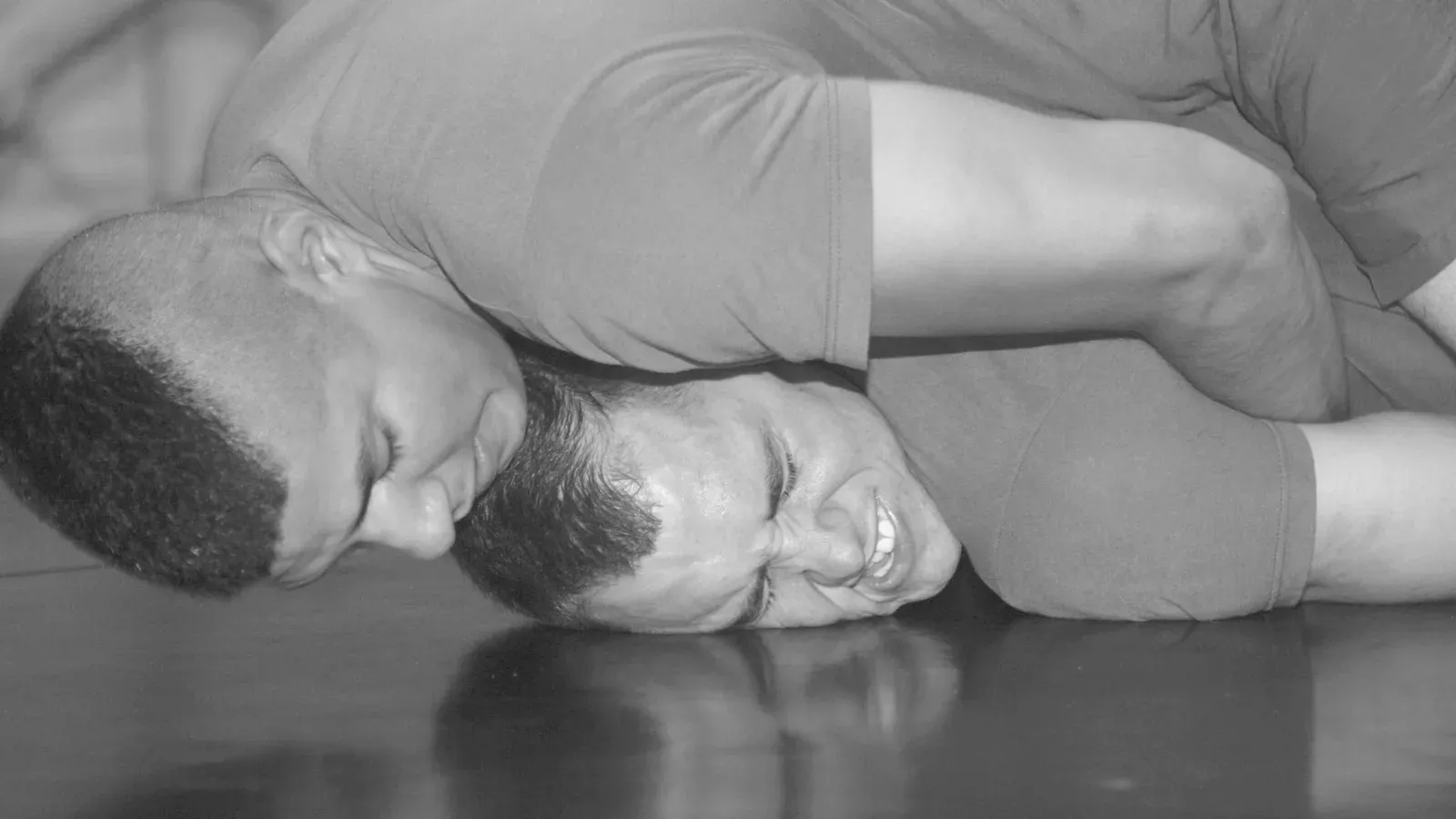
Stop trying to move them and start trying to be somewhere they are not. Against a much heavier partner, strength-for-strength exchanges are the one contest you are guaranteed to lose, and almost everything a smaller grappler does well comes from refusing that contest.
This is not the “technique beats strength” platitude. Strength matters, a sixty-kilo gap is a real disadvantage, and you will lose rounds you would have won at equal weight. The question is what to do about it, and the answer is specific.
Why it feels impossible
Weight in grappling behaves less like force and more like terrain. A heavier partner does not have to do anything clever to be a problem: they can simply be on top of you, and the pressure is continuous while your defence costs energy every second.
Two consequences follow. First, time is on their side — you tire, they do not. Second, your mistakes are more expensive: at equal weight a poor frame is recoverable, and under a much larger person it collapses immediately.
So the goal is not to escape faster. It is to be in fewer positions where you are simply holding weight up.
The adjustments that actually change things
Frame, do not push. A frame is a structure — bone stacked against bone, elbows in, arms connected to your own body — that holds space without you having to be stronger than the person leaning on it. Pushing with extended arms is a strength contest against someone who will win it, and it hands them your arm.
Get to your side. Being flat on your back under a heavier person is the single worst place to be, because your hips cannot move and their weight has the largest possible contact area. Turning onto a hip, even slightly, restores the ability to move and reduces what you are carrying.
Do not let them settle. Most of a big partner’s advantage arrives after they have consolidated a position. The moment to move is early, while their weight is still shifting — one second of scramble is worth thirty seconds of trying to bench-press somebody off you.
Manage distance rather than contact. Either be tight to them, where their weight has less leverage on you, or be far enough away to have your legs between you. The middle range — arms extended, half a metre away, gripping nothing — is where the size gap is largest.
Breathe. Beginners under pressure hold their breath, and that alone accounts for much of the panic. It is the same mechanism behind why beginners gas out so quickly, and it gets much worse when the person on top is heavy.
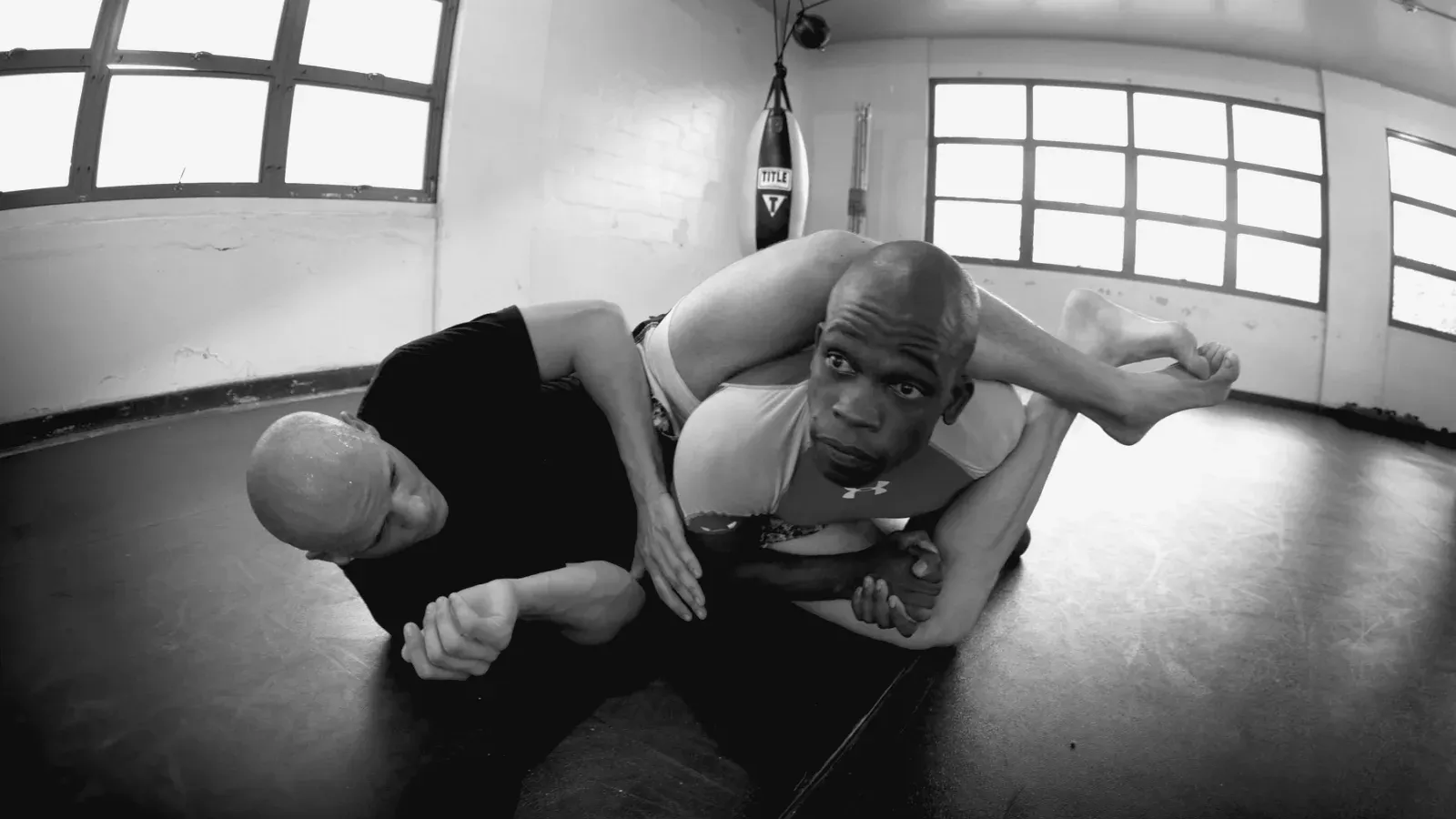
The techniques that carry the most weight here are the ones built on frames and hips rather than on lifting: shrimping, the elbow-knee escape, and the bridge and roll when the timing is right.
What to accept
Some things will not work, and knowing which saves a lot of frustration.
You will not out-muscle a good grip. You will not sweep somebody who has settled their weight properly by trying harder. You will get flattened, and you will lose positions you would keep against smaller partners.
Accepting that has a real payoff: it forces you to solve the problem earlier, at the point where it was still solvable. Nearly everything a smaller grappler is good at — timing, angles, refusing bad positions before they exist — is a habit built by not having the option to muscle out.
That is also why the person who is regularly the smallest in the room usually has better defence than everyone around them. It is not talent. It is that the bad positions have been unavoidable, so they have been practised.
Safety, honestly
Rolling with much bigger partners is worth doing and does carry more risk. Reasonable precautions:
- Tap early. Submissions arrive with more force and less warning when there is a large strength difference. Tap to the position, not the pain.
- Say what is hurting. “Careful with my left shoulder” is a normal sentence in a Brazilian Jiu Jitsu gym and nobody thinks less of you for it.
- Do not defend a locked submission out of pride. The margin you think you have is smaller against someone stronger.
- Decline a round. If a partner is out of control rather than merely large, you are allowed to say no, and you should tell your coach.
There is a difference between heavy and reckless. Heavy is the sport. Reckless is a person, and it is fixable by the room.
If you are the bigger partner
The other half of this, and the part that decides whether smaller people want to train with you:
- Your weight is not a technique. If your entire game is settling on people, you will stop improving around blue belt, and the moment you meet somebody your own size you will discover what you never learned.
- Give the round somewhere to go. Let a smaller partner work. You are not proving anything by holding a white belt still for five minutes.
- Apply submissions slowly. You have a strength margin they cannot resist, which means the responsibility for their joints is disproportionately yours.
- Ask. “Too heavy?” costs nothing and gets an honest answer.
Good big partners are enormously valuable — they are the only way smaller people learn to deal with pressure. Being one is a choice, and the room notices.
Common questions
Should I only roll with people my size? No. Mixed rounds are where most of the learning is. Match your size when you want to test something, and go bigger when you want to test yourself.
Is it dangerous? Marginally more than equal-weight rolling, and manageable with the habits above. The larger risk to most beginners is refusing to tap, not the weight itself.
Everyone at my gym is bigger than me. Is that a problem? It slows down the fun and speeds up the defence. Long term it is closer to an advantage — provided you are not being injured, which is a different conversation to have with your coach.
How do I stop feeling exhausted after one round? Frames instead of pushing, breathing instead of holding your breath, and moving before they settle. Almost all beginner fatigue under a heavy partner is wasted effort rather than missing fitness.