
Guide
What to focus on as a white belt
The first year is not about collecting techniques. It is about surviving, escaping, and building the handful of habits everything later is built on.

Survive, escape, and turn up. In that order. Everything a white belt is shown that is not one of those three is a bonus, and treating it as the main event is the single most common way a first year gets wasted.
That sounds reductive, so here is the reasoning. In your first year you will be in bad positions for most of every round. Time spent learning to attack is time spent rehearsing something you rarely get to do, while the thing you do constantly — being underneath somebody — goes unpractised.
The first three months: do not drown
Nothing you are shown will stick yet, and that is normal rather than a sign you are slow. What you are actually learning is much more basic:
- How to breathe under pressure. Most beginners hold their breath the moment somebody’s weight lands on them, which is why they gas out so quickly despite being fit outside the gym.
- How to tap. Early, without drama, and to the position rather than the pain. If you are unsure where the line is, when to tap is worth reading before your next session.
- How to move on the ground. Shrimping, bridging, getting to your side. Warm-ups look like filler and are actually the syllabus.
- The names of things. Mount, side control, guard, back. You cannot ask a useful question about a position you cannot name.
Do not try to win rounds. Try to still be there at the end of them.
Months three to twelve: get good at being in trouble
This is where the useful sorting happens. Two white belts train for a year; one spends it scrambling to stay on top and avoid bad spots, the other spends it deliberately working out of them. The second one is a much better blue belt.
Concretely, the priorities are:
Escapes first. From mount, from side control, from the back. These are the positions you will be in, they are the least fun to practise, and they are the foundation of everything. A person who can escape can afford to experiment; a person who cannot spends every round terrified of losing position.
A guard that does something. Not a fancy one. Something happens when a partner kneels in front of your legs — you get grips, you get frames in, you make it awkward. Which guard barely matters yet; the map of guard types will make more sense once you have played one badly for a few months.
Two or three submissions, not twenty. Pick ones your coach teaches often and that keep appearing in class. Depth beats breadth by an enormous margin at this stage.
The positional hierarchy. Understanding why position comes before submission reorganises everything else you are taught. It is the closest thing the sport has to a first principle.
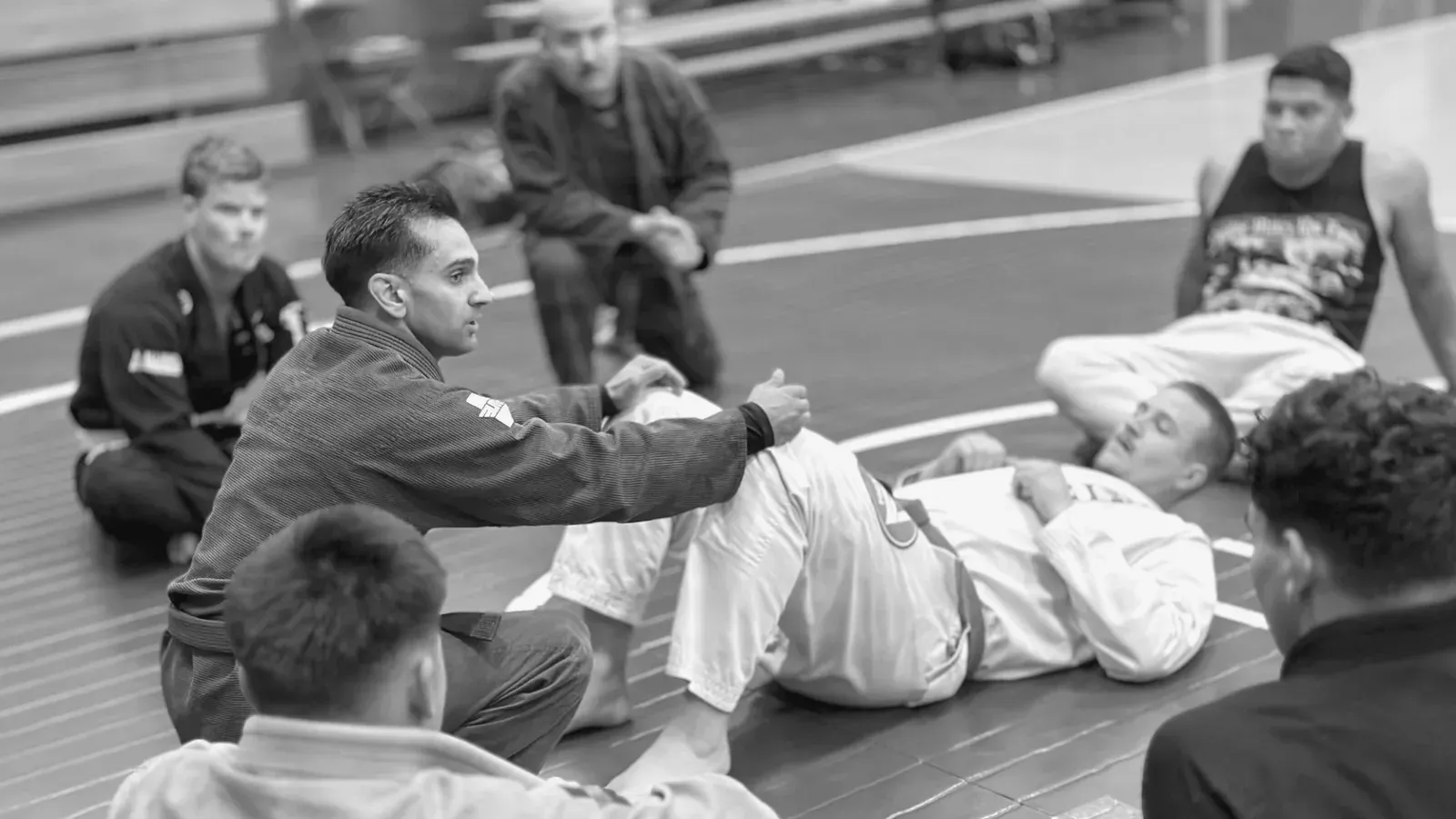
In practice that is a short list: the shrimp underneath everything, the bridge and roll and the elbow-knee escape from mount, and a reliable way out of back control.
The habits that matter more than the techniques
- Turn up on the bad days. The sessions you do not want to attend are worth more than the ones you do, because they are the ones that decide whether you are still training next year.
- Roll with everyone. Especially the people who dismantle you. A white belt who only rolls with other white belts is practising against the same errors they have.
- Ask one question per class. Not five. One specific question about the thing that failed tonight gets a much better answer than “how do I get better?”.
- Write down one thing afterwards. What happened, what you could not solve. Almost nobody does this, and the people who do stop rediscovering the same problem every month.
- Wash your gi after every session. Non-negotiable, and the room will notice.
What to ignore for now
The technique firehose. Instagram, YouTube and the person at your gym who has learned a berimbolo will all offer you material you cannot use. It is not that these are bad; it is that a technique without a position to use it from is a party trick.
Winning rounds. Nobody is counting. Tapping a lot at white belt is the expected outcome, not a verdict.
Comparing timelines. The person promoted before you trains more often, or started with a wrestling background, or has been there two years longer than you assumed. Belts are a poor measure of your own progress precisely because they update so rarely.
Buying things. One gi, a mouthguard, a rashguard. That is the whole list for a year.
The one thing to take from this
If you only do one thing differently after reading this: stop trying to escape bad positions quickly and start trying to be comfortable in them. Panic costs more energy than any technique saves, and calm under pressure is the trait every experienced grappler shares.
Everything else — the guard, the submissions, the game you eventually build — sits on top of that. And when you are ready to think about what “your game” even means, building one deliberately is the natural next step, usually somewhere around blue belt.
Common questions
How many techniques should I know at white belt? Fewer than you think. A handful you can actually apply beats a hundred you can name.
Should I drill at home? Movement drills, yes — shrimping and bridging cost nothing and pay off. Technique on a cushion, not really.
I keep forgetting everything from class. Is that normal? Completely. Most people remember the last five minutes of a session, which is why writing one line down afterwards changes what you actually retain.
When should I start competing? Whenever you are curious, and never because you feel obliged. It is a useful accelerator, not a requirement.