
Escapes
Elbow-Knee Escape
The frame of elbow and knee that recovers guard from underneath, and the movement almost every other bottom escape is built on top of.
Frames hold space. Hips make space. Almost everything that goes wrong underneath somebody comes from confusing those two jobs — usually by trying to push a person off with your arms, which is the one thing arms are least able to do.
The elbow-knee escape is the answer, and it is less a technique than a mechanic. It is what the mount escape, the side control escape, guard recovery and half the sweeps in the sport are built on. Learning it well is worth more than learning five separate escapes badly.
Where it comes from
This model records it from side control, bottom and mount, bottom — the two places a beginner spends most of their first year. The same shape appears under north–south, under knee on belly, and in every scramble where you are underneath and need your legs back.
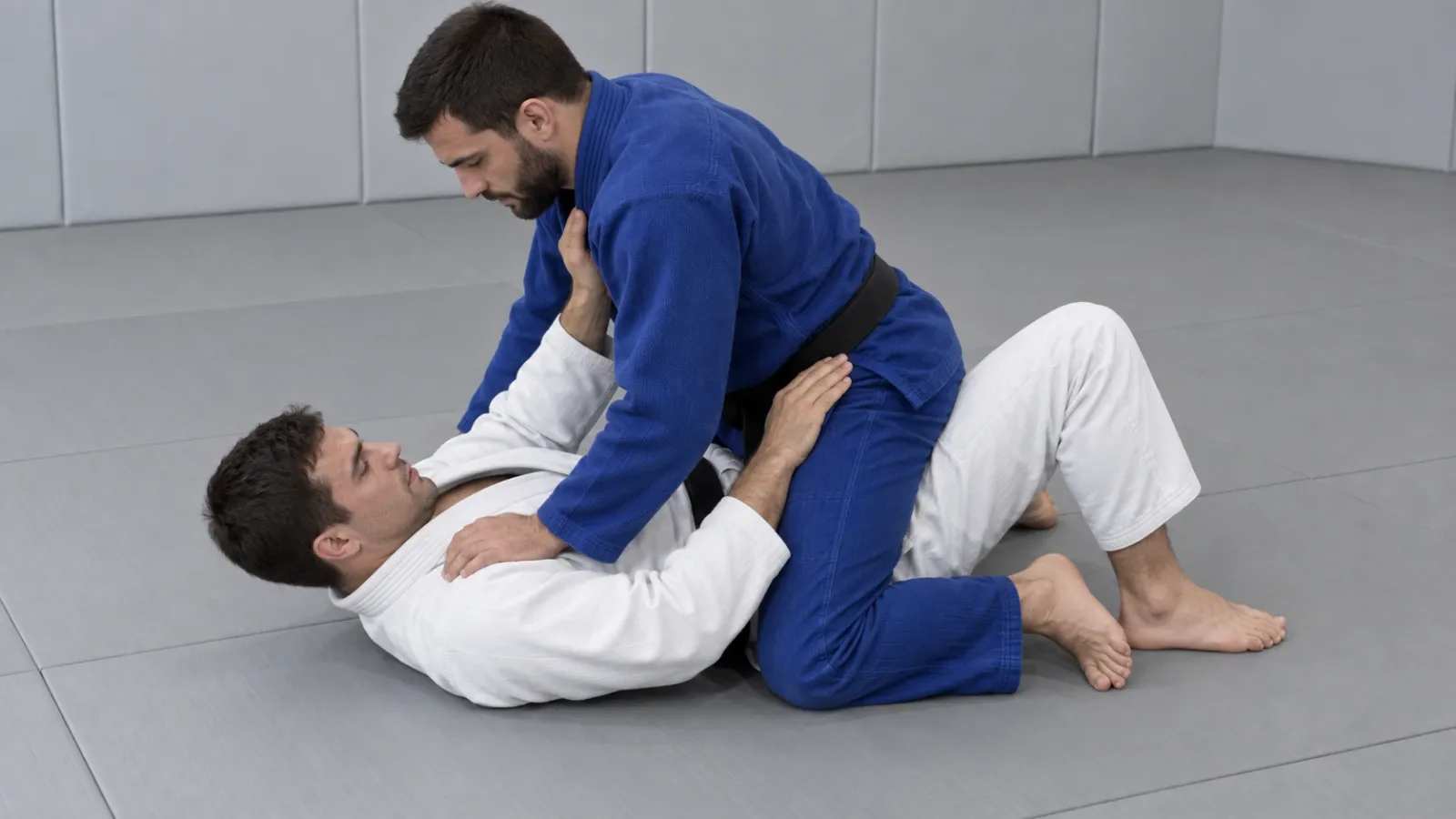
What a frame actually is
A frame is a structure, not a push.
Your forearm against their neck or hip, elbow connected to your own body, is a strut. It holds a fixed distance using your skeleton, and it costs almost nothing to maintain. A straight arm pushing at them is a muscle doing work against someone heavier than the arm, and it has two failure modes at once: it tires, and it offers a straight limb to an armbar.
The two frames you will use:
- Elbow-to-hip. Your forearm across their hip or their near shoulder, keeping their weight from settling onto your chest.
- Knee-in. Your knee slipping into the gap between you, which is what converts space into a guard.
“Elbow-knee” is the pair working together: the elbow holds the space open and the knee occupies it.
How the escape actually works
The sequence, and the reason for each step:
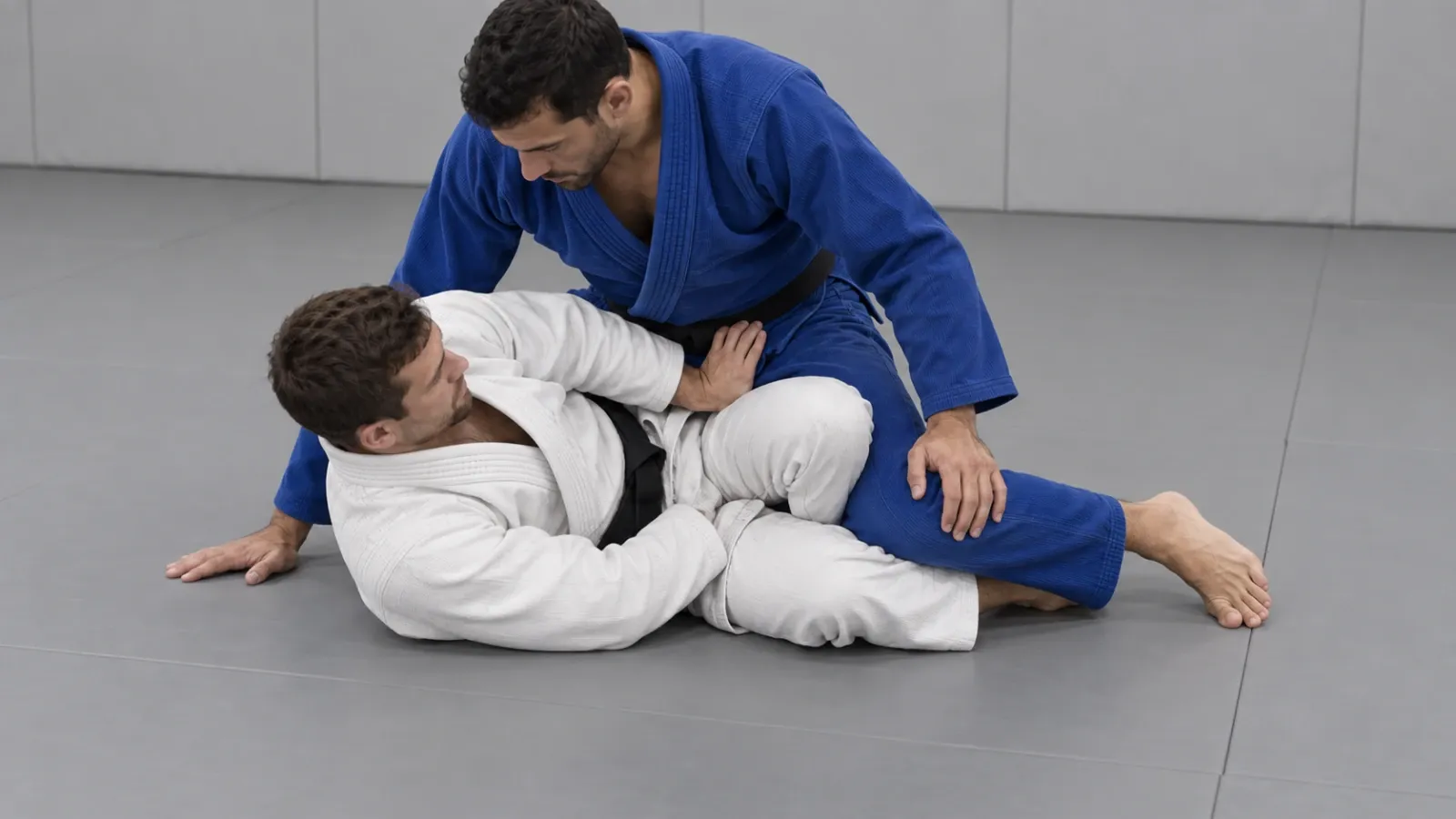
- Get on your side. Flat on your back you have no hips available and no frames that work. Turn towards them, shoulder off the mat.
- Set the frames. Forearm into their hip or neck, other arm inside, elbows connected to your torso. You are not pushing. You are refusing to be flattened.
- Move your hips away. This is the shrimp — the hip escape — and it is the motor of the technique. Push off your feet and slide your hips back, away from them. The space appears between your bodies, and it appears because you moved, not because they did.
- Insert the knee. As soon as there is a gap, the knee goes in. Not a foot, not a shin across — the knee, pointing at them, so it can become a guard.
- Recover. Once the knee is in, either the other leg follows and you have closed guard, or you frame again and repeat.
The whole thing is usually two or three small repetitions rather than one big movement. Beginners tend to attempt a single enormous escape and exhaust themselves; a good escape is three inches at a time.
The straight-arm error
It deserves its own heading because it is the classic beginner mistake and it is genuinely dangerous, not merely ineffective.
Pushing them off with straight arms does three things: it fails, because they weigh more than your triceps; it tires you, because it is a sustained isometric load; and it presents an extended arm to somebody in a dominant position, which is how a large proportion of white-belt armbars and americanas happen.
The correction is small and physical: keep the elbow connected to your own ribs. If your elbow is touching your body, you have a frame. If it is out in space, you have an offering.
Why it fails
- You are flat. Nothing works from flat. Getting onto your side is step zero.
- You shrimp without frames. You make space and they follow into it immediately.
- You frame without shrimping. You hold the space and nothing changes; eventually your frames collapse.
- The knee goes in late. Space closes fast. The knee has to arrive in the same beat as the hip movement.
- You try to escape towards their strength. Under side control, shrimping straight away from a crossface just feeds it. Usually you need to deal with the crossface first, or go the other way.
- You escape into mount. Common under side control: you shrimp away, and they simply step over into mount, which is worse. The knee has to come in as you move, not after.
The relationship to the other escapes
This library records the elbow-knee escape and the bridge and roll as interchangeable answers to mount, and the choice is decided by what the opponent offers: an available arm means the upa is on, a tight defensive opponent means you frame and shrimp instead.
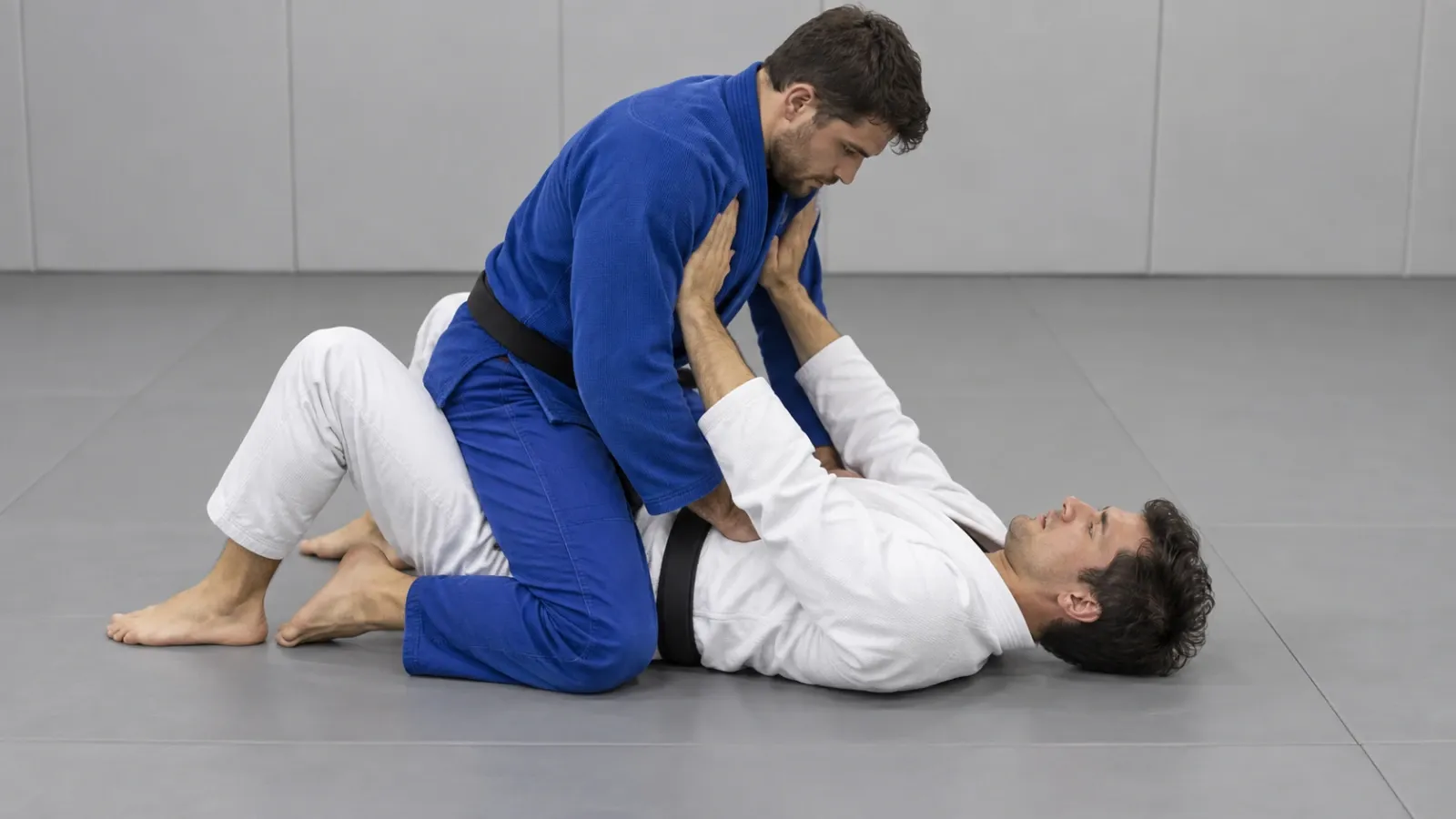
More useful than choosing is combining them. Bridging hard forces them to post their hands forward to stop being rolled — and a posted hand is weight off your chest, which is exactly the moment the frames and the hip escape work. Shrimping forces them to chase you, which often exposes an arm for the upa. The two escapes are a pair, and good bottom players alternate rather than commit.
Drilling it
Solo. Shrimping across the mat, on both sides, with attention to the frames rather than speed. Most gyms warm up with this for a reason.
With a passive partner. Them in side control with no resistance, you working frames-hips-knee until the sequence is automatic.
With graded resistance, and here is the part that matters: ask your partner to resist the frame specifically — to try to flatten you and kill the space — rather than to resist the escape as a whole. The escape is won or lost at the frame, and drilling against a partner who only resists the final movement teaches the wrong lesson.
Frames are the common component of nearly every escape from underneath, and they are a large part of what a white belt gets the most from.
Gi and no-gi
Fundamentally the same mechanic. Two practical differences:
In the gi, the top player has grips that make holding you flat easier, and friction works against you when you try to slide your hips. Escapes are correspondingly slower and more deliberate, and breaking grips becomes part of the escape.
In no-gi, sweat helps you slide but their crossface and underhook control does not depend on grips, so the fight is more about head position and less about hands. Escapes tend to be faster and more scrambly.
Escapes becoming faster and scrappier without grips is one of the more noticeable parts of moving between gi and no-gi.
Safety
One of the lowest-risk items here — it is an escape, and nothing in it loads a joint on your partner.
The risk it carries is to you, and it is the straight arm described above: an extended arm offered to somebody in mount or side control is how a large share of training-room armbars happen. Keeping the elbow connected to your ribs is a safety instruction as much as a technical one.
Beyond that, watch your own neck under a heavy partner — turning onto your side with their weight on your head is worth avoiding — and do not force the hip movement if your lower back is tight.
Technique varies with your body and your training partner. Ask your coach or instructor to check whether your escape is coming from the planted foot or from your arms.
Escaping from underneath somebody considerably heavier has its own adjustments, collected in escaping somebody heavier than you.
Common questions
What is the elbow-knee escape? A frame-and-hip escape from underneath: forearm frames hold the space, the hips move away to create more, and the knee comes in to convert that space into a guard.
Why can I not push them off? Because arms are weaker than a whole body. Frames are skeletal structures that hold distance; they are not for pushing. The space comes from your hips moving, not from your arms extending.
Is this the same as shrimping? The hip escape — shrimping — is the movement. The elbow-knee escape is that movement combined with the frames and the knee insertion that turn it into a guard recovery.
Does it work from side control and mount? Yes, and the mechanic is the same in both. It also underpins escapes from north–south and knee on belly.
Why do I keep escaping into mount? The knee is arriving too late. If you move your hips away without inserting the knee in the same beat, you have simply given them a clear path to step over.
Should I use this or the bridge and roll from mount? Whichever they give you. An available arm means bridge and roll; a tight, heavy opponent means frame and shrimp. In practice, alternate — each one creates the opening for the other.