
Guide
How to learn Brazilian Jiu Jitsu
You learn Brazilian Jiu Jitsu by training in a class setting where you practise techniques, drill them with a partner, and use controlled sparring (rolling) to apply them. It does not work well if you are trying to learn only from theory without partners, supervision, and live practice.
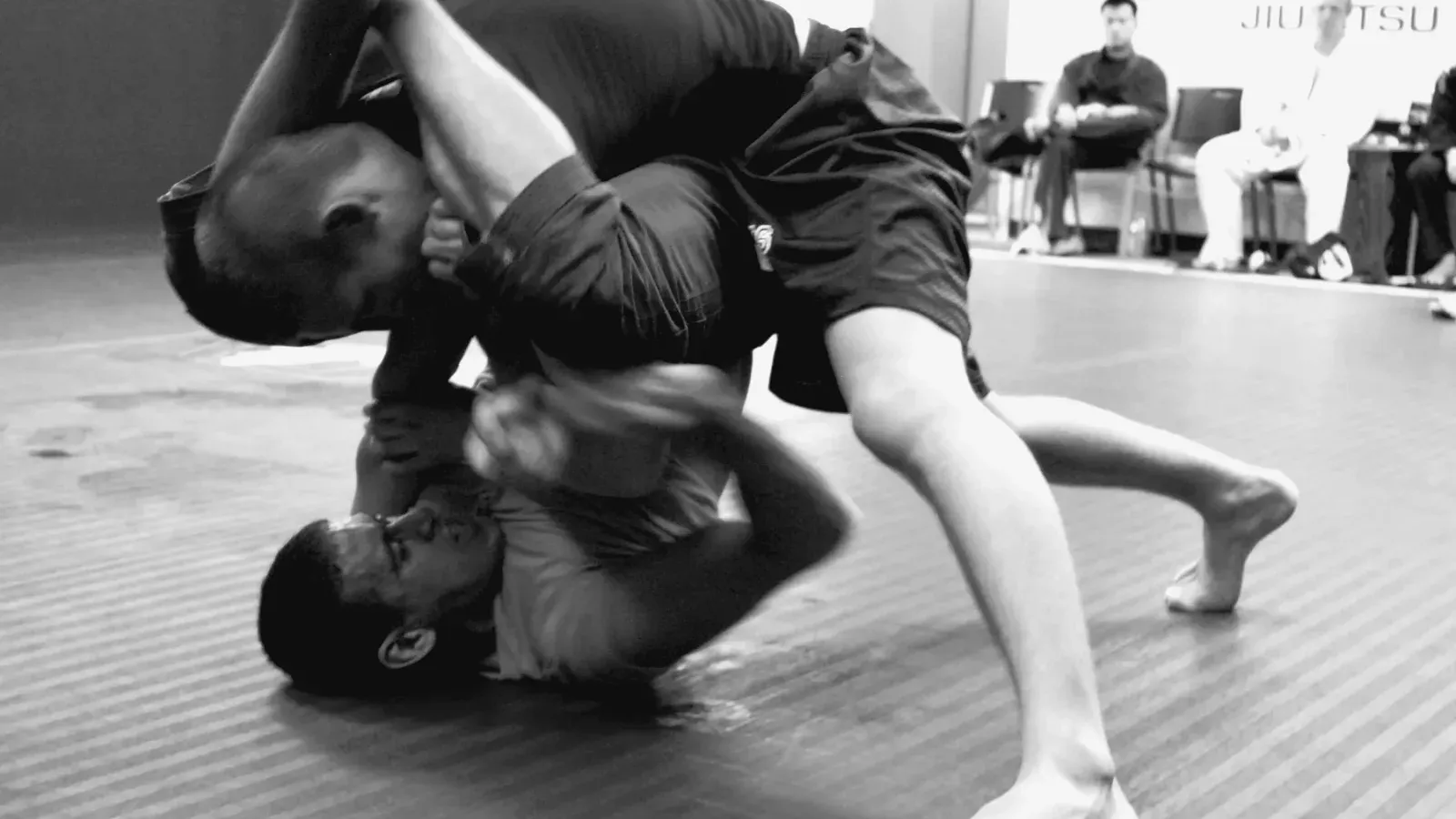
Mark Bonica from Durham, NH, USA · Openverse (wikimedia) · Creative Commons Attribution 2.0
What it means to learn Brazilian Jiu Jitsu
Brazilian Jiu Jitsu is a self-defence system, martial art, and combat sport based on grappling, ground fighting, and submission holds. In practice, learning it means getting used to taking an opponent to the ground, building control from dominant positions, and using joint locks, chokeholds, or compression locks to force a submission.
Because Brazilian Jiu Jitsu is learned through performance as much as explanation, your training normally includes live drilling and sparring (commonly called rolling). Those parts matter because they reveal what you can actually do against resistance, not just what you can repeat compliantly.
How learning Brazilian Jiu Jitsu is done (a practical sequence)
The most reliable way to learn is to put yourself in a training loop you can repeat for months: instruction, drilling, and then controlled resistance.
Start by training at a gym where you can work with partners. Brazilian Jiu Jitsu is a partner sport; you need real bodies, grips, pressure, and timing to understand what positions and submissions feel like.
In class, treat the demonstration as a map, not the skill itself. Your job is to understand the goal of the movement (for example: improving position, preventing an escape, or setting a submission) and the key control points that stop your partner simply standing up or turning away.
After that, drill. Drilling is where you make the technique repeatable and safe. Keep your partner’s safety central when practising submissions: apply them slowly, give your partner time to signal, and stop when they do. Your drilling should be tidy enough that you can do the same movement from the same starting position without improvising every rep.
Then roll. Rolling is sparring in Brazilian Jiu Jitsu, and it is where you learn which positions you lose, where you get stuck, and which controls actually hold up when your partner resists. If you are new, you will often spend time in inferior positions; that is normal, and it is why many instructors want a new student to emphasise escapes and defensive positioning.
Finally, review what happened. You do not need a complicated system: pick one problem you ran into repeatedly (for example, getting stuck under mount or losing side control) and make that your next focus in class and drilling.
When learning Brazilian Jiu Jitsu applies, and when it does not
Learning Brazilian Jiu Jitsu applies when you can train with partners and practise against resistance. The sport is built around grappling and ground fighting, so the learning process depends on timing, balance, pressure, and reactions you cannot fully recreate on your own.
It also applies whether you train in a gi or without one (no-gi). Brazilian Jiu Jitsu can be practised both ways; in no-gi, rash guards are commonly used. The training method is still the same: learn a movement, drill it, then pressure-test it through live training.
It does not apply well if your plan is to learn primarily from theory, notes, or watching, without consistent partner practice and live drilling. You can understand ideas that way, but Brazilian Jiu Jitsu requires you to execute techniques on a resisting opponent and to stay safe while doing it.
It also does not apply if you are looking for a fixed “official” syllabus that every gym follows. Brazilian Jiu Jitsu does not have an established canon of techniques, and there is significant regional variation in both application and naming. That means you can learn excellent Brazilian Jiu Jitsu in different ways, but it also means you have to judge your learning by your ability to perform, not by whether you have ticked off a universal checklist.
What people get wrong about learning Brazilian Jiu Jitsu
A common mistake is thinking the belt alone tells you what you “should” know. Belts in Brazilian Jiu Jitsu signify increasing technical knowledge and practical skill, but promotional criteria can be informal and conservative depending on the culture around you. Use rank as rough context, not as a curriculum.
Another mistake is trying to collect techniques without building usable skill. Brazilian Jiu Jitsu contains a very large variety of takedowns, escapes, sweeps, positions, and submissions, and names vary. If you chase new moves every session, you can end up with a shallow catalogue you cannot apply under pressure.
A better approach is to use a smaller set of positions and build depth: learn how to stay safe, how to escape, and how to hold a stable position before you worry about fancy variations. This aligns with what many instructors want early on: a focus on defensive positioning and escapes because new students often end up in inferior positions when training with more experienced partners.
People also get confused by naming. Brazilian Jiu Jitsu uses many eponym-based technique names, and the same technique can be known by different names in different rooms. When you learn, prioritise the mechanics and the position over the label. If you can explain what a technique does and what it relies on—control of the hips, posture, head position, or an isolated limb—you will be able to translate between naming conventions.
How the belt system can guide your learning without trapping you
Brazilian Jiu Jitsu uses coloured belts as part of its ranking system to indicate increasing technical knowledge and practical skill. If you compete under rulesets with belt divisions, rank matters administratively. For learning, it is most useful as a rough way to pace your expectations.
For example, blue belt is often the rank at which the student learns a large number of techniques. That does not mean you should delay learning until then; it means that after you have a base, your learning can widen substantially because you have enough mat experience to retain and apply more material.
If you are under 16, belt structure can be different because there is a division between youths and adults in the ranking system. That matters because the belts you see on adults are not always the ones used to mark progress in younger students.
If you train in an academy that follows the International Brazilian Jiu-Jitsu Federation framework for adult ranks, the minimum age for a blue belt is 16. If you are younger, your learning still happens, but the adult belt milestones are not the right reference point.
A simple way to choose what to work on next
Because Brazilian Jiu Jitsu does not have a single universal canon, you need a practical method for deciding what to practise.
Use your rolls to pick your priorities. If you are repeatedly stuck in an inferior position, put your attention on escapes and defensive positioning from that position. If you can escape but cannot stabilise anything after, work on holding a dominant position long enough to attempt a submission safely.
Keep your technical focus tied to positions you actually reach. Brazilian Jiu Jitsu is primarily ground-based, so most beginners will benefit from concentrating on common ground positions and the transitions between them, rather than memorising specialist moves that rarely show up in sparring.
As you gain mat time, you can broaden your game. The sport includes both standing work (takedowns and trips) and extensive ground grappling. The right time to add more is when your base skills—staying safe, escaping, controlling—hold up reliably in rolling.
If nothing obvious presents itself, the hip escape, or shrimp and the technical stand-up are never the wrong answer early on.
Choosing a useful beginner guide
Choose learning material that answers your current mat problem, names the starting position, and makes its limits clear. Take the explanation to your instructor rather than treating a search ranking as proof of technical quality. A useful guide gives you a question to test in class; collecting more URLs does not replace partner practice.