
Guide
What is a Brazilian Jiu Jitsu fundamentals class?
A Brazilian Jiu Jitsu fundamentals class is a beginner-oriented session built around the sport’s core positions, escapes, and highest-percentage attacks. It matters most when you are new, returning after time off, or changing context (gi, no-gi, or ruleset), and it matters less once you already have solid basics and need specialist training.
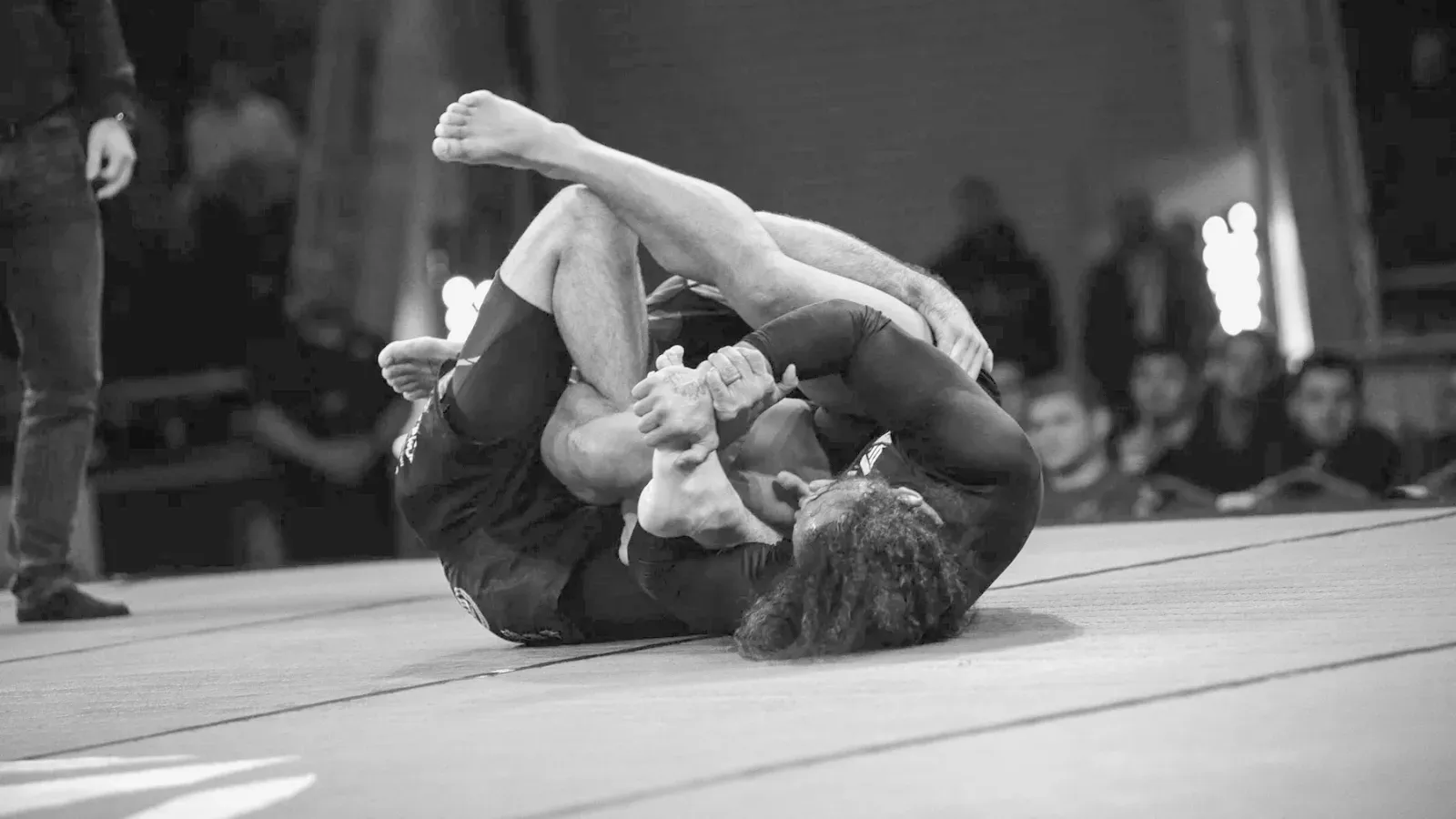
Richard Presley · Openverse (wikimedia) · Creative Commons Attribution 2.0
What is a Brazilian Jiu Jitsu fundamentals class?
A Brazilian Jiu Jitsu fundamentals class is a class aimed at giving you the usable basics of Brazilian Jiu Jitsu: how to control and escape common ground positions, and how to apply a small set of high-utility submissions safely. In most gyms, it is the on-ramp for people who have not trained before, or for people who are rebuilding their base after time away.
Brazilian Jiu Jitsu itself is a self-defence system, martial art, and combat sport based on grappling, ground fighting, and submission holds. In practical terms, that means you spend a lot of time learning to bring a fight to the floor, achieve a dominant position, and finish with a submission such as a joint lock or chokehold.
A fundamentals class typically narrows that huge topic down to repeatable essentials you can practise against resistance without being overwhelmed. You will usually see three training modes inside it:
- Technique instruction: a coach demonstrates a position and a small number of linked actions (for example, an escape and the immediate follow-up).
- Drilling: you repeat the movement with a partner so you can build timing and body mechanics.
- Controlled sparring: you test the basics against a partner who is trying to stop you, often starting from a specific position.
Sparring (often called rolling) and live drilling are a significant part of Brazilian Jiu Jitsu training in general, so a fundamentals class is not necessarily “non-sparring”; it is usually just more structured and scaled to beginners. If you want a clearer sense of why gyms separate repetition from open sparring, see Drilling vs rolling — why you need both.
When a fundamentals class applies, and when it does not
A fundamentals class applies whenever your main constraint is that you do not yet have reliable, safe reactions in the common situations of Brazilian Jiu Jitsu. That is not only “brand new white belt”. It can also be true if you have trained before but you are returning after a long break, moving to a new gym whose training style is different, or changing from gi to no-gi (or the other way round) and finding that grips, pacing, and control points feel unfamiliar.
It also applies when your priority is to build a base that works under pressure. Brazilian Jiu Jitsu is primarily ground-based and often begins with taking an opponent down, gaining a dominant position, and then using techniques to force submission. A fundamentals class is where you start to recognise those dominant positions, learn what “good” control feels like, and learn how not to panic when you are underneath.
A fundamentals class does not apply as your main training diet once the basics no longer limit you. If you can consistently keep yourself safe, escape standard pins, and execute a small set of attacks against resisting partners, you may get more value from sessions that cover advanced variations, specialised games, or competition-specific strategy.
It also does not apply if you are looking for a fixed, universal syllabus that guarantees a particular belt outcome. There is no set standard list of techniques or belt requirements across Brazilian Jiu Jitsu; schools rank students informally according to actual fighting proficiency. That is one reason “fundamentals” can look different from gym to gym: the label is common, but the exact content is not standardised.
If your question is really about the point where you move beyond beginner training, How long does it take to get a blue belt in Brazilian Jiu Jitsu? gives the next piece of context without promising a universal checklist.
What people get wrong about a Brazilian Jiu Jitsu fundamentals class
They assume “fundamentals” is the same everywhere
Many people talk about fundamentals as if every gym teaches the same list in the same order. Brazilian Jiu Jitsu does not have a set standard list of techniques or belt requirements across the sport, and schools rank students informally. So a fundamentals class is better understood as a level of class (beginner-focused, safety-led, and built around core positions) rather than a single universal curriculum.
The practical takeaway is simple: judge a fundamentals class by whether it helps you function in the main situations you repeatedly hit in sparring, not by whether it matches what you saw online.
They think it is only for complete beginners
Fundamentals training is most obviously useful at the start, but it is not exclusive to brand new students. If you are changing context, you can be “new” again in relevant ways. For example, Brazilian Jiu Jitsu can be practised in a gi or without it (no-gi). Even when the underlying grappling mechanics remain, the way you control, break posture, and stabilise positions can feel different when grips change.
They treat it as “easy class” and neglect safety basics
Because fundamentals tends to be structured and slower paced, some people assume it is automatically safe. It is only safe if you and your partner make it safe.
Brazilian Jiu Jitsu uses submissions including joint locks and chokeholds. In a fundamentals class, you should treat taps and releases as the core safety skill, not an afterthought. Apply pressure gradually, stop immediately when your partner taps, and avoid yanking movements while you are still learning alignment.
They think it is only about submissions
A lot of beginners arrive wanting finishes straight away, and leave thinking the class was “mostly escapes”. That is not a flaw. Brazilian Jiu Jitsu is built around getting to dominant positions and then using submissions. If you cannot reliably escape and re-guard, you cannot spend meaningful time learning to attack, because you will be stuck defending.
A well-run fundamentals class usually gives you enough attack to be dangerous, but it prioritises the positions that let you survive long enough to use it.
They confuse “fundamentals” with older jujutsu training ideas
Because the word “jiu-jitsu” is used across different traditions, some people expect a fundamentals class in Brazilian Jiu Jitsu to look like a traditional jujutsu class.
Jujutsu is a Japanese martial art system with many variations, and some styles are correctly classified as Edo jūjutsu, generally designed to deal with opponents not wearing armour and using grips and holds on clothing. Brazilian Jiu Jitsu is a distinct grappling-focused art and combat sport in its modern form, with a strong emphasis on ground fighting and live practice.
That does not mean one is “better”; it means a Brazilian Jiu Jitsu fundamentals class is usually organised around the recurring problems you face in live grappling, not around formal set routines.
Related to that, kata in jujutsu were intended to be practised by students of all grades but are now mostly practised formally as complete set routines for performance, kata competition and grading rather than as individual self-defence techniques in class. Brazilian Jiu Jitsu fundamentals classes are typically not kata-based, because Brazilian Jiu Jitsu training places significant weight on sparring and live drilling.
How to use a fundamentals class well
You will get more from fundamentals if you treat it as skill-building rather than information.
First, use drilling to make your movement consistent. Do not chase speed; chase correct shape and control. If you are unsure what “control” means in a position, ask your coach what your job is (for example, stopping your partner turning in, sitting up, or re-guarding).
Second, use controlled sparring to pressure-test only what you were shown. If the round starts from a specific position, commit to solving that position rather than trying to win by scrambling somewhere else.
Third, keep notes in terms of problems, not moves: “I keep getting flattened when I try to sit up from bottom” is more actionable than a list of technique names.
If you also train outside the gym, keep it realistic. Practising movements at home can help with coordination, but it does not replace partner feedback and resistance. This is covered in How to learn Brazilian Jiu Jitsu at home.
If you want guidance on what to prioritise while you are still in fundamentals, What to focus on as a white belt fits naturally alongside your classes.
A quick note on rulesets, competition, and why “fundamentals” is not a competition category
Some people assume “fundamentals” is a formal competition division. Competition divisions are typically set by an organiser’s rules, not by what your gym calls its beginner class.
Weight classes for Brazilian Jiu Jitsu competitions can differ depending on the organisation promoting the event. The IBJJF weight classes are the most commonly used; under IBJJF rules, weight classes vary by age, sex, and competition type (gi vs no-gi). None of that is the same thing as a “fundamentals class”, but it does explain why gyms often teach fundamentals in a way that works across contexts rather than narrowly for one event.
If you are training fundamentals with an eye on improving your stand-up, it can help to add a separate focus on takedowns and clinch work. How to improve wrestling for Brazilian Jiu Jitsu is a sensible next read once the basic ground positions feel less overwhelming.
What you should be able to say after a good fundamentals block
After a solid run of fundamentals classes, you should be able to describe what you are trying to do in sparring in plain terms: get to the ground safely, recognise where you are, improve your position, and finish with controlled submissions when they are available. You do not need a huge catalogue. You need a small set you can execute under pressure, because Brazilian Jiu Jitsu rewards the ability to apply techniques against resistance, not just recognise them in theory.
Concretely, that usually means the hip escape itself and the technical stand up as movements, the bridge and roll as an escape, and one or two submissions such as the straight armbar and the americana.