
Guide
Drilling vs rolling — why you need both
They do different jobs and are not substitutes. Most training plateaus come from quietly neglecting one of them for months.
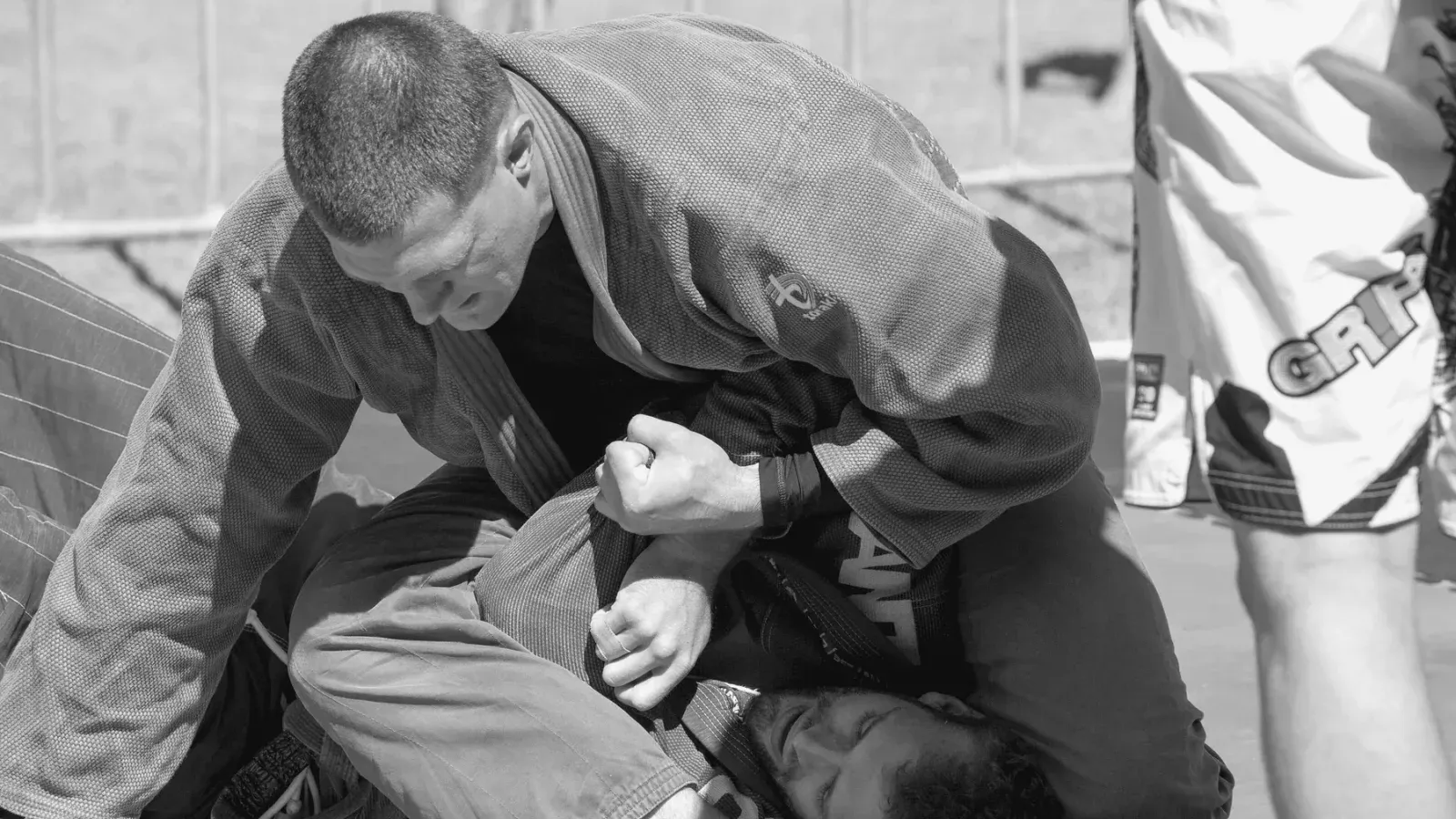
Drilling builds the movement; rolling tells you whether you can use it. They are not two intensities of the same activity, and neglecting either produces a specific, recognisable kind of stuck.
Drilling is practising with a cooperative partner. Rolling is live sparring against a resisting one.
What each is actually for
Drilling builds the movement. Slow, repeated, correct repetitions with a partner who is not fighting you. The point is to get the mechanics right often enough that they stop requiring conscious thought — which is the only way they will ever be available in a live round, where there is no time to think. A movement you have to remember is a movement you do not have.
Rolling proves you can use it. Against resistance, at speed, from a position you did not choose, against somebody actively preventing it. Rolling does not teach the movement; it tells you whether the movement is really yours yet, and what is missing.
Put crudely: drilling is where you acquire options, rolling is where you find out which of them exist under pressure.
The two ways this goes wrong
All rolling, no drilling. Common in people who find drilling boring — which it can be. The result is a plateau: you get better at using the small set of things you already do and stop adding anything. Rolling is a bad place to learn something new, because the pace does not allow the attention learning needs. People in this pattern often feel like they have not improved in a year, and they are usually right. It is the most common plateau in the sport.
All drilling, no rolling. Less common in a healthy academy, but it happens — especially in people who dislike losing. The result is a large catalogue of movements that fall apart under resistance. You can execute the technique beautifully with a compliant partner and cannot land it on anybody who does not want you to.
Both failures feel like effort. Neither produces much.
Drilling badly is the more common problem
Most people who drill are drilling in a way that does not do the job. The failure modes are consistent enough to list.
- Going too fast. Speed hides errors. If you cannot do it slowly and correctly, doing it quickly is practising a mistake at higher volume.
- Not resetting properly. Half the value is in the entry, and hurrying back to the start position skips the part that actually needs the repetition.
- Chatting between reps. Pleasant, and it turns twenty reps into six.
- A partner who is secretly resisting. Drilling is cooperative. A partner who quietly makes it hard is not helping you learn the movement; they are making you learn a worse version of it. This is worth saying out loud to them, politely.
- Only drilling what you are already good at. The same instinct that makes people avoid bad positions in rolling, applied where it costs even more.
- Drilling in isolation. A movement practised only from a perfect start rarely appears in a round, because rounds do not offer perfect starts.
Fixing these does more for most people than adding a session per week.
Positional sparring is the missing middle
The step between the two is worth naming, because it does something neither of the others does.
Positional sparring starts both people in one specific position — one trying to hold it, one trying to escape — and resets when it resolves. It has the resistance of rolling and the focus of drilling, and it concentrates repetitions on exactly the position you are trying to fix.
If one position keeps costing you rounds, positional sparring will fix it faster than either drilling or free rolling. Free rolling might put you there twice in an hour. Positional sparring puts you there fifteen times. It is the standard answer to a guard that keeps getting passed, which is the position most beginners lose most often.
Most academies run it. If yours does not, it is the easiest thing in the world to arrange with a willing partner before or after class.
How to split them
There is no correct ratio, and any specific number would be invented. Three things are more useful than a ratio:
- A normal class already splits them for you. The structure — technique, drilling, rolling — is doing this job. The imbalance usually creeps in around the edges: open mats that are entirely rolling, or a habit of drifting through the drilling portion.
- The useful question is which one you are avoiding. The honest answer is almost always whichever you are worse at, which is also the one that would help most.
- Match the tool to the problem. Something you cannot do at all is a drilling problem. Something you can do in drilling but never land is a positional sparring problem. Something you land but at the wrong moment is a rolling problem.
That third point is the practical one. Most people apply more volume when they should be changing the mode.
A worked example
Say you keep getting your guard passed in the same way.
- Rolling more gives you two or three chances a night to solve it under full resistance, badly, while tired, having already lost the position.
- Drilling the retention movement gives you a hundred clean repetitions of the mechanic, none of them against somebody actually trying to pass.
- Positional sparring from that exact position gives you fifteen realistic attempts an hour, with a reset each time.
All three help. Only one of them is aimed at the problem, and it is the one most people do least.
Movements like the hip escape movement and the technical stand up sit at the far drilling end of this: there is no live version of them to practise.
Noticing the imbalance
The difficulty is that neglecting one of these does not feel like neglect. It feels like training, because it is.
You will not remember accurately how much of last month went into each, or which positions you avoided. Memory of training is dominated by the most recent and most emotional moments, which is much of the argument for keeping some record of what you actually did rather than trusting an impression of the week — and it is the same reason measuring progress needs more than a sense of how the evening went.