
Guide
Why your guard keeps getting passed
Guard retention is mostly decided before the pass starts. Here is what is actually going wrong and the order to fix it in.

Most passed guards are lost before the pass begins. Not to a better technique — to three habits: lying flat, letting the other person get past your knee line before you react, and treating your legs as the whole guard when they are only part of it.
If you fix nothing else, fix this: stop waiting. Beginners react when the pass is happening. By then the person is already past the point where your legs can help, and you are trying to solve a problem that was solvable four seconds ago.
The three things actually going wrong
You are flat on your back
Flat is the worst possible orientation. Your hips cannot move, your legs cannot re-enter, and everything a passer wants to do becomes easier at once.
Being on your side is the default position of good guard players, and it is not a detail — it changes what your legs can reach, how much of their weight you carry, and whether you can move your hips at all. If you take one physical change from this page, it is: get onto a hip and stay there.
You have legs but no connection
A guard is not “my legs are somewhere near you”. It is a set of connections — grips, hooks, frames and knees — that manage the distance between you.
The specific failure is legs crossed behind their back with no grips at all. It feels secure and it does nothing: they posture up, break the position at their leisure, and you have spent energy holding a shape rather than controlling a person.
You are reacting to the pass instead of the setup
A pass has a beginning: they clear a leg, get past your knee line, flatten your hips, or establish a cross-face and an underhook. By the time you feel their chest on yours, the pass is finished and what remains is an escape from side control — a different, much harder problem.
Guard retention is largely the skill of noticing the first of those and moving then.
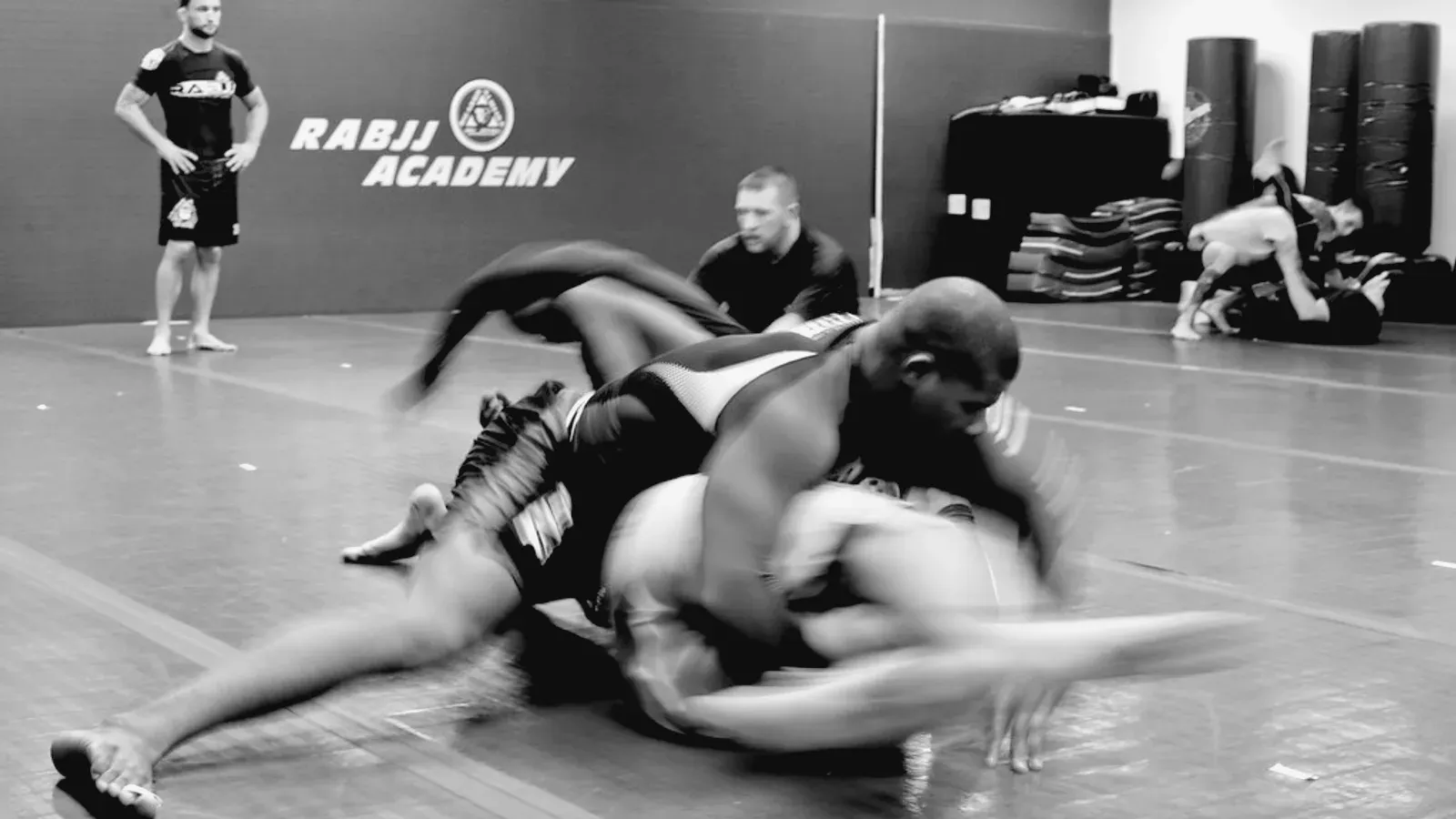
It also helps to know which pass you are actually losing to. The knee cut, the torreando, the double under and the body lock succeed for different reasons and are stopped at different moments.
What to work on, in order
1. Get to your side and stay there. In every round, in every guard. It is uncomfortable at first because it feels less stable than being square, and it is the single highest-return change most white belts can make.
2. Frames before you need them. A frame is a structure — forearm or shin, elbow connected to your own body — placed against their hip, shoulder or neck to hold space. Frames are what buy you the time to move your hips. Put them in early; a frame built after someone’s weight has arrived is a strength contest you will lose, particularly against a bigger partner.
3. Face them. Whatever else is happening, keep your hips and chest pointed at your partner. If they circle, you turn. Most passing is an attempt to get to an angle where you cannot see them, and a great deal of retention is simply refusing to be turned away.
4. Recover legs early. Once one leg is cleared, getting it back in front of them is achievable. After both are cleared and their chest is on yours, it is not. Fight for the first leg.
5. Accept a worse guard rather than lose guard. Going from closed guard to half guard to a deep, awkward half guard is not failure. It is retention working. Beginners often refuse the downgrade and end up in side control instead.
Most of that list is one movement done properly: shrimping early and with frames rather than late and with arms.
Why it may not be the guard at all
People with a passed guard usually go looking for a new guard. That is almost always the wrong diagnosis at white and blue belt.
The guard families differ in what they threaten and how they hold distance, but every one of them fails if you are flat, disconnected and late. A new guard adds a fourth problem to the three you already have.
The exception worth taking seriously: if your guard depends on grips that do not exist in the session you are training — a gi guard being used in no-gi, say — then it really is the guard, and the difference between the two is larger than most beginners expect.
How to actually practise it
Guard retention is one of the hardest things to improve through ordinary rolling, because in a full round you get perhaps three or four chances and you are busy.
Ask for positional rounds. Start with your partner in your guard, on their knees, ready to pass. When they pass, reset. Five minutes of that is worth an hour of full rounds for this specific skill, and it is the clearest case for why drilling and rolling do different jobs.
Set the difficulty deliberately. Ask a partner to pass at fifty per cent so you get to react in time, then raise it. Retention practised only at full speed teaches panic.
Roll with your legs handicapped occasionally — closed guard only, or no grips — so you find out which part you are relying on.
Open mat is where all of this fits, because nobody is running a class and you can spend forty minutes on one position.
Common questions
Should I just use closed guard until I am better? It is a reasonable base and it will not solve this. Closed guard gets opened and then you are in exactly the same situation, one step later.
They are much stronger and just muscle through. What do I do? Frame instead of push, get to your side, and move earlier. A strength gap makes late reactions much more expensive, which is why smaller grapplers tend to develop the best retention.
How long does guard retention take to improve? Months, and it improves in a way you can feel before you can see: the pass takes longer, then it takes two attempts, then it stops working. Those are exactly the sort of changes belts are too coarse to record.
Is it normal to have my guard passed constantly at white belt? Entirely. It is the position where the gap in experience shows most clearly, and the one that improves most obviously with deliberate practice.