
Submissions

Americana
Usually the first submission a beginner is shown from top control, and the one that teaches what a shoulder lock actually is.
The americana is where most people learn that a submission is a lever rather than a squeeze. It is taught early because the position it comes from — side control or mount — is one a beginner can actually hold, and because the mechanics are visible: you can see the arm, see the angle, and see what goes wrong.
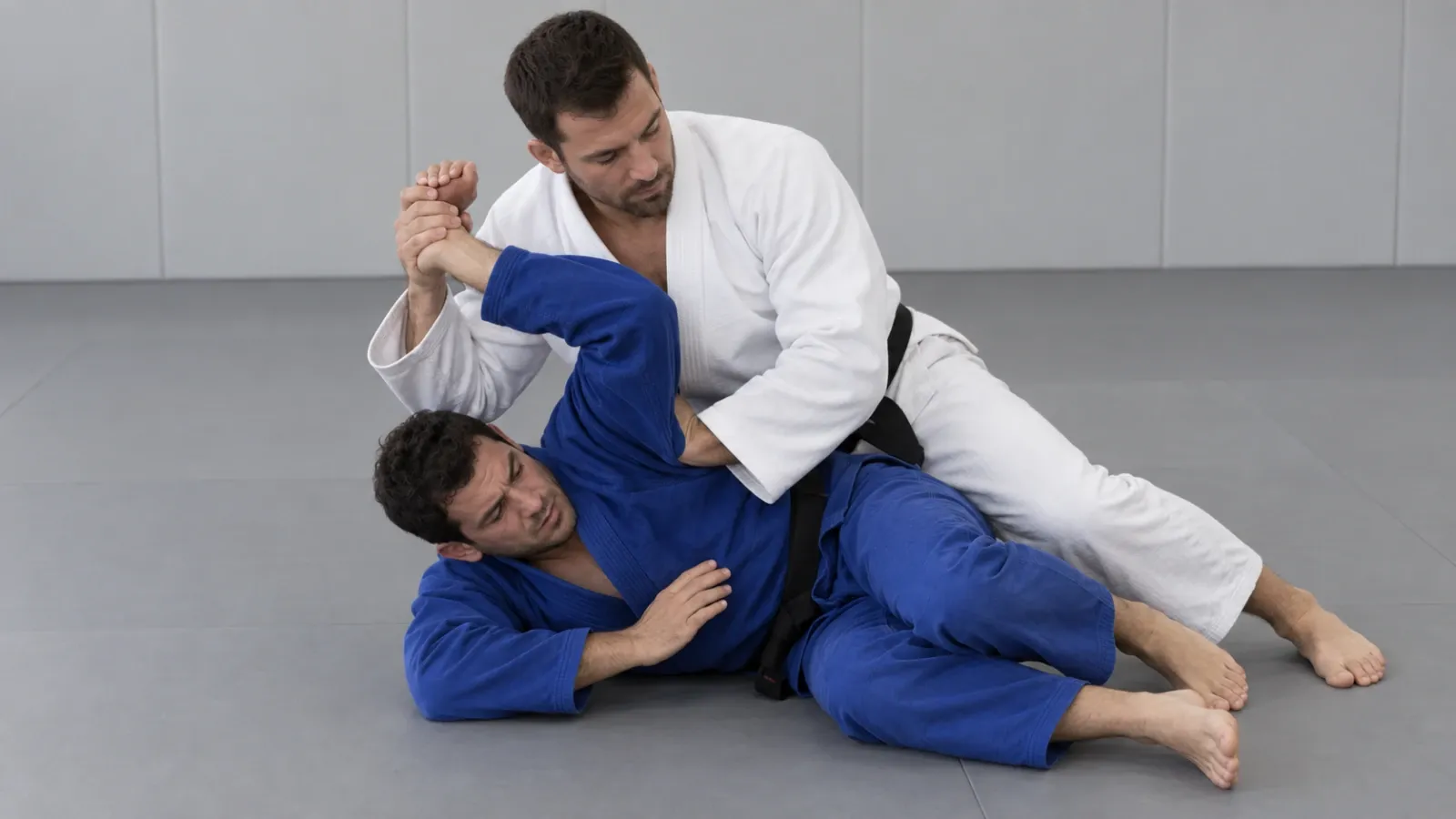
It is a shoulder lock, applied with a figure-four grip, rotating the arm externally — the hand travels towards the opponent’s feet while the elbow stays where it is. In judo it is ude-garami.
Where it comes from
Two positions, both on top: side control and mount. This model records those and no others, and unlike the kimura the americana does not travel much. It is a top-control attack and it wants the opponent flat on their back.
The invitation is specific. Their arm is bent at roughly ninety degrees with the hand up near their own head — usually because they are pushing on your neck or your shoulder, or because they have posted a hand to frame. A bent arm with the hand down by their hips is a kimura, not this.
The mechanics
Pin the elbow to the mat. This is the part beginners skip and the reason their americana stops working the moment somebody resists. If the elbow can lift, there is no lock — the whole submission depends on the elbow being a fixed point that the hand rotates around. Trap it with your hand, your forearm, your bodyweight, or all three.
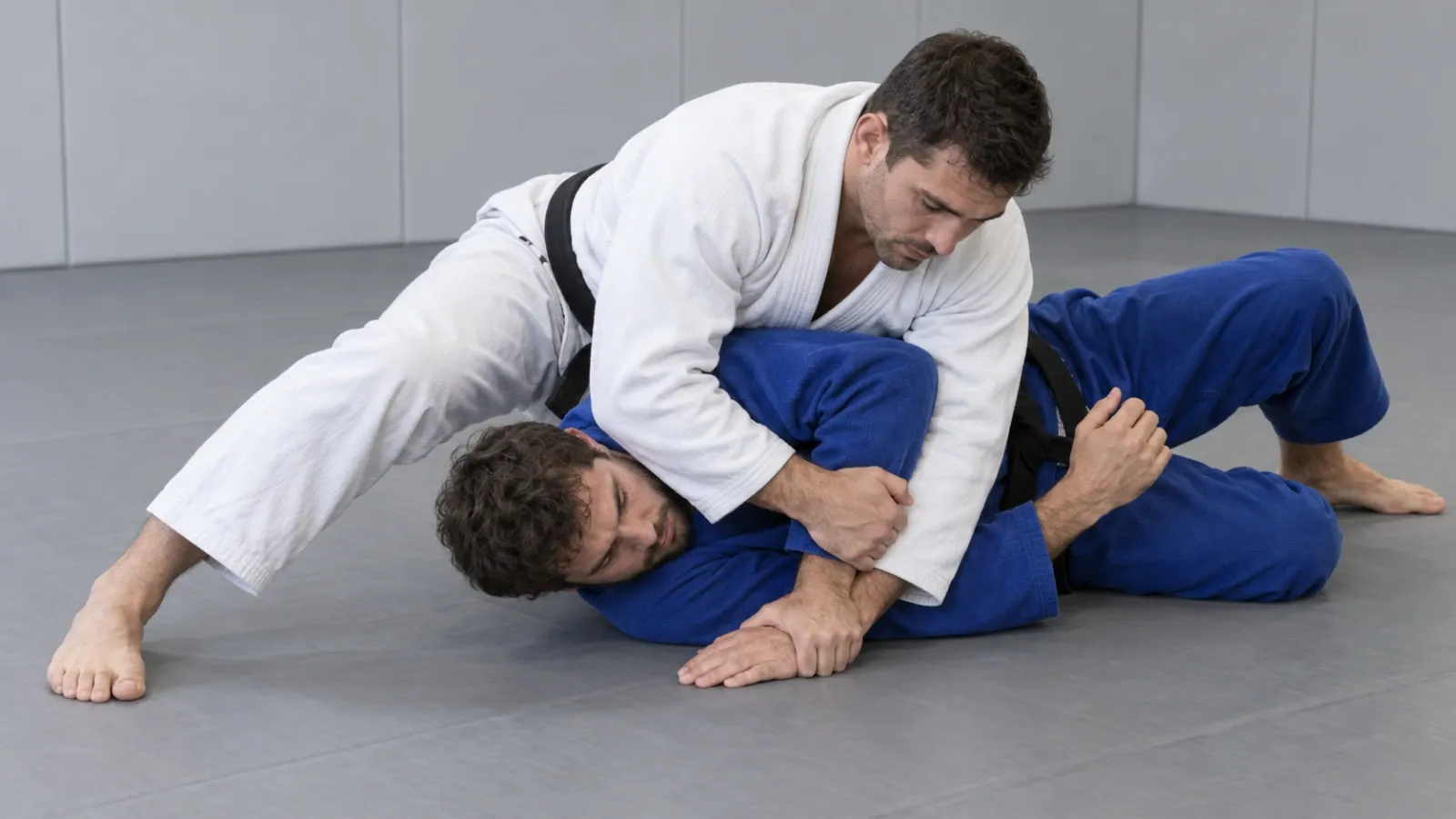
Take the figure four. Your near hand grips their wrist and pins it towards the mat. Your other arm threads under their upper arm and grips your own wrist. Now the loop is closed and you have two arms against one.
Drag the hand down towards their hip. This is the most commonly mistaught detail. The instinct is to lever the wrist straight up off the mat, like turning a doorknob. That direction fights the strongest part of their shoulder and gives them a straightening escape.
Sliding their elbow down towards their hip first, keeping the arm bent, changes the angle so the rotation loads the shoulder capsule rather than the arm’s own strength. Then the lift finishes it.
Keep your own weight on them. An americana attempted while your chest lifts off them is an invitation to bridge. The pin has to survive the attack, not be traded for it.
Why it stops working
The americana has a reputation for being a white-belt technique. That is not quite fair — it is a technique that stops working against people who know one specific defence, which is a different thing.
The failures, in the order you will meet them:
- The elbow is not pinned. They lift the elbow, straighten the arm, and the lock is gone.
- You lever straight up. Strongest direction for them, weakest for you.
- They straighten the arm. A straight arm cannot be rotated the way this lock needs. The usual answers are to bend it back by attacking the wrist, or to abandon and switch.
- They grab their own belt or gi. Same idea — it stops the arm being isolated. Break the grip first; attacking the fingers of the gripping hand is the standard method, and it is faster than fighting the whole arm.
- They turn into you. Turning towards the trapped arm removes the angle. This is the defence that makes the americana disappear at blue belt, and the reason experienced players use it as a threat that opens something else rather than as a primary finish.
What it opens
A defended americana is rarely wasted. The most useful relationship is with the kimura: they are the same figure-four grip on the same shoulder, rotated in opposite directions, and this library records them as interchangeable for exactly that reason.
If they straighten the arm to defend the americana, the arm is now available for a straight armlock. If they turn into you to kill the angle, they have given up the flat-on-their-back posture that was holding them in side control, and the pass to mount or the transition to north–south is usually there.
Learning the pair as one grip with two directions — plus “they straightened it, so take the armbar” — converts a technique with a short shelf life into a small system that keeps working.
Drilling it
Drill the elbow pin on its own. Have a partner lie flat with one arm bent and simply try to lift the elbow while you hold it down with grip and weight; nothing else about the technique matters if that fails.
When the arm they are pushing with ends up across their own face instead, the arm triangle is the other thing that reaction offers.
Then drill the recognition. The single most useful americana skill is spotting the bent arm with the hand up before they know they have offered it — most of the time it appears because they pushed on you, which means the submission arrives as a response rather than as a plan.
That kind of recognition is not something a cooperative repetition can teach you, which is the practical case for giving drilling and rolling different jobs.
Safety
This is a shoulder lock and the shoulder has less travel available than people assume, particularly in external rotation. Go slowly, apply the rotation gradually rather than snapping it, and release immediately on the tap.
Be especially careful applying it with bodyweight assistance — leaning your chest into the lever adds a great deal of force very quickly and is a common cause of training-room shoulder injuries. If you are defending, tap on shoulder pressure and do not try to power out of it; the shoulder tends to give before your strength does.
Shoulders give very little warning before they reach their limit, which makes this one of the submissions where tapping before it hurts is the whole safety margin.
Gi and no-gi
The lock is the same, because the figure four grips your own wrist rather than any clothing. The gi makes the setup easier in two ways: their sleeve gives you something to hold while you take the wrist, and the friction of the jacket makes side control harder to escape, so you have longer to work.
In no-gi the arm slips more, the defence of simply straightening it is easier, and the americana is correspondingly less common — it appears more as a threat that opens the kimura than as a finish in its own right.
A technique drifting in and out of usefulness like this is a good small example of what actually changes between gi and no-gi.
Common questions
What is the difference between an americana and a kimura? Same figure-four grip, opposite rotation. The americana turns the hand towards their feet with the elbow pinned; the kimura turns it behind their back. Which is available depends on where their elbow is already pointing.
Where can you do an americana from? Side control and mount — top positions, against an opponent who is reasonably flat.
Why does my americana not finish? Most often because you are levering the wrist straight up. Drag the elbow down towards their hip first, keeping the arm bent, then lift.
What do I do when they straighten their arm? Stop attacking the shoulder. A straight arm is an armbar, not an americana — switch rather than force.
Is the americana just a beginner technique? It is taught first because the position is achievable early. It stops being a reliable finish against people who know to turn in and straighten, which is why experienced players use it mainly as a threat that opens the kimura, the armbar or the pass to mount.
How do you escape an americana? Keep the elbow off the mat if you can, straighten the arm, grab your own belt or gi with the trapped hand, and turn towards the trapped side to kill the angle.