
Guide
Americana from side control
An Americana from side control is a shoulder lock (a lateral keylock) applied from a top pin, using control of the head and/or arms to stop the opponent turning and freeing the shoulder. It fails most often because people chase the finish before they have stable side control and clear arm control.
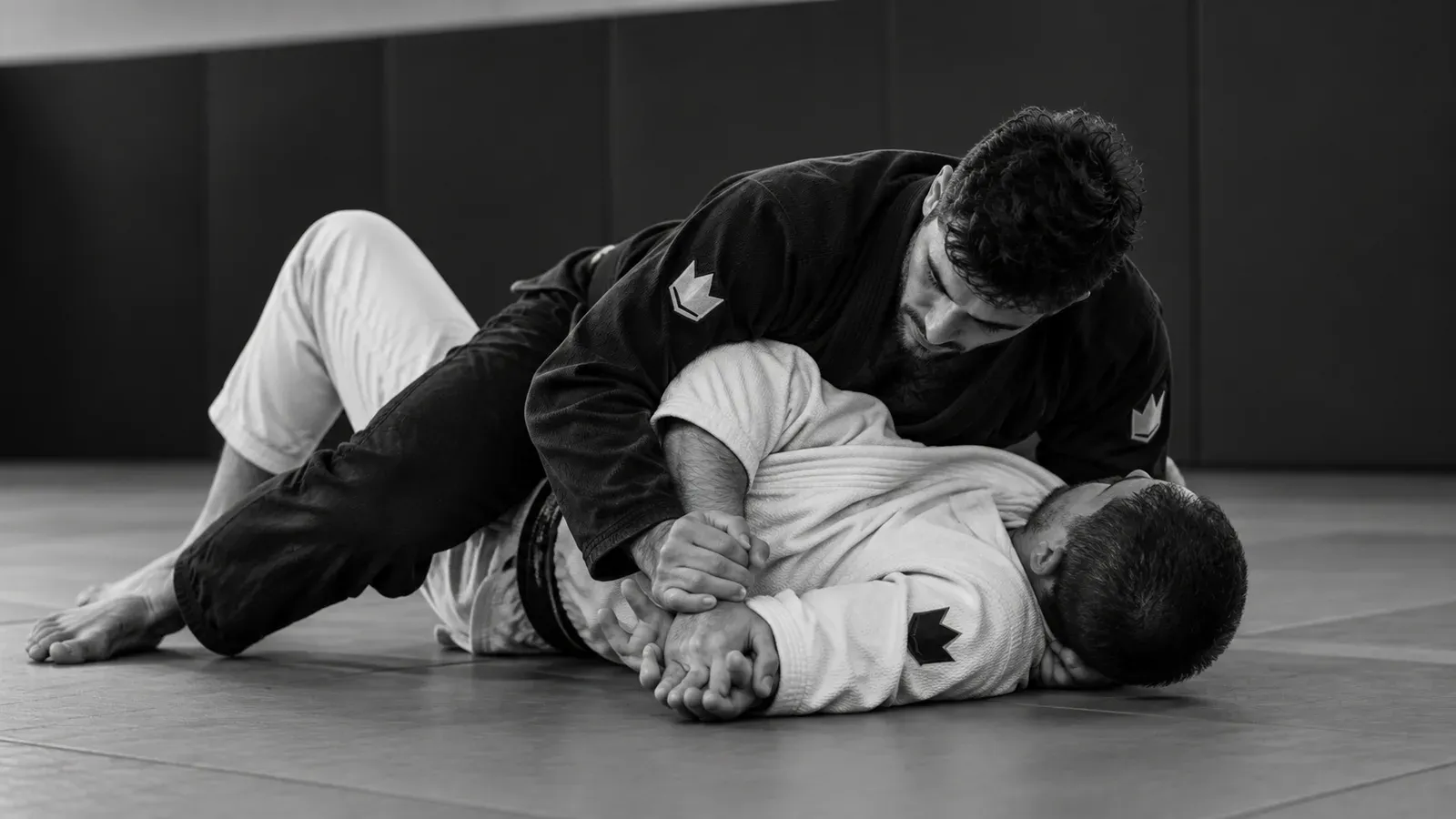
What “Americana from side control” means in Brazilian Jiu Jitsu
In Brazilian Jiu Jitsu, an Americana is a joint lock listed as “Americana (Ude garami)”, and it is also described more generally as a lateral keylock. “From side control” means you are applying that shoulder lock while on top in a side control pin rather than from guard, mount, or another top pin.
A useful detail for clarity is that side control is not one single shape. There are many variants of the side control position, including kesa gatame and reverse side control (switch-base). An Americana can be attempted from those side-control variants in the sense that you are still working from a top pin, but whether it is realistically available depends on whether that variant lets you keep the opponent’s upper body and arm controlled.
When Americana from side control applies, and when it does not
Americana from side control applies when you can do two things at the same time:
- keep a pin that subdues the opponent’s movement on bottom, and
- control the opponent’s head and/or arms well enough that the shoulder you are attacking cannot easily turn, slip free, or be shielded.
In top control positions, pressure is commonly applied by bringing your hips downwards towards the ground to generate what is often referred to as dead weight. The Americana is a submission hold, so the expectation in training is that pressure is increased in a controlled manner and released if the opponent cannot escape and signals defeat by tapping.
It does not apply when you cannot keep those conditions. In practical terms, that includes situations where:
- you are not actually in side control yet (for example, the opponent still has you in half guard, where one of your legs is controlled and they are preventing you from settling into side control or mount),
- you cannot keep control of the head and/or arms, so the opponent can turn, recover a guard, or simply pull the arm free, or
- the only way you can create the lock is by forcing a sudden or uncontrolled twist on the shoulder, which is not compatible with safe training and can lead to injury.
Side control versus knee-on-belly (why it matters for “from side control”)
Knee-on-belly (knee ride) is a modified side pin that is distinctly separated from the side control position. It is characterised primarily by controlling the opponent with one leg out for base and balance and the other leg positioned across the opponent’s torso, pinning them to the ground, while simultaneously controlling the upper body by wrapping the arms around the chest or neck.
That distinction matters because people often label any top cross-body pressure as “side control” and then wonder why the Americana feels unstable. Knee-on-belly is a mobile pin rather than a static pin, and is considered more dominant in many grappling formats; it is also worth additional points in some rulesets because it provides a greater striking platform and is closer to mount. However, it is not the same position as side control, and your balance and arm control problems will be different if you are actually on knee-on-belly when you think you are finishing from side control.
Side control versus north-south (a common transition point)
North-south occurs when you are lying on top of your opponent with your weight over their chest and head area, with your legs pointing away from them. Control is established by controlling the opponent’s head and/or arms, and, as with most top controlling positions, pressure is applied by bringing the hips down towards the ground (dead weight).
If your side control Americana attempt keeps turning into a scramble, it is often because you have not kept head-and-arm control as the opponent turns. Whether you end up in north-south or back in side control, the submission is only truly “on” when your control of the head and/or arms prevents the shoulder line from rotating out.
What people get wrong about Americana from side control
They treat the Americana as a move, not a pin plus a submission
A submission hold is meant to force a submission through pain or fear of injury, and, when incorrectly used, joint locks may cause serious harm. In training, you should apply pressure in a controlled manner and release on a tap.
The common mistake is to grab the arm and try to finish before the opponent is subdued by a pin. Side control is a pinning situation first: if your opponent can freely move their shoulders and head, they can often relieve the pressure on the shoulder or simply take their arm back.
They do not understand that “side control” has variants, and not all of them give the same arm access
There are many variants of side control, including kesa gatame and reverse side control (switch-base). If you pick a side-control variant that does not give you reliable control of the opponent’s head and/or arms, the Americana will feel like it is constantly slipping.
In other words, it is not enough to be broadly “on top beside them”. The Americana depends on controlling the shoulder line, and different side-control variants offer different ways to do that.
They confuse a ruleset or training format issue with a technique issue
Brazilian Jiu Jitsu can be practised in a gi or without it (no-gi), and it also has its own subset of rules for no-gi practice and competition. In some formats, light strikes may be permitted, such as open palm strikes in Combat jiu-jitsu.
That matters because an Americana from side control is not only about the mechanics of a shoulder lock; it is also about whether you can hold the top pin without giving the opponent space to escape, stand, or strike. Even if the joint lock itself is legal, the way you hold side control and control the head and/or arms can change depending on whether you are training gi grips or a closer-fitting no-gi context. If you want a clear overview of how those contexts differ, see Gi vs no-gi — what actually changes.
They chase the arm while the opponent is still effectively “guarding” with their legs
In guard, the bottom practitioner is on their back controlling an opponent with their legs, and this position allows a wide variety of counter-attacks from bottom, including submissions and sweeps. Half guard specifically means one of the top grappler’s legs is controlled by the bottom grappler’s legs, preventing the top opponent from passing into side control or full mount positions.
A frequent error is trying to finish an Americana “from side control” while the opponent still has enough leg control (often half guard) that you cannot settle your weight, cannot maintain a pin, and cannot reliably control the head and/or arms. At that point, you are not failing at the Americana; you are failing at getting to side control.
Safety and training priorities when you do pursue it
An Americana is a joint lock and, like any submission hold, can injure the shoulder if you apply it abruptly or ignore a tap. In normal Brazilian Jiu Jitsu training, the responsible approach is to increase pressure in a controlled manner and release when your partner taps.
If you cannot keep the opponent pinned and their head and/or arms controlled, the safer choice is usually to return to maintaining top control rather than wrenching on the shoulder from a losing position.