
Guide
When to tap in Brazilian Jiu Jitsu
Tapping is how a sport built on breaking joints and cutting off blood stays safe to do twice a week. Here is when to do it, how, and why waiting is the mistake.

Tap as soon as you know the submission is on — not when it starts to hurt, and never to find out whether you can survive it. The tap is not a scoreboard. It is the mechanism that lets two people apply joint locks and strangles to each other twice a week and still go to work on Monday.
If you take one rule from this page: tap to the position, not to the pain. Some of the most dangerous submissions in grappling give you almost no warning at all.
What tapping actually is
Two or three clear taps with your hand on your partner — their body, not the mat, because they can feel that and may not hear it. If your hands are trapped, say “tap” out loud; verbal taps are universally accepted. If you can neither move an arm nor speak, tapping with a foot on the mat is recognised in most rooms.
Your partner must release immediately. That is not politeness; it is the fundamental agreement of the sport, and a training partner who holds a submission after a tap is somebody to tell your coach about.
You can also tap before anything is applied — to a scramble that has gone somewhere bad, to a neck that is already sore, to a leg entanglement you do not understand. Nobody will think anything of it.
When to tap
- A joint lock has reached the end of your range. The elbow, shoulder or knee is straight or twisted as far as it goes and pressure is still increasing. There is no reserve past that point; there is a ligament.
- A strangle is on. If your vision narrows, greys or starts to tunnel, you are already late. Blood chokes work in seconds and the transition from “uncomfortable” to unconscious is not gradual.
- You do not understand what is happening to your leg. More on this below.
- Something feels wrong — a sharp or electrical sensation, a pop, a joint moving in a direction it does not have. Tap and stop the round.
- You are stuck under someone and cannot breathe. Being crushed is not a submission, and you are still allowed to end it.
- Cramp, panic, a rib you landed on. Your own body is a valid reason. You do not owe anybody an explanation.
The submissions that do not warn you
This is the part beginners most need to hear, and it is why “I’ll tap when it hurts” is a bad rule rather than a brave one.
Heel hooks and other rotational leg attacks. A heel hook loads the knee by twisting, and the structures it damages — ligaments inside the joint — can tear before the pain arrives. People routinely report hearing or feeling something give while thinking they still had time. In most academies these are restricted to more experienced students for exactly this reason. If you feel your foot being isolated and rotated and you are not sure what is happening, tap immediately.
Neck cranks and anything that bends the spine. These are not blood chokes; they work on structures that do not tolerate being tested. Discomfort here is not information about how much time you have.
Shoulder locks. They can reach the end of the shoulder’s range with much less warning than an armbar gives, particularly if you are already turned away.
Against a straight armbar or a well-applied strangle, you generally get a clear signal. Against these, you may not. Tap to the position.
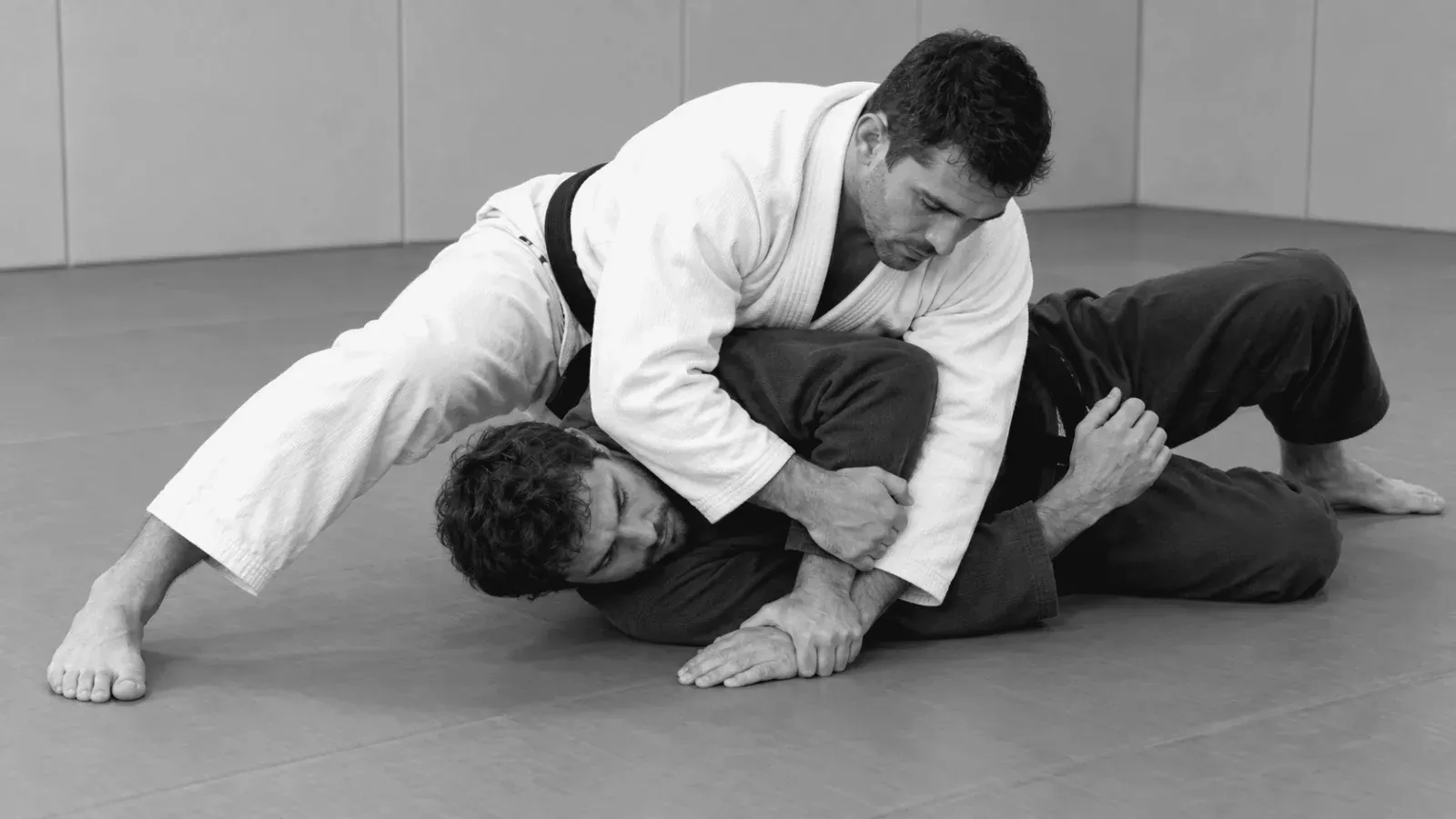
The clearest cases are blood chokes — the choke from the back above all — and shoulder locks such as the kimura, where the distance between tight and injured is very short. Even an armbar arrives faster than most beginners expect it to.
Why waiting is the expensive choice
The trade is bad in every direction. Tapping costs you a round that was already lost. Not tapping costs you six weeks of not training — and the people who quit rarely quit because of the injury itself, but because of the two months of not going that followed it.
There is also a learning cost that people miss. If you escape a locked-in armbar by tensing your arm and surviving, you have learned nothing except that you are strong today. Tapping ends the round and gives you the actual question: how did I get here, three positions ago?
The ego problem, honestly
Everyone taps. Black belts tap in training, constantly, and think nothing of it. The person counting your taps is you.
Two specific traps:
Refusing to tap to a lower belt. This is where injuries happen. It is also transparent to everybody watching.
Tapping only after a struggle, so it looks earned. This is the same behaviour dressed up, and it is the reason people finish a session with a sore elbow they will feel for a month.
If you find yourself deciding whether to tap based on who is applying it, that is a training-partner problem worth reading about — and it usually gets worse, not better, as you improve.
When you are the one applying it
The other half of the agreement:
- Apply submissions slowly. Especially joint locks, and especially against a beginner. Speed removes their chance to tap.
- Release the instant you feel a tap, and check they are all right.
- Do not crank on anything you have not been taught properly. A submission you half-know, applied fast, is how a training partner gets hurt.
- Say something if you see somebody in trouble. Coaches expect it.
And in live rolling, if a partner has clearly not seen the tap — it happens, hands get trapped — stop when they say the word or when a coach calls it.
Common questions
Is tapping losing? In a competition, yes, that is the result. In training, it is the round ending, which every round does.
How many times should I tap in a session? At white belt, a lot. It is the expected outcome and nobody is keeping count.
What if I tap and they keep going? Tap harder, say it out loud, and tell your coach afterwards. It is a serious problem and it is not yours to solve alone.
Should I tap to pressure alone? If you cannot breathe, yes. Being flattened and smothered is not a submission, but you are allowed to end it — and asking your partner to ease off is normal.