Brazilian Jiu Jitsu guides
Longer pieces about training rather than about a single technique — what to expect, what to measure, and how the parts of a Brazilian Jiu Jitsu game fit together. Written to stay true for years rather than to be current this month.
Is Brazilian Jiu Jitsu Training Dangerous?
Brazilian Jiu Jitsu training carries a genuine risk of injury because sparring is done at full speed and full strength, similar to competition. That risk is managed by tapping before injury and by rulesets that ban the most dangerous techniques, so how dangerous a session is depends heavily on the techniques involved and whether you train gi or no-gi.
Should You Wear a Groin Guard for Brazilian Jiu Jitsu?
Brazilian Jiu Jitsu is a grappling art of joint locks, chokeholds and submission holds, and no rule in the sport requires a groin guard. The requirement exists in striking sports such as mixed martial arts and Kyokushin karate, where kicks, knees and punches make groin protection compulsory even though groin strikes themselves are fouls.
What Brazilian Jiu Jitsu Submission Hurts the Most
The submissions that hurt most sharply are the ones that crush muscle against bone, such as the calf slicer and bicep slicer, while chokes usually cause no pain at all before they take effect. Which submissions you will actually meet also depends heavily on your belt, your ruleset, and whether you train gi or no-gi.
What Colour Is a Brazilian Jiu Jitsu Gi?
A Brazilian Jiu Jitsu gi is most commonly white, blue or black, with white being the traditional colour of the sport. The colour of the gi carries no meaning about the wearer's grade, which is shown by the belt instead.
What Muscles Does Brazilian Jiu Jitsu Work the Most?
Brazilian Jiu Jitsu is a ground-based grappling sport, and the positions that define it, guard, top control and north-south, place the heaviest and most repeated demand on the hips, core, shoulders, neck and grip. The pattern of common injuries in the sport, at the knee, shoulder and neck, points to the same areas as those under the greatest sustained load.
Arm bar from bottom side control
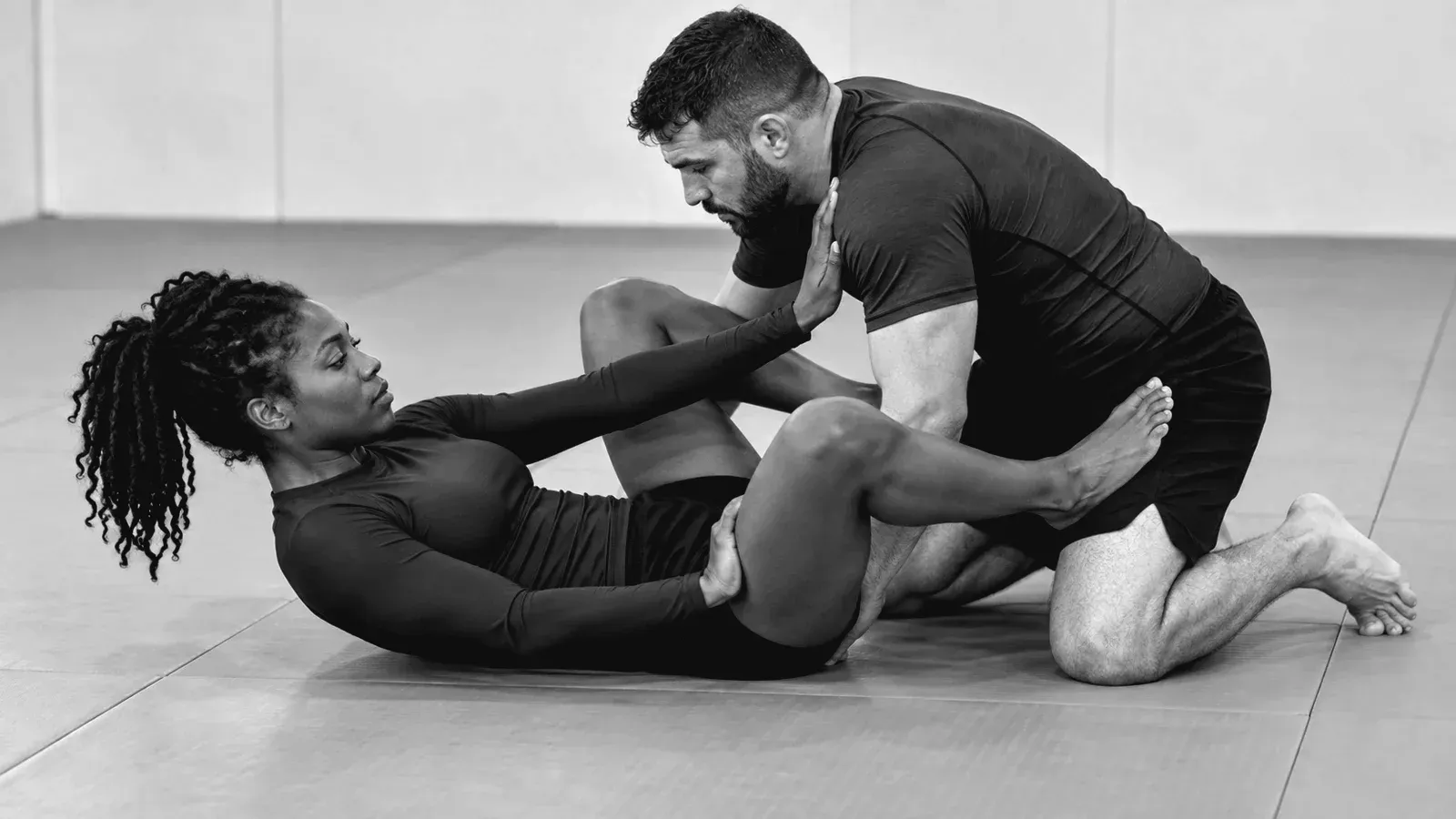
Bottom side control is a pinning position that leaves the person underneath without leg contact on the opponent, which is what an armbar needs to work. This guide explains why the submission has to wait until guard, half guard or mount is recovered, and the mistake of hunting for the arm while still pinned.
Does Brazilian Jiu Jitsu Work in Real Life?
Brazilian Jiu Jitsu gives you the tools to close distance, take an unwilling person down, and control or submit them without needing to strike. It does not prepare you for multiple attackers, weapons, or a confrontation that stays entirely on your feet trading blows.
What Is S-Mount in Brazilian Jiu Jitsu?
S-mount is a mount variation with one knee near the head and the other leg curled beneath the armpit. Learn how to recognise it and distinguish it from technical mount.
Americana from side control
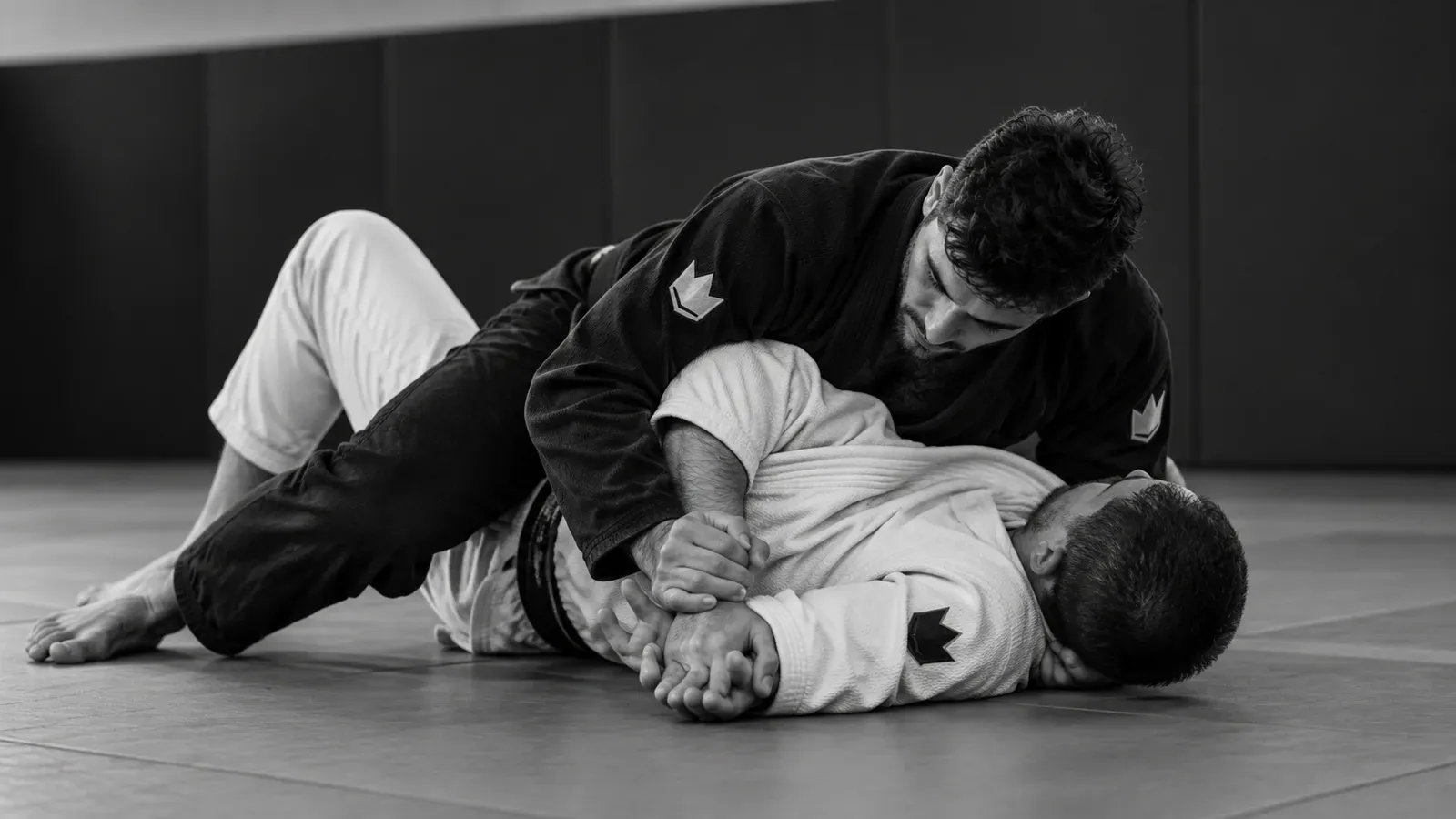
An Americana from side control is a shoulder lock (a lateral keylock) applied from a top pin, using control of the head and/or arms to stop the opponent turning and freeing the shoulder. It fails most often because people chase the finish before they have stable side control and clear arm control.
How to armbar from full guard
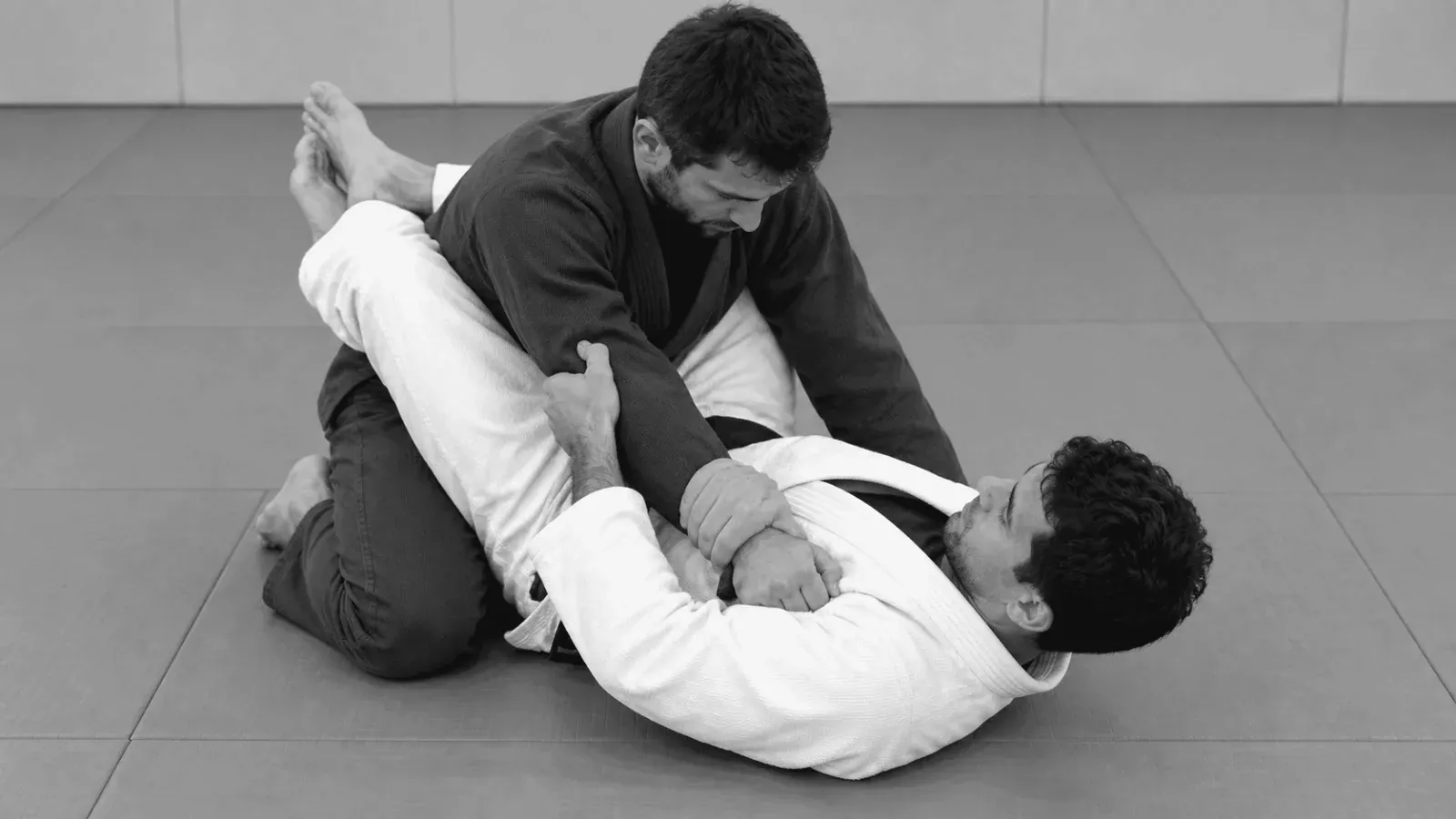
An armbar is an elbow hyperextension armlock, and full guard is a ground position where you control the top player with your legs. From full guard, your aim is to isolate an arm and apply the armbar mechanics with hips tight, knees squeezed, and controlled extension.
How to armbar from mount
An armbar from mount is a jūji-gatame applied after you isolate an arm while you are in a dominant mounted position. It works best when you use full-body leverage and deny the bottom person’s ability to pull the arm free or move into an escape.
How to armbar from side control
An armbar is an armlock that hyperextends the elbow, and it is often less problematic to apply on the ground from positions such as side control. The finish relies on full-body leverage, controlling the wrist, and slow, controlled application in training.
How to scissor sweep in Brazilian Jiu Jitsu
The scissor sweep is a named sweep in Brazilian Jiu Jitsu commonly associated with closed guard. It is used as part of guard offence to reverse position, but it depends on controlling distance and stopping the top player from standing or passing.
Is the scissor takedown legal in Brazilian Jiu Jitsu?
Whether the scissor takedown is legal depends on the ruleset you are competing under. It is prohibited in sport jujutsu, and you should confirm the specific Brazilian Jiu Jitsu rulebook for your event.
Scissor sweep in Brazilian Jiu Jitsu (no gi): when it applies, when it does not, and common mistakes
In no gi Brazilian Jiu Jitsu, a scissor sweep attempt sits inside open guard: you are using your legs to control and create leverage long enough to off-balance and reverse. It is least reliable when the top player can freely stand up or begin passing your open guard.
Straight arm bar takedown in Brazilian Jiu Jitsu
“Straight arm bar takedown” is a search term people use for taking an opponent down while controlling an extended arm for an arm lock. In Brazilian Jiu Jitsu you can use takedowns from many grappling arts, but whether a standing armlock-to-takedown is allowed and safe depends on the ruleset and how you train it.
What is side control in Brazilian Jiu Jitsu?
Side control is a dominant ground grappling pin in Brazilian Jiu Jitsu where you control a face-up opponent from perpendicular top position. It applies when the bottom player’s legs are free and not controlling you, and it is often confused with knee-on-belly or treated as a guaranteed win rather than a control position you must maintain.
How to retain guard in Brazilian Jiu Jitsu
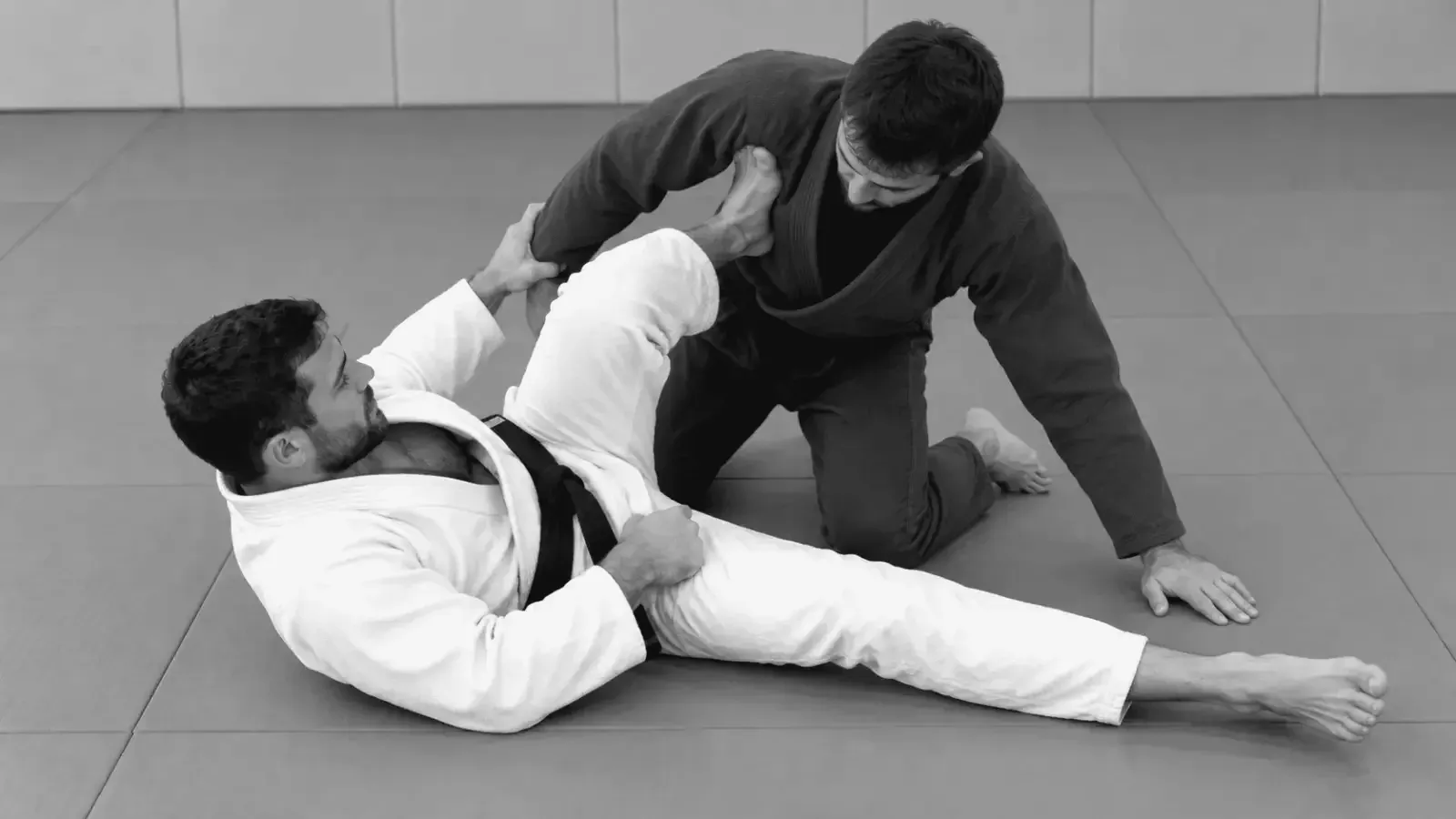
Guard retention in Brazilian Jiu Jitsu means stopping a passer from clearing your legs and establishing a dominant top position. You do it by keeping connection with frames and hooks, moving your hips, and recovering your guard as soon as your legs are displaced.
How to train Brazilian Jiu Jitsu solo
Solo training in Brazilian Jiu Jitsu is real, but it is limited: you can build movement quality, conditioning, and understanding on your own. You cannot replace partner drilling and sparring, so solo work should support, not substitute, time on the mat.
How to do Brazilian Jiu Jitsu sweeps
In Brazilian Jiu Jitsu, a sweep is a reversal where you move from underneath to a top position. You normally build sweeps from guard positions that also support submissions, then finish by stabilising your top control.