
Guide
Should You Wear a Groin Guard for Brazilian Jiu Jitsu?
Brazilian Jiu Jitsu is a grappling art of joint locks, chokeholds and submission holds, and no rule in the sport requires a groin guard. The requirement exists in striking sports such as mixed martial arts and Kyokushin karate, where kicks, knees and punches make groin protection compulsory even though groin strikes themselves are fouls.
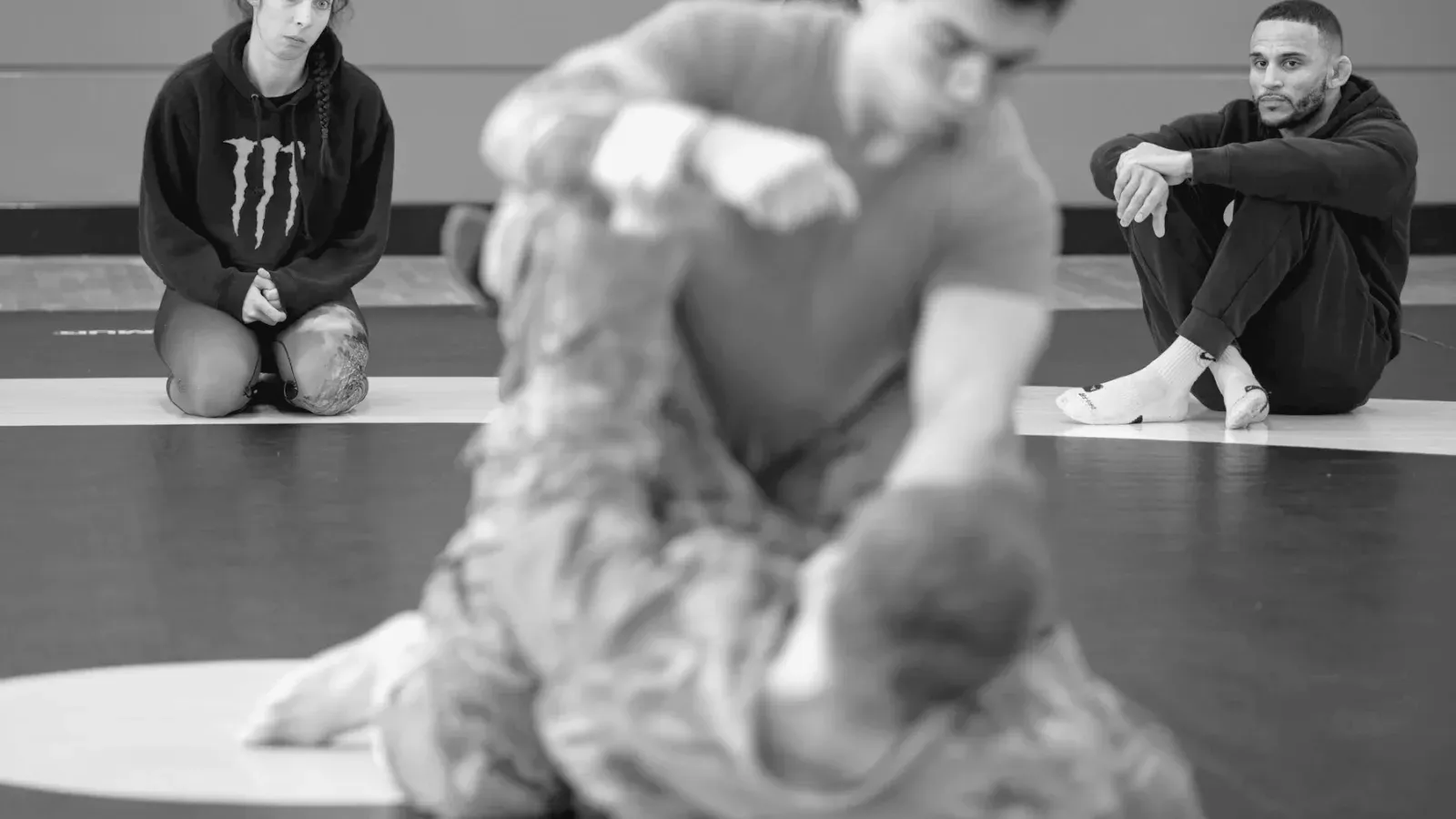
The short answer
No rule in Brazilian Jiu Jitsu requires you to wear a groin guard, a protective cup or shield worn over the groin. That requirement belongs to combat sports built around striking, where a kick, knee or punch can land at or near the groin even when a direct hit is against the rules. Brazilian Jiu Jitsu is a grappling art of joint locks, chokeholds and submission holds; there is no punching, kicking or kneeing to referee, so the specific hazard a groin guard is designed for is largely absent from standard training and competition. Whether you wear one comes down to personal comfort rather than any regulation.
Why groin guards are compulsory in striking sports
In mixed martial arts, groin strikes are listed among the illegal blows, alongside head butting, biting, eye gouging, hair pulling, elbowing an opponent who is on the mat, kidney strikes, and striking the back of the head with a closed fist. Despite the foul, most athletic commissions still require male fighters to wear a groin protector underneath their trunks. The rule exists because legal strikes travel close to the groin constantly during a fight, and a single mistimed kick or knee, foul or not, can cause serious injury.
The same pattern holds outside professional mixed martial arts. Kyokushin karate puts advanced practitioners through bare-knuckle, full-contact sparring that allows kicks, knees and punching, though not punching to the head, and it requires a groin guard for male practitioners and a chest guard for female practitioners, worn under the gi. Even a promotion built on the promise of no rules followed the same logic: UFC 1 advertised itself as having no rules, but it in fact banned biting, eye gouging and groin attacks from its very first event. The pattern across all of these is consistent - wherever strikes are thrown, groin protection is either mandated by equipment rule, banned as a foul, or both.
Why this doesn’t carry over to grappling
Brazilian Jiu Jitsu sits in a different category of martial art. It is built on joint locks, chokeholds and submission holds, not punches, kicks, knees or elbows. There is no striking exchange for a groin strike to occur within, legally or as a foul. The mechanism that makes a groin guard necessary in mixed martial arts and Kyokushin karate - live strikes travelling toward the body - simply doesn’t exist in a Brazilian Jiu Jitsu class or match. That is the core reason the sport has no equivalent equipment expectation.
Where contact happens instead
Even without strikes, Brazilian Jiu Jitsu is not a hands-off sport. The main types of guard, mount and side control all put two bodies in sustained, close contact, and the exchanges between them keep that contact going. Passing an opponent’s guard, retaining your own guard, setting up an armbar from full guard, or controlling from side control for something like an americana all involve hips, knees and forearms pressed against a partner. None of that is a strike and none of it is aimed at the groin the way a kick or knee is in a striking art, but it is close enough that some practitioners still choose to wear a cup for comfort, entirely apart from any competition requirement.
When the calculus changes
The picture changes the moment strikes enter the picture. If your training includes a mixed martial arts component, or you cross-train in an art that permits striking, such as Kyokushin karate, the equipment expectations of that discipline apply during that training, for the same reasons they apply to fighters and karateka generally.
It is also worth separating how you train. Drilling and rolling serve different purposes and carry different levels of unpredictability. Drilling is a slower, cooperative rehearsal of a technique with a compliant partner, while rolling is live, resisted grappling where contact is faster and less predictable. Neither involves strikes, but rolling in particular can bring more incidental, scrambling contact, which is reason enough for some practitioners to wear a guard regardless of any rule, purely as a matter of personal preference.
What people get wrong about this
The confusion usually comes from assuming Brazilian Jiu Jitsu’s equipment expectations mirror those of mixed martial arts. Some MMA equipment rules do apply broadly, regardless of striking: both male and female fighters in MMA are required to wear a mouthguard, since a clash of heads or jaws is a hazard in any close-contact sport, grappling included. The groin protector rule is not one of those broadly applicable rules. It applies specifically to male fighters, under most athletic commissions, because it addresses a hazard produced by striking, and Brazilian Jiu Jitsu does not produce that hazard in the same way.
People also sometimes point to the list of illegal blows in mixed martial arts, which names groin strikes as a foul, as proof that the groin is a recognised danger zone across combat sports generally. It is, in sports where strikes are thrown. That list exists because fighters are punching and kicking each other and a foul needs a name. Nothing comparable exists in Brazilian Jiu Jitsu’s rule set, because nothing comparable happens in a match.