
Guide
Straight arm bar takedown in Brazilian Jiu Jitsu
“Straight arm bar takedown” is a search term people use for taking an opponent down while controlling an extended arm for an arm lock. In Brazilian Jiu Jitsu you can use takedowns from many grappling arts, but whether a standing armlock-to-takedown is allowed and safe depends on the ruleset and how you train it.
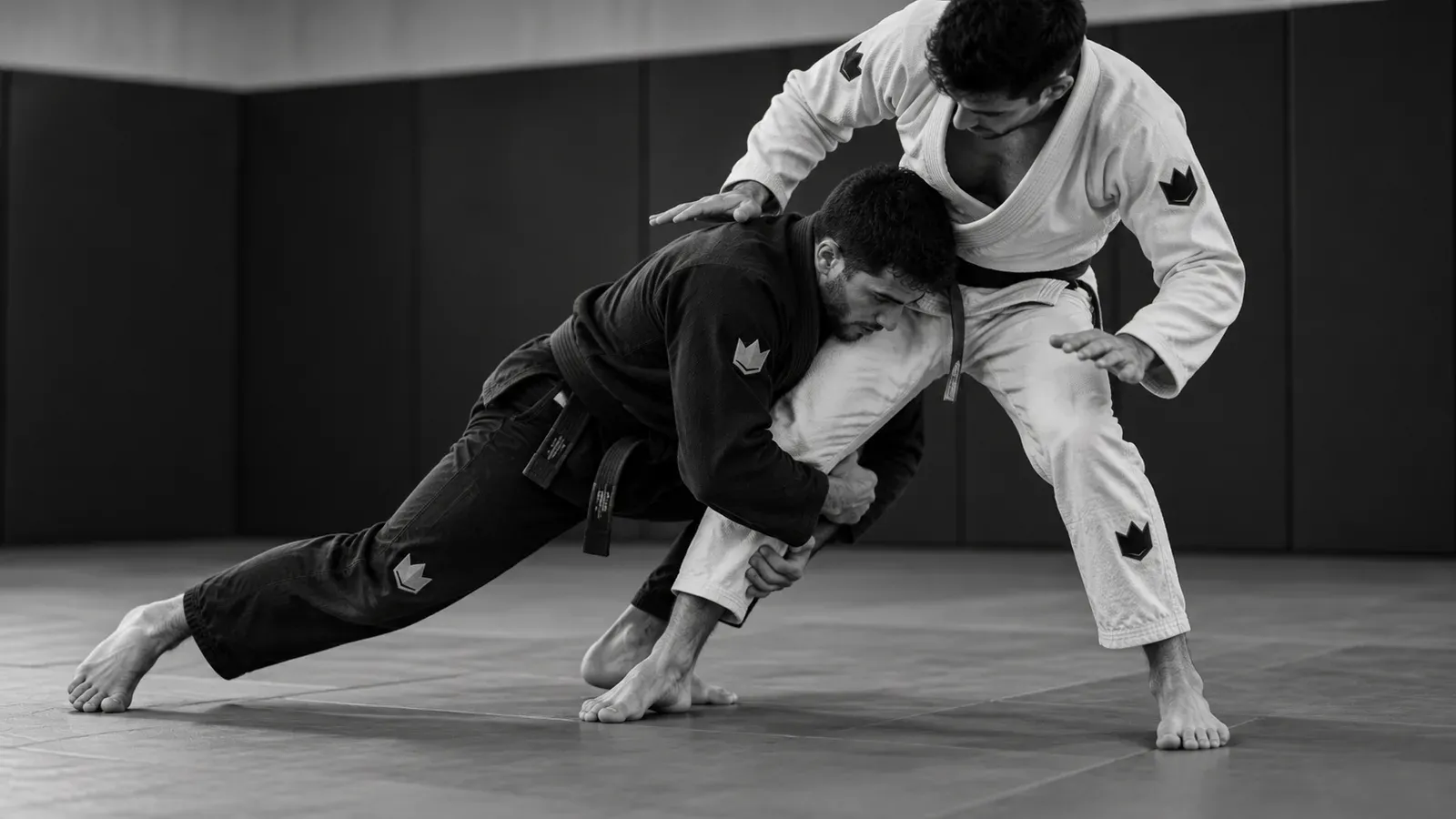
What people usually mean by “straight arm bar takedown”
“Straight arm bar takedown” is not a universally fixed technique name in Brazilian Jiu Jitsu. Most people using the phrase are describing a standing situation where you control the opponent’s arm in a straightened position (a joint lock attempt) and use that control to bring them to the ground.
That matters because Brazilian Jiu Jitsu uses a wide range of takedown approaches, including takedowns that come from wrestling and other grappling arts, and it is common for training to blend grips, drags, and finishes across those styles rather than keeping a single, formalised naming system.
When it applies in Brazilian Jiu Jitsu (and when it does not)
In simple terms, it applies when you are in standing grappling (often called standing work) and you are trying to bring the opponent to the ground while still controlling a straightened arm. It does not apply when you are already on the ground, or when your entry and finish are not meaningfully using straight-arm control as the main lever for the takedown.
It is also not the same thing as “pulling guard”. Brazilian Jiu Jitsu employs a wide range of takedown techniques to bring an opponent to the ground, and pulling guard is one of those ways of choosing to go to the floor. A “straight arm bar takedown”, as people use the term, implies you are taking the opponent down rather than choosing to sit or fall into guard without first putting them to the floor.
Finally, it does not apply if your rule set or your gym’s safety standards mean you are not permitted to apply that kind of joint lock from standing. Rule sets vary widely in Brazilian Jiu Jitsu and related competition formats, and training standards around standing joint locks can be stricter than standards for the same lock on the ground.
Ruleset and context: why the phrase causes confusion
Brazilian Jiu Jitsu exists in gi and no-gi formats, and rule sets can differ not only between organisations but also between event types. As a combat sport and grappling rules ecosystem, it also overlaps with other sports.
Three broad points from the sport’s own description help you interpret the phrase:
- Brazilian Jiu Jitsu allows a broad range of leg-attack rules compared with judo, including heel hooks and knee-reaping, and it also allows takedowns used in wrestling, sambo, or other grappling arts, including direct attempts to take down by touching the legs or dragging the opponent to the ground.
- Use of holds and takedowns from wrestling and other grappling styles is common in no-gi Brazilian Jiu Jitsu.
- Brazilian Jiu Jitsu includes “pulling guard” as a way to bring the fight to the ground.
Those points tell you why people expect “anything goes” and assume a standing armlock-to-takedown must automatically be normal. The reality is that “allowed in Brazilian Jiu Jitsu in general” is not the same as “a good idea in this gym session” or “legal in this specific competition rule set”.
If you are learning takedowns and you are not sure what is permitted where you train or compete, start with the mindset from the position-first principle: prioritise control and safety before chasing a finish, particularly from standing.
What people get wrong about a “straight arm bar takedown”
Mistake 1: thinking it is a standard, named takedown
People often search as if “straight arm bar takedown” is a single canonical throw, like you would find on a formal list of throwing techniques in judo. In Brazilian Jiu Jitsu, naming is not always that formal, and the same action may be described differently depending on whether you came up through judo, wrestling, or a Brazilian Jiu Jitsu-first approach.
Practically, that means you cannot rely on the name alone to tell you what the mechanics are. You need to check what your coach means by it in your room.
Mistake 2: assuming it is always legal because Brazilian Jiu Jitsu is “less restricted”
Brazilian Jiu Jitsu does allow a wider range of techniques than judo in some areas, and it allows takedowns drawn from multiple grappling styles, including leg-touching takedowns and dragging finishes. But that does not automatically settle the legality or appropriateness of a standing straight-arm joint lock attempt while completing a takedown.
If you compete, you must check the rule set for that event. If you are training, you must follow the rules and safety standards of your academy.
Mistake 3: treating the arm lock as a “handle” rather than a submission
A straight-arm joint lock is a submission attempt. If you treat it as merely a way to steer a takedown, you can end up applying force too fast while bodies are moving and balance is breaking.
Even when something is permitted, standing joint locks raise the stakes because the opponent may fall awkwardly while their arm is controlled. That changes what “controlled” means. A clean takedown without a joint lock can still allow the opponent to post, turn, or land in a way that protects them; an armlock can remove those options.
So the practical correction is not a new step-by-step sequence. It is this: if you are going to train any standing armlock-to-takedown concept, you must train it with a high emphasis on partner safety and on the ability to stop, release, or redirect as the fall develops.
Mistake 4: confusing it with guard pulling or with wrestling-style takedowns
Because Brazilian Jiu Jitsu includes pulling guard as a valid way to bring the fight to the ground, people sometimes lump every way of getting to the floor under “takedown”. But a “takedown” in the common sense is you putting the opponent down, not you choosing to sit or fall.
On the other side, because wrestling-style takedowns are common in no-gi Brazilian Jiu Jitsu, people sometimes assume the “straight arm bar takedown” is a wrestling move with an armlock finish. The safer way to think about it is that Brazilian Jiu Jitsu often borrows takedown entries and finishes from multiple styles, and the “straight arm bar” part is an extra layer you may or may not be allowed to apply while standing.
How to use the idea safely in training (without inventing a sequence)
Without getting into mechanical details that depend on a specific technique variant, you can still apply a few training rules that fit Brazilian Jiu Jitsu as it is commonly practised.
First, decide what the goal of the round is. If you are doing takedown rounds, you can work takedowns drawn from wrestling and other grappling arts, but you and your partner should be clear whether submissions from standing are part of the drill. If they are not, do not force a straight-arm lock as you take the opponent down.
Second, match the pace to the risk. If your partner cannot safely breakfall or you cannot reliably control the descent, treat it as off-limits in live standing rounds. You can still work towards the ground in other ways, including the many takedowns Brazilian Jiu Jitsu allows from other grappling styles.
Third, be clear on where you want the exchange to go. Brazilian Jiu Jitsu is primarily a ground-fighting style that aims to get to the floor, establish position, and then submit. If your standing “straight arm bar takedown” attempt is really just a scramble that sacrifices your base, you may be giving up the very thing Brazilian Jiu Jitsu rewards: stable positional control.
If you are earlier in your training, you may find it more productive to focus on learning to arrive on the ground in a position you can hold before you worry about submission attempts during the takedown. For a broader view of progression in the sport, see How to learn Brazilian Jiu Jitsu and the expectations around experience in The Brazilian Jiu Jitsu belt system, explained.
A practical way to decide if it belongs in your game
A “straight arm bar takedown” concept belongs in your game when all three of these are true: it is permitted under the rule set you are using, you can do it with controlled force and controlled descent, and it improves (rather than undermines) your ability to land in a position you can stabilise.
It does not belong in your game when you are relying on speed to make it work, when you are using the arm lock as a substitute for proper balance and positioning, or when you cannot keep your partner safe as you bring them down.
If you want the benefits people are often chasing with this search term, keep your focus on the Brazilian Jiu Jitsu priority: get to the floor, secure a dominant position, and then apply submissions under control rather than trying to finish a joint lock while gravity and momentum are still deciding the exchange.