Brazilian Jiu Jitsu guides
Longer pieces about training rather than about a single technique — what to expect, what to measure, and how the parts of a Brazilian Jiu Jitsu game fit together. Written to stay true for years rather than to be current this month.
How to learn Brazilian Jiu Jitsu
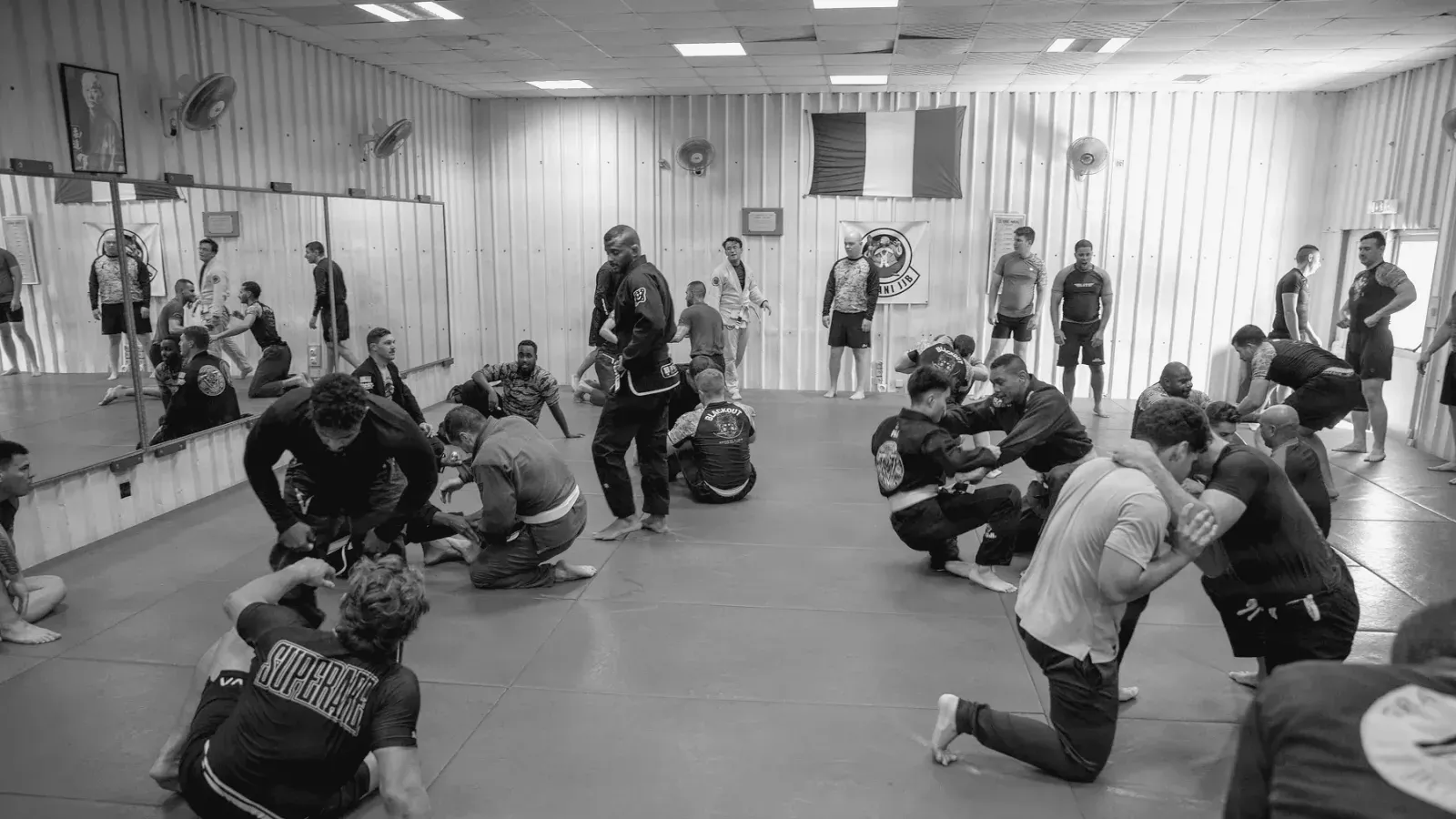
You learn Brazilian Jiu Jitsu by training in a class setting where you practise techniques, drill them with a partner, and use controlled sparring (rolling) to apply them. It does not work well if you are trying to learn only from theory without partners, supervision, and live practice.
What is a Brazilian Jiu Jitsu fundamentals class?
A Brazilian Jiu Jitsu fundamentals class is a beginner-oriented session built around the sport’s core positions, escapes, and highest-percentage attacks. It matters most when you are new, returning after time off, or changing context (gi, no-gi, or ruleset), and it matters less once you already have solid basics and need specialist training.
How to improve wrestling for Brazilian Jiu Jitsu
To improve wrestling for Brazilian Jiu Jitsu, you train the standing phase as a connected part of your grappling: how you enter, finish, defend, and stabilise on the ground. It applies most in no-gi and submission-wrestling style training, but you still need to match what you do to your competition rules and safety constraints.
Drilling vs rolling — why you need both
They do different jobs and are not substitutes. Most training plateaus come from quietly neglecting one of them for months.
Gi vs no-gi — what actually changes
Two versions of the same sport that feel different to train and reward slightly different things. What changes, what does not, and which to start with.
How long does it take to get a blue belt in Brazilian Jiu Jitsu?
One to three years is the honest answer for someone training a couple of times a week. Here is what actually moves you through that range, and what a blue belt is supposed to mean.
How often should a beginner train Brazilian Jiu Jitsu?
The number matters less than most people think, and consistency matters far more. Here is the reasoning, including why more is not simply better in the first year.
How to build your own Brazilian Jiu Jitsu game
At some point technique collecting stops working and you need a game — a small connected set of things that reliably lead into each other. How that actually gets built.
How to measure progress in Brazilian Jiu Jitsu
Progress in grappling is real but almost invisible month to month, which is why so many people who are improving are convinced they are not.
How to train with bigger, stronger partners
Size is real and it is not the whole story. The adjustments that make a heavier partner manageable are the same ones that make your Brazilian Jiu Jitsu better against everyone.
Position before submission — what it actually means
Control first, attack second. The phrase makes sense once you see the hierarchy of positions it is built on — and it has real limits worth knowing.
Technique vs strength in Brazilian Jiu Jitsu
The slogan is repeated so often that it has stopped being examined. It is largely true, in a specific way, with real limits — and the limits are the part that helps you train better.
The Brazilian Jiu Jitsu belt system, explained
Five adult belts, four stripes on each, a separate set for children and three red belts most people never see. What the order is, what it signals, and how promotions are decided.
The main types of guard in Brazilian Jiu Jitsu
Guard is not one position but a family of them, sorted by how they hold distance. Here is the map, what each is good at, and where to start.
What is an open mat in Brazilian Jiu Jitsu?
No warm-up, no technique of the day, no coach talking. Just mat space and whoever turned up. What to do with that, and the etiquette that makes it work.
What is rolling in Brazilian Jiu Jitsu?
Live sparring against a resisting partner is the part of training that makes the art work, and the part beginners most misunderstand. What it is, what it is for, and how not to get hurt.
What to expect from your first Brazilian Jiu Jitsu class
Most of the anxiety about a first class comes from not knowing the shape of it. Here is the shape of it, including the parts people find surprising.
What to focus on as a white belt
The first year is not about collecting techniques. It is about surviving, escaping, and building the handful of habits everything later is built on.
When to tap in Brazilian Jiu Jitsu
Tapping is how a sport built on breaking joints and cutting off blood stays safe to do twice a week. Here is when to do it, how, and why waiting is the mistake.
Why beginners get so tired in Brazilian Jiu Jitsu
Runners and lifters routinely gas out in their first few months and conclude they are not in shape. They usually are. What is missing is the ability to not use energy, which takes longer to build than fitness does.