
Guide
How to armbar from side control
An armbar is an armlock that hyperextends the elbow, and it is often less problematic to apply on the ground from positions such as side control. The finish relies on full-body leverage, controlling the wrist, and slow, controlled application in training.
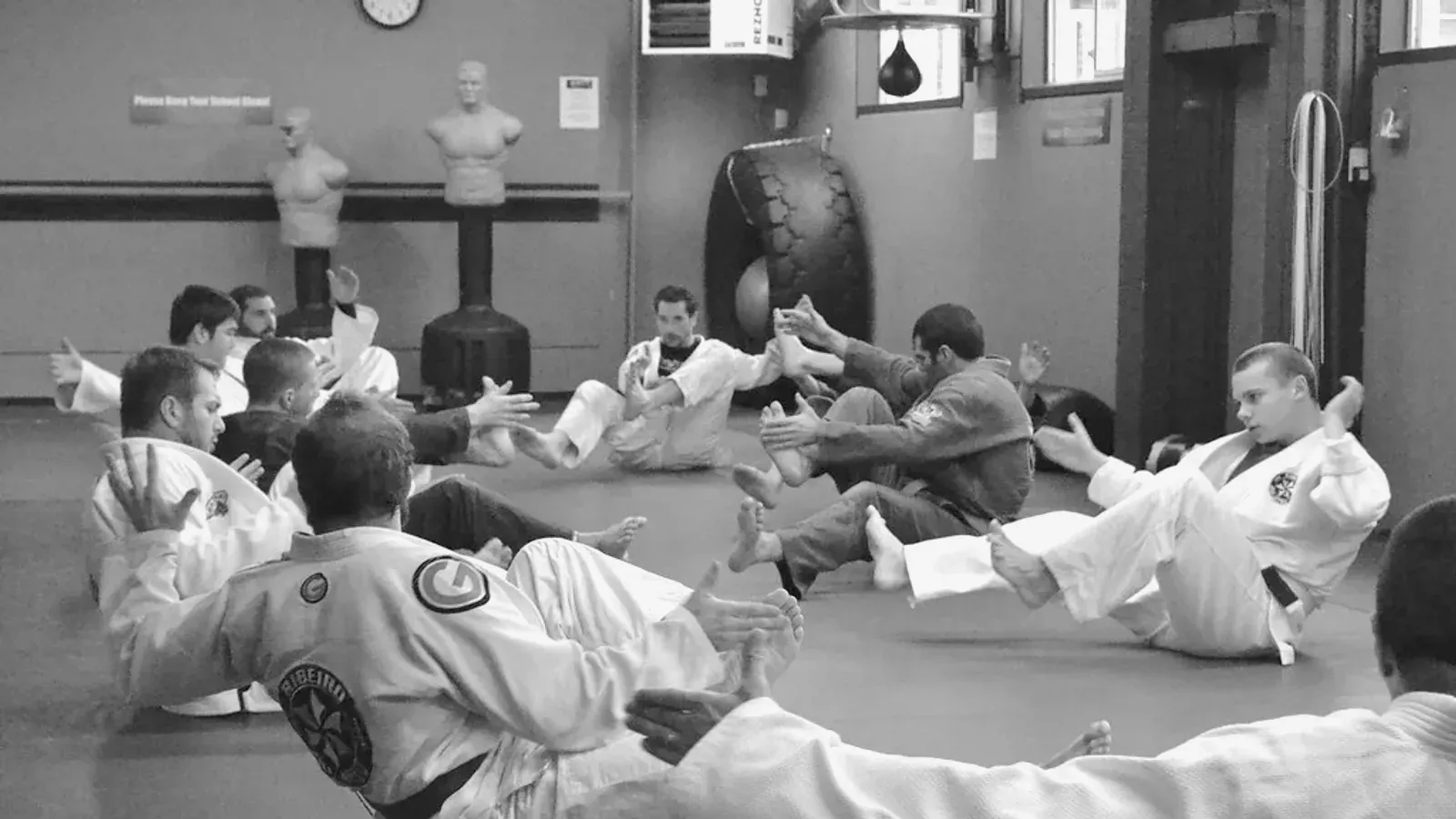
Ippon.Kumite · Openverse (flickr) · Creative Commons Attribution 2.0
What an armbar from side control is
An armbar is an armlock that hyperextends the elbow. In Brazilian Jiu Jitsu it is commonly applied on the ground, and side control is one of the positions where performing an armlock is less problematic because you can use your bodyweight and the floor to help control movement.
Side control is not a single fixed pin: there are many variants of the side control position. The constant requirement, whichever variant you use, is that you can keep control long enough to isolate an arm and stop the opponent from pulling it free.
How the mechanics of the armbar work (the finish)
Obtaining an armlock requires effective use of full-body leverage to initiate and secure a lock on the targeted arm, while preventing the opponent from escaping the lock. For the straight armbar finish described in jūji-gatame, that leverage comes from trapping the arm between your thighs and bringing your hips tight to the opponent’s armpit so their shoulder and elbow line cannot follow the movement.
Mechanically, the jūji-gatame armbar is secured by controlling the opponent’s arm at the wrist and trapping it by squeezing your knees together. One of your legs goes across the opponent’s chest and your other leg’s calf crosses the opponent’s face. With your hips tight into the armpit and the arm held between your thighs, you finish by extending the opponent’s arm to hyperextend the elbow.
Your hand position matters because it affects how directly you can extend the elbow. In the common finishing detail described for the armbar, you hold the opponent’s wrist to your chest with your pinky finger on your sternum and the thumb facing up (the arm semi-supinated or semi-pronated), then apply extension.
In training, armlocks are generally executed slowly and under control, giving your partner time to submit prior to injury. If you want more on decision-making around that moment, read why tapping early is the safe default.
How to apply it from side control (what must happen before the finish)
From side control, the part you must solve is not a special side-control-only armbar finish. It is the transition from a pin to the standard armbar mechanics: isolating one arm, securing wrist control, and placing your legs so the arm is trapped between your thighs with your hips tight to the armpit.
If you cannot keep the opponent’s arm isolated at the wrist long enough to bring your legs into position, you do not yet have an armbar attempt, because the key requirement for an armlock is preventing escape while you apply leverage.
Because side control has variants, you may find it easier to reach your preferred angle for leg placement from certain side-control styles than others. What matters is that your control does not collapse as you move your lower body into the jūji-gatame structure.
When the armbar from side control applies, and when it does not
It applies when you can:
- stay on top in side control long enough to isolate an arm
- secure the wrist and keep it from slipping free
- bring your hips tight to the armpit and trap the arm between your thighs by squeezing your knees
Those conditions are easiest to achieve on the ground. Armlocks are less problematic from ground positions such as mount, side control, or guard because the floor helps you limit movement while you assemble the lock.
It does not apply well when you cannot prevent the escape routes that matter for armlocks: the opponent retracting the elbow, rotating the arm, or freeing the wrist before your legs and hips are in place. In practical terms, if you cannot keep wrist control and you cannot keep your hips engaged close to the shoulder line, your opponent has too much freedom to disengage before the elbow is actually threatened.
What people get wrong
The most common misunderstanding is treating the armbar as an arm-only move. The sources are explicit that obtaining an armlock requires full-body leverage, and the standard armbar depends on controlling the wrist, clamping the knees, and using your hips tight to the armpit to create the lever that hyperextends the elbow.
A second mistake is rushing the finish in training. Armlocks are generally applied slowly and controlled in training to give time to submit, because applied improperly or with excessive force they can cause serious damage.
A third mistake is confusing positions and expecting the same control to exist everywhere. Knee-on-belly, for example, is a modified side pin that is distinctly separated from side control. It is a more mobile pin rather than a static pin, which can change how easy it is to keep the opponent’s upper body pinned while you try to isolate an arm.
Gi, no-gi, and ruleset notes that matter
Brazilian Jiu Jitsu allows both gi and no-gi practice and competition, with its own subset of rules for no-gi. The armbar mechanics above do not depend on cloth grips, but your ability to hold the wrist and prevent escapes will feel different without gi friction and sleeve grips. If you want the broader context for how control changes, see Gi vs no-gi — what actually changes.
If you are training under a particular competition ruleset, check what it treats as legal gripping, how it defines control for scoring, and how it handles pins, because those constraints affect how long you can safely and legally build the isolation you need for an armlock.