
Guide
Does Brazilian Jiu Jitsu Work in Real Life?
Brazilian Jiu Jitsu gives you the tools to close distance, take an unwilling person down, and control or submit them without needing to strike. It does not prepare you for multiple attackers, weapons, or a confrontation that stays entirely on your feet trading blows.
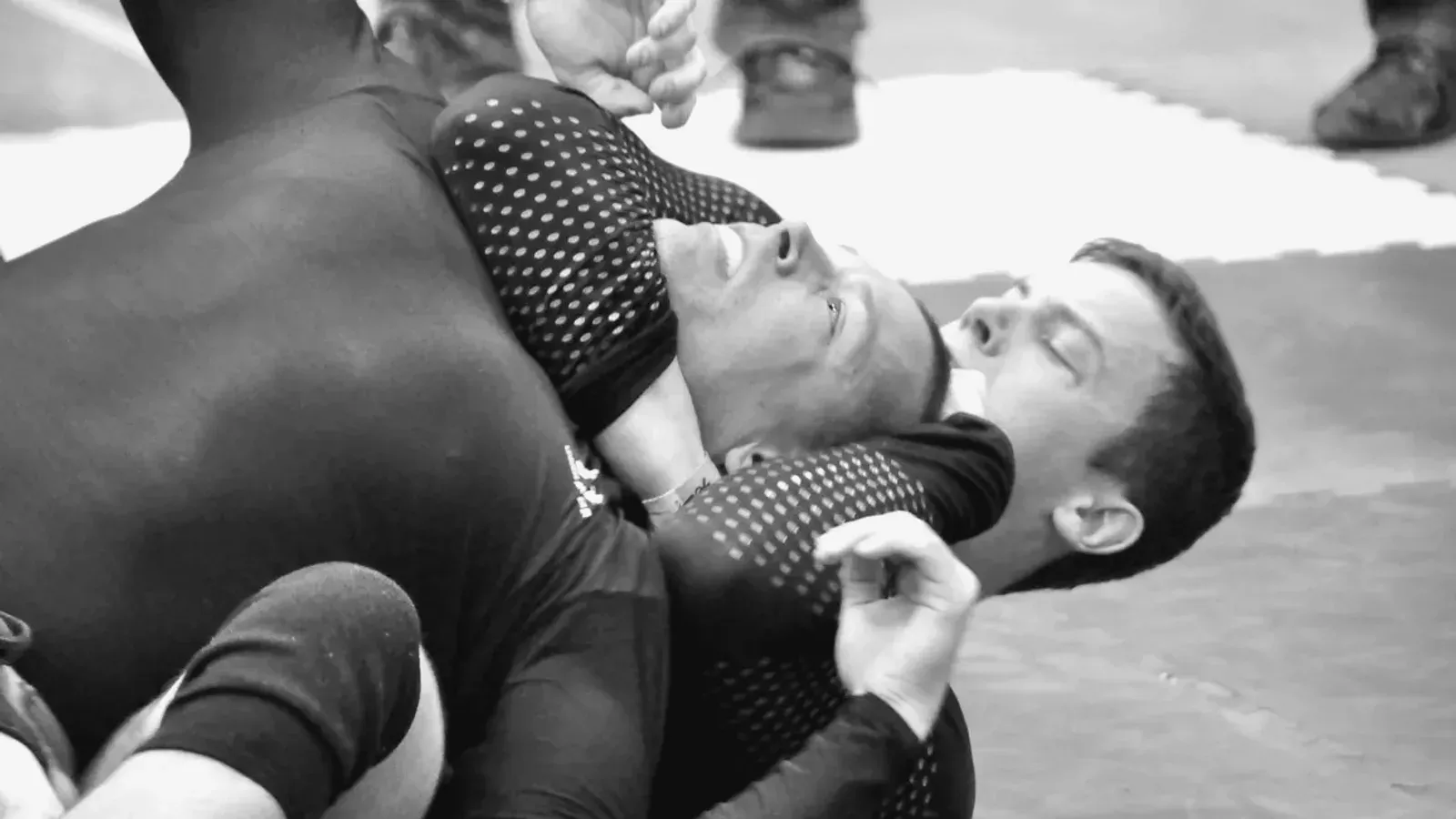
MartialArtsNomad.com · Openverse (wikimedia) · Creative Commons Attribution 2.0
What “real life” means for Brazilian Jiu Jitsu
The question only has a useful answer once you separate two things: sport Brazilian Jiu Jitsu, practised under a set of competition rules against a single opponent who is also trying to score or submit you, and a genuine confrontation, where there may be no rules, no referee, and no guarantee you are facing only one person. Brazilian Jiu Jitsu was developed as a grappling art, so its answer to “does it work” is really an answer about grappling: closing distance, taking someone down, controlling them once you are both on the ground, and finishing with a joint lock or a choke if the situation demands it.
Combat sports are generally understood to cover three separate dimensions: striking, throwing, and groundwork. Brazilian Jiu Jitsu is built almost entirely around the third of these, with a smaller amount of the second in the form of takedowns and trips, and none of the first. Before asking whether it works, it helps to know which of those three dimensions the situation you have in mind actually involves.
Where the skills transfer directly
Against a single unarmed person who is grabbing, pushing, or trying to take you down, Brazilian Jiu Jitsu gives you a working answer that does not depend on hitting harder or being bigger. Clinching, off-balancing, and controlling someone’s hips and shoulders are the same skills whether the person resisting you is a training partner or someone you did not choose to be near. Time spent training these positions also removes the panic that untrained people often feel the moment a confrontation reaches the ground, simply because you have been there, on purpose, hundreds of times before.
The control aspect matters as much as the finish. Positions like mount and side control let you restrain someone without striking them, which is relevant if your aim is to stop a situation rather than hurt someone. If a finish is genuinely needed, options such as an armbar from mount or an armbar from full guard give you a way to end a physical confrontation through joint control rather than repeated strikes, provided you have trained the position enough to apply it under pressure and understand the responsibility that comes with controlling someone’s joint against its limit.
Where Brazilian Jiu Jitsu falls short
The art has clear limits, and they matter more than the parts that work well:
- It does not train you to deal with a second or third attacker. Going to the ground to control one person leaves you exposed to anyone else who is there, which is not a factor in a one-on-one sport match.
- It does not address weapons. Grappling range assumes bare hands are the only tool in play, and none of its positions are built around a knife, a blade at a distance, or a firearm.
- It does not cover striking at all, and only a limited amount of throwing. A confrontation that stays on the feet and involves punches is outside what the art trains you for.
Sport competition also starts from a specific position that a real confrontation rarely offers. A grappling match, of the kind where competitors begin standing and work for a submission, starts with both people upright, aware of each other, and ready. A real confrontation might start with you grabbed from behind, pushed against something, or already on the ground before you have decided to respond at all. The techniques can still apply, but the entry point you have practised most is not the one you are likely to get.
What people get wrong about Brazilian Jiu Jitsu and self-defense
The most common mistake is assuming that because ground control works, taking every confrontation to the ground is the right plan. Outside a one-on-one match, going to the ground removes your ability to see or move away from anyone else nearby, and it is a decision that should depend on the surroundings, not a reflex trained purely for competition.
The second mistake is treating sport habits as if they were self-defense habits without adjustment. Martial arts tend to drift from their original combative purpose once competition becomes the main way people train and measure progress. Aikido shows this clearly: versions that stayed closer to its earlier form as Aiki-Jujutsu kept more of the original combative technique, while later versions leaned more on the philosophy its founder emphasised toward the end of his life. Brazilian Jiu Jitsu has a version of the same split, between schools where the stated priority is sport competition and schools where it is control and self-defense. Neither approach is wrong, but they are not identical, and it is worth knowing which one you are training if the reason you started was self-defense.
The third mistake is expecting the art to cover the whole of a confrontation on its own. It answers the groundwork question well and the takedown question reasonably well. It does not answer the striking question, the weapon question, or the multiple-attacker question, and no amount of extra mat time changes that.
Training it with real-world use in mind
If self-defense is part of why you train, the groundwork is the same as anyone else’s: your first class will introduce the core positions and the etiquette around going live with a partner, and learning when to tap early is what keeps training sustainable enough that you actually get the reps in. Sweeps are worth particular attention, since sweeping from guard is often how you get back to a controlling position without needing to strike your way out of a bad spot. Regular open mat time against a range of training partners, rather than only structured class drilling, is what turns technique you can perform slowly into technique you can call on against someone who is genuinely resisting, which is closer to what a real confrontation demands than any drill can be.