
Guide
How to scissor sweep in Brazilian Jiu Jitsu
The scissor sweep is a named sweep in Brazilian Jiu Jitsu commonly associated with closed guard. It is used as part of guard offence to reverse position, but it depends on controlling distance and stopping the top player from standing or passing.
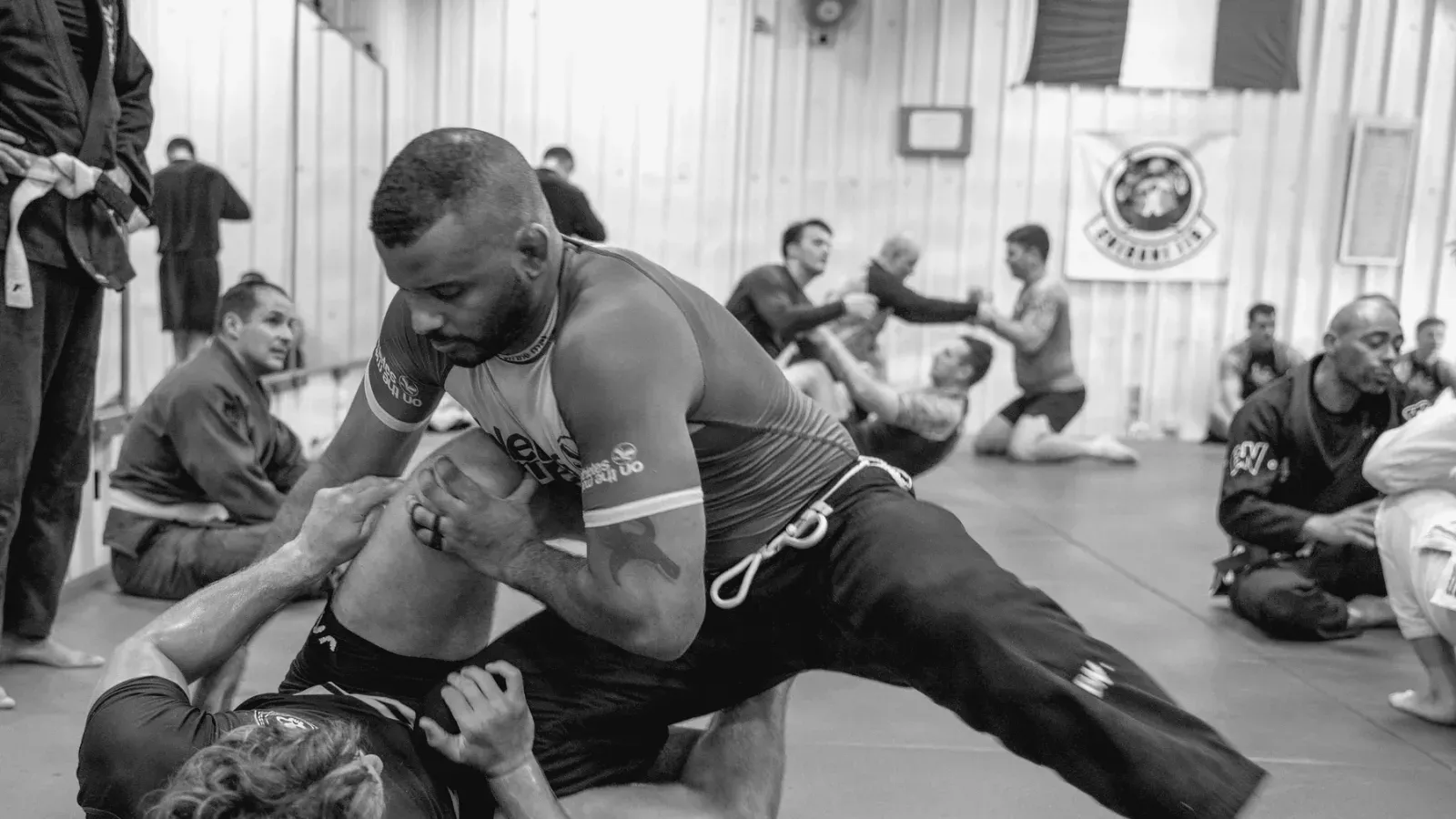
What the scissor sweep is in Brazilian Jiu Jitsu
The scissor sweep is listed as a sweep from closed guard in Brazilian Jiu Jitsu. A sweep, in this context, is a reversal from bottom guard to a top position, using your legs and grips to create leverage and off-balance.
Closed guard (sometimes called full guard) is the guard where your legs are hooked behind the opponent’s back, which prevents them from standing up or moving away until they open your legs. It is one of the core guard positions used for offence: from guard you can attack with joint locks and chokeholds, while the top player’s priority is passing the guard.
If you want a wider map of where closed guard sits alongside open guard, half guard and other variations, see The main types of guard in Brazilian Jiu Jitsu.
How it is done (what you must have in place)
The sources available here confirm where the scissor sweep lives (closed guard) and what makes guard work mechanically (leg control, entanglement, and using the legs to control and create leverage). They do not support a step-by-step scissor-sweep movement sequence (for example: specific grips, which knee goes where, or the direction you cut the opponent).
What you can take, reliably, is the set of conditions that make any closed-guard sweep possible:
You start in the guard: you are on your back with the opponent on top inside your legs, using your legs to control them.
You need enough control that the top player cannot simply stand up or disengage. Closed guard achieves this by hooking the legs behind the opponent’s back, preventing them from standing up or moving away until the guard is opened.
You use your legs as the primary control tool. Guard positions work because the bottom combatant uses the legs to control the opponent; that control creates opportunities for techniques such as sweeps.
Because the scissor sweep is specifically categorised as a closed-guard sweep, you should treat it as part of your closed-guard attacking cycle: maintain control, off-balance, then reverse. For a broader discussion of why your position has to come before your submission or sweep attempts, read why control comes before the finish.
When the scissor sweep applies, and when it does not
The scissor sweep applies when you are actually able to play closed guard as a stable attacking position: your legs are controlling the opponent’s posture and distance well enough that you can create the off-balance required to reverse them.
It stops being the right tool once you lose the defining features of closed guard:
If your guard is opened. Closed guard only prevents standing and disengagement while your legs remain locked; once the top player opens your legs, the nature of the exchange changes.
If the opponent can stand or begin passing. Open guard, by definition, allows the opponent to stand up or try to pass the guard, and is often used only temporarily to set up sweeps or other techniques. If you have been forced into open guard, you are no longer in the closed-guard situation that the scissor sweep is named for.
If the opponent has already achieved a clean passing position. In guard, the top player’s priority is passing; if they are already past your control, you are no longer in a position to sweep from guard.
Practically, that means you should see the scissor sweep as one option inside a short window: while you still have closed guard control and before the opponent’s posture, standing, or passing attempts have changed the position.
What people commonly get wrong
Because Brazilian Jiu Jitsu does not have a formalised canon and names can vary by region, the first common mistake is thinking “scissor sweep” always means the same mechanics everywhere. The name is consistent enough to place it in the sweep list, but the details you are taught may not match what somebody else calls a scissor sweep.
The second mistake is trying to do closed-guard offence when you are functionally in open guard. Open guard is a broad family of positions where your legs push, wrap, or hook without locking your ankles together, and it inherently allows the opponent to stand or try to pass. If your legs are no longer locking the opponent in place, you need to address that change rather than forcing a closed-guard sweep idea.
The third mistake is treating the sweep as a “move” rather than a product of control. Guard works because the bottom player uses the legs to control and create leverage. If your legs are not doing that job, you will often feel as if the sweep is failing for no reason, when the real issue is that the opponent is not actually being controlled.
Finally, many people practise sweeps as if the exchange ends at the reversal. In grappling, guard is advantageous because you can attack while controlling; the top player’s priority is to pass. When you reverse someone from guard, you still have to stabilise your top position, because the opponent’s priority immediately becomes recovery of guard or escape.
How to fit it into your guard game (without overcomplicating it)
Closed guard is one part of a larger guard system, and in real sparring you often move between variations. The open guard is often used temporarily to set up sweeps or other techniques, while other open guards (such as De La Riva guard) are explicitly described as offering sweeps, transitions, and submissions.
So the simplest way to use the scissor sweep idea in training is to treat it as a closed-guard sweep option that depends on you keeping the opponent controlled long enough to off-balance and reverse. If you routinely lose closed guard before you can sweep, that is a sign to work on your guard control and transitions, not a sign that the sweep “doesn’t work”.
If you are building your overall approach, How to build your own Brazilian Jiu Jitsu game can help you decide where closed guard offence fits your priorities.
Safety and ruleset notes
The scissor sweep discussed here is a sweep from closed guard in Brazilian Jiu Jitsu. Do not confuse that with “scissor takedowns” (a standing technique family) which can be dangerous; some potentially dangerous techniques such as scissor takedowns are prohibited in sport jujutsu.
Even when a technique is allowed under your Brazilian Jiu Jitsu competition rules, your training room may still restrict how you apply it in sparring. The practical safety standard is simple: you control the position first, and you prioritise your partner’s ability to land and post safely as you reverse them.
If you want a reliable way to identify what is breaking down when you try to sweep, Why tracking your training changes what you learn can help you record whether the failure happened at control, off-balancing, or stabilising the top position.