
Guide
How to do Brazilian Jiu Jitsu sweeps
In Brazilian Jiu Jitsu, a sweep is a reversal where you move from underneath to a top position. You normally build sweeps from guard positions that also support submissions, then finish by stabilising your top control.
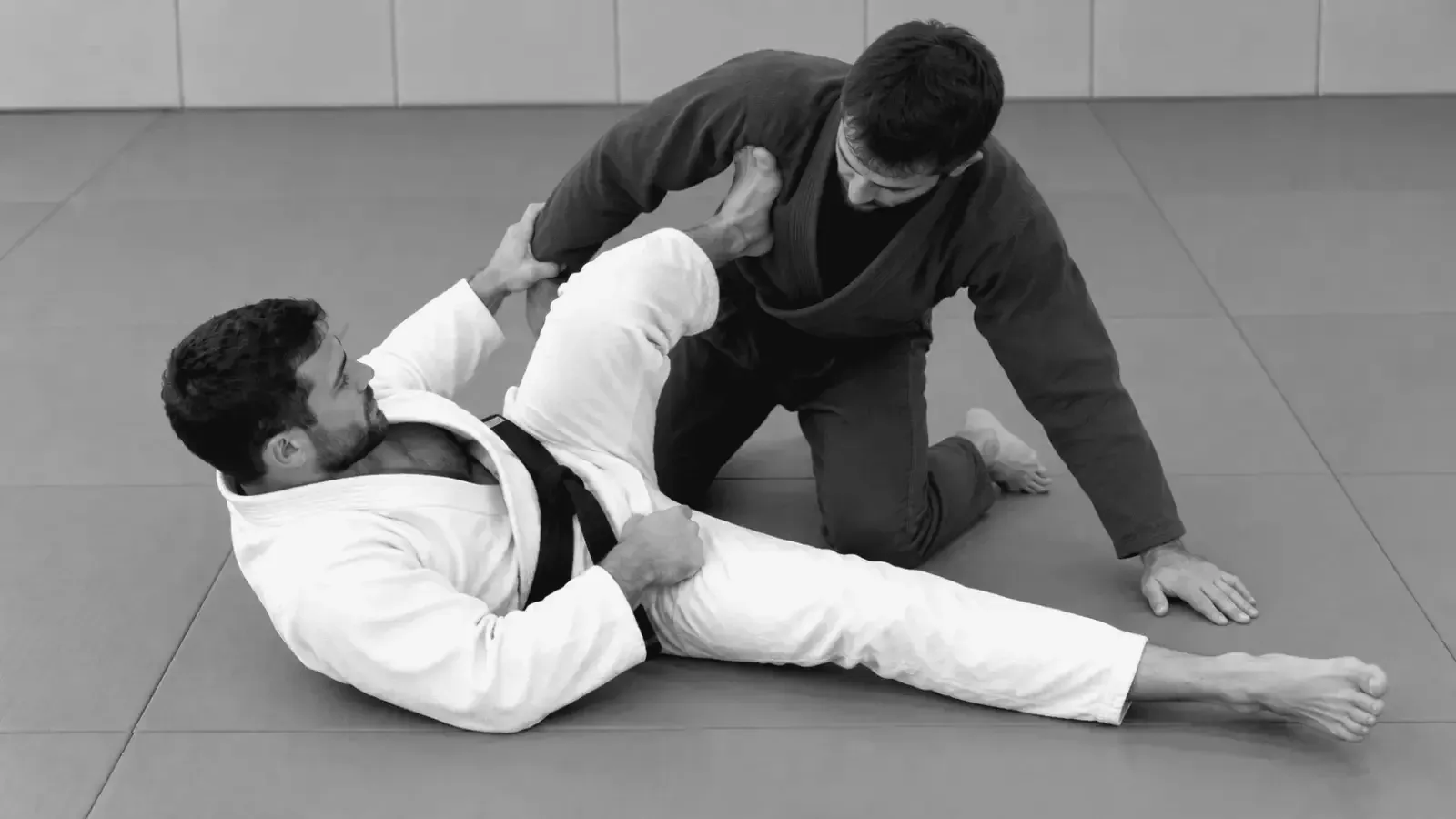
What a sweep is in Brazilian Jiu Jitsu
A sweep (also called a reversal in broader grappling) is when you are underneath your opponent on the ground and you manoeuvre so you end up on top. In practical terms, you are not just moving them; you are changing who has the top position.
Sweeps matter because Brazilian Jiu Jitsu is built around grappling: ground fighting, control, and submissions. Many of the positions you use from the bottom are not just defensive. They are designed to let you counter-attack with submissions and sweeps.
How to do Brazilian Jiu Jitsu sweeps: the method that carries across positions
You cannot learn every sweep as one big list and expect them to work. Brazilian Jiu Jitsu has no single formalised canon of techniques and there is variation in naming and emphasis, so what transfers best is the method.
Start from the idea that a sweep is a reversal to top. Your job is to (1) build enough control from bottom that you can move your opponent, (2) force a base change or loss of balance, (3) come up on top, and then (4) stop them immediately reversing you back.
1) Start from a bottom position that gives you control
Most reliable sweeps start from some form of guard (your legs and grips acting as frames and levers while you are on your back or seated).
Some guards are explicitly described as offering many sweep setups alongside submissions. That matters tactically: if your opponent has to worry about being submitted, they often have to change posture or hand position, which can make it easier for you to create movement.
One clear example is spider guard: you place one or both feet on your opponent’s arms, which is effective at keeping control from the bottom and can be used to set up sweeps or submissions. The important transferable point is not the guard name; it is that your legs can manage distance and your feet can control the line of your opponent’s arms.
2) Connect your control to your opponent’s base
A sweep finishes when their base fails. Base is the structure that keeps them from falling: where their weight is and what points of contact are keeping them stable.
From the bottom, your control needs to connect to that structure. In practice this usually means you are influencing at least one of:
- Their arms (posts and frames).
- Their hips (where their weight is loaded).
- Their legs (their platform for staying up).
If your grips and hooks only make them uncomfortable but do not affect how they can post or step, you will often get movement without a reversal.
3) Make them carry weight where they cannot post
The simplest way to think about the middle of a sweep is: make them carry their weight in a direction where their hands or feet cannot catch them.
You can get there by forcing a reaction. If you threaten a submission from guard, they may posture, pull back, drive forward, or reach to strip grips. Those reactions are often the moment when their base is weaker.
This is why guards that support both submissions and sweeps are so useful: you are not choosing between them early. You are using one threat to open the other.
4) Come up: the sweep is not finished until you are on top
In grappling terms, a reversal or sweep occurs when you gain a top position over your opponent. If you off-balance them but stay underneath, you have not completed the sweep.
The practical rule for your training is: the moment you start tipping them, you must already know how you will get your chest, hips, or knees on top so you can settle your weight.
5) Stabilise the top position immediately
A sweep that ends in a loose scramble often becomes a sweep in name only. Your opponent’s first response after being turned is usually to re-guard, stand up, or counter-sweep.
So the final part of “how to do sweeps” is not the turn itself; it is your ability to land in a top position you can hold long enough to work.
When sweeps apply, and when they do not
Sweeps apply when you are underneath on the ground and can manoeuvre to come on top. That is the defining feature of a sweep in grappling terms.
They do not apply in three common situations.
First, if you are not underneath on the ground, you are not sweeping. If you are standing and you take someone down, you are doing a takedown or throw, not a sweep.
Second, if the movement does not result in you gaining a top position, it is not a sweep. You might have created space, improved your guard, or forced them to disengage, but you have not reversed.
Third, if you cannot control the exchange well enough to come up safely, attempting a sweep may be the wrong choice. A sweep attempt that gives up your control can turn into your opponent passing your guard or settling into top control.
Useful sweep “platforms”: guards that naturally lead to reversals
You can sweep from many guards, but a practical way to organise your learning is to start with guard positions that are described as supporting a wide variety of counter-attacks from bottom, including submissions and sweeps.
If you are building your sweep game, pick one or two guards you can reach reliably and make them your main platforms. You will get better faster by repeating the same control problems rather than trying a different sweep each round.
Spider guard as a control-based example
Spider guard is defined by placing one or two feet on your opponent’s arms. Because it is effective for keeping control from the bottom and can be used to set up sweeps or submissions, it is a good illustration of what you should be aiming for in any open guard: your legs and feet should not just be “in the way”. They should be controlling your opponent’s ability to use their arms to posture and post.
50/50 as an example of equal opportunity
The 50/50 position is called 50/50 because neither opponent has a distinct advantage and both sides have the same possibilities of sweeps and attacks. The takeaway for your sweeping decisions is that some positions do not give you an inherent sweeping edge. If you enter them without a plan to win the control battle, you may end up in a neutral exchange where you are no more likely to come on top than your opponent is.
Worked examples of each: the scissor sweep and the hip bump from closed guard, the butterfly sweep from a seated hook, and the flower sweep when their arm is the thing that is available.
What people get wrong about Brazilian Jiu Jitsu sweeps
Treating “a sweep” as a move rather than a reversal to top
Many people call anything that disturbs the top player a sweep. In grappling terms, a sweep is when you move from underneath to a top position. If you do not come on top, you have not swept.
The fix is simple: in training, only count it as a sweep when you can settle on top. That forces you to practise the part most people skip.
Trying to sweep without control from guard
Because guard positions can offer a wide variety of counter-attacks from bottom, including submissions and sweeps, it is tempting to attack continuously. But the guard is not magic. If your opponent can freely posture, step, or remove your hooks, they will often stop your sweep attempt before their base is ever threatened.
Build the habit of establishing your chosen guard controls first. If you cannot hold the position long enough to threaten something, your sweep is likely to be a lunge.
Confusing standing foot sweeps with ground sweeps
In Brazilian Jiu Jitsu vocabulary, “sweeps” in this context are ground reversals, not standing foot sweeps. Standing techniques exist in grappling, but a sweep (reversal) is about being underneath on the ground and gaining top.
If you are drilling, make sure you and your partner are using the word the same way. Otherwise you end up with mismatched goals: one of you is trying to off-balance on the feet while the other is trying to reverse from guard.
Entering neutral positions and expecting the sweep to be automatic
Positions like 50/50 are explicitly described as giving neither side a distinct advantage, with both sides having the same possibilities of sweeps and attacks. If you treat a neutral entanglement as if it guarantees a reversal, you can waste time or give your opponent the same attacking chances you wanted.
If you land in a position where the opportunities are equal, your next decision has to create an advantage: stronger control, a clearer angle, or a more reliable route to coming up.
A safe training note: sweeps and submissions are linked
Many guards are described as giving you setups for submissions such as joint locks and chokes, as well as sweeps. That link is useful, but it also means you and your partner can quickly move from a reversal attempt into a submission exchange.
When you drill sweeps, keep your partner’s safety in mind as you come up, especially if your sweep uses their arm as a post or you are transitioning straight into a submission threat. Your goal is a clean reversal to top control, not a chaotic landing.