
Guide
What Brazilian Jiu Jitsu Submission Hurts the Most
The submissions that hurt most sharply are the ones that crush muscle against bone, such as the calf slicer and bicep slicer, while chokes usually cause no pain at all before they take effect. Which submissions you will actually meet also depends heavily on your belt, your ruleset, and whether you train gi or no-gi.
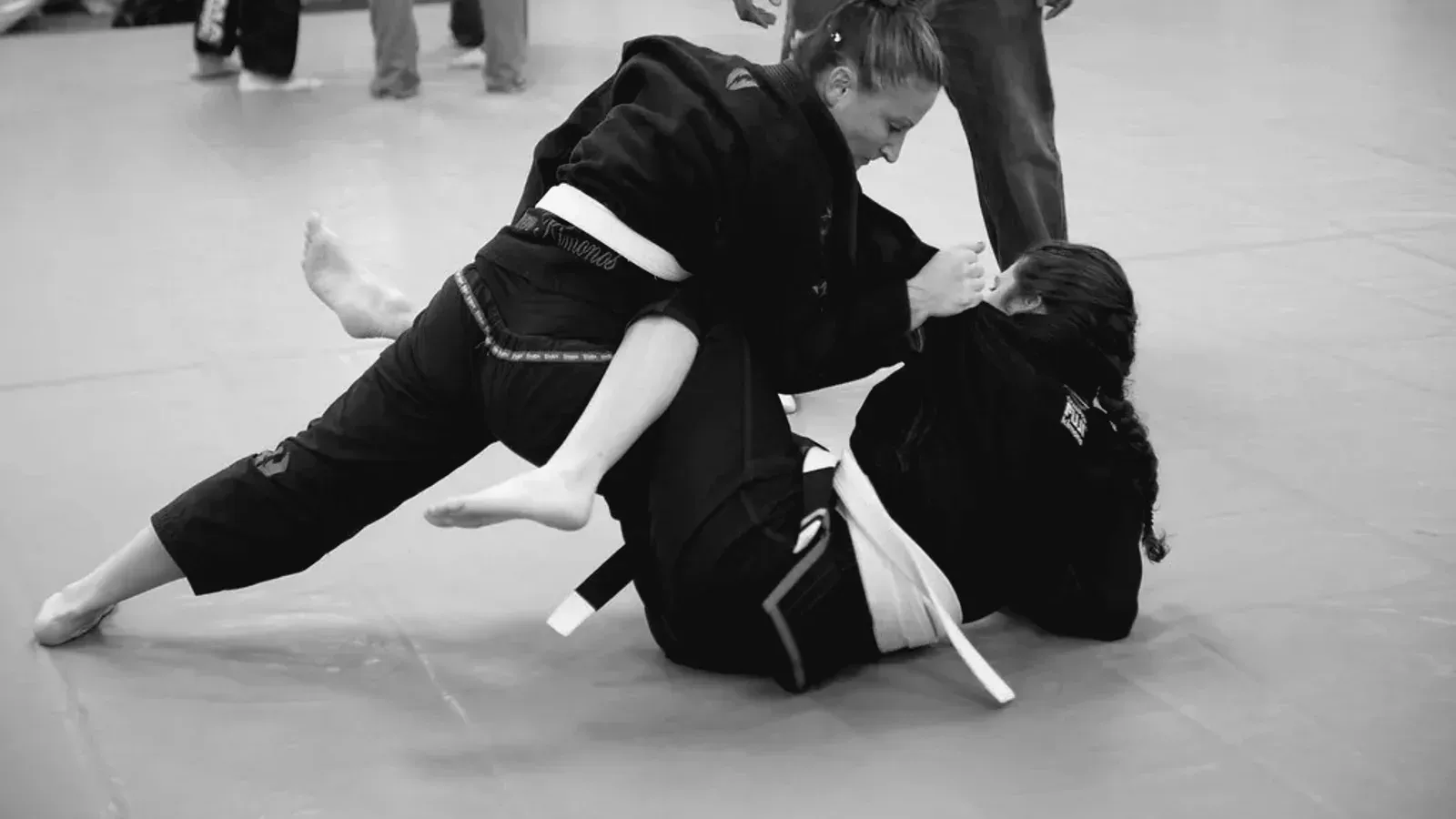
jervineyard · Openverse (flickr) · Creative Commons Attribution 2.0
Why some submissions hurt and others don’t
A submission is any technique that forces you to stop, either by tapping or by the referee intervening, because carrying on puts a joint, a muscle, or your consciousness at risk. Not every submission works the same way. Joint locks take a joint past its normal range of motion, straining the ligaments and tendons around it, and this usually produces pain that builds as the lock tightens. Chokes work differently. A choke can end things before the discomfort has had time to register.
That distinction matters for answering which submission hurts the most, because pain and danger are not the same thing. A choke can be extremely effective and genuinely risky, yet the person caught in it often feels nothing sharp before losing consciousness. A joint lock usually announces itself early, through a specific, localised pain that gets worse the longer you stay in it.
The submissions people find hardest to take
Among joint locks, the ones that hurt most immediately tend to be the ones that pin soft tissue against bone rather than simply stretching a joint. The calf slicer is applied by trapping the lower leg across a shin or forearm and folding the knee, which compresses the calf muscle directly against the bone underneath it. The bicep slicer does the same thing to the upper arm. Both produce an intense, localised pain very quickly, because muscle tissue is being crushed rather than a joint being pulled.
The kimura, a shoulder lock applied by rotating the arm behind the back with a figure-four grip on the wrist, forces the shoulder into internal rotation past its comfortable range.
A standard armbar, which hyperextends the elbow by pulling the arm straight while pinning it across the hips, tends to build more gradually. The elbow has less room to move than the shoulder, so pain from an armbar often arrives closer to the point where the joint would actually be damaged. That is one reason people who wait too long to tap out of an armbar can end up hurt on a lock that felt manageable moments earlier.
Why the heel hook is treated differently
The heel hook targets the knee by rotating the foot while the leg is trapped, twisting the ligaments inside the knee rather than the ankle itself. Many clubs introduce it later than other leg locks, and it is also where gi vs no-gi makes a real difference: leg lock entries and control are far more developed in no-gi grappling, where the lack of fabric changes how grips and leg positioning work.
Chokes: dangerous, not painful
Chokes split into two rough categories. Blood chokes, such as the rear naked choke or a tight guillotine, compress the arteries at the sides of the neck and cut off circulation to the brain. Air chokes press across the front of the throat rather than the sides of the neck, compressing the windpipe directly. If a choke feels painful rather than simply tight and inescapable, it is usually crossing the windpipe rather than sealing the arteries, and adjusting the angle of the forearm or lapel back onto the sides of the neck is the standard fix.
Rules change what you can use
The IBJJF restricts heel hooks to adult brown and black belt divisions in its competitions, in both gi and no-gi. This is a good illustration of why the question of what hurts most cannot be separated from the ruleset you train or compete under: a submission that is common in one setting can be banned outright at the same belt in another organisation, or unlocked only later in your progression. If you are working out how belt progression affects what you are taught and allowed to use, it is worth reading about how long it takes to reach blue belt, since a lot of syllabus decisions around leg locks and small joint attacks sit inside that early period of training.
What people get wrong about submission pain
The common mistake is treating pain as the main signal of danger. It isn’t. Assuming a submission that doesn’t hurt much is therefore safe, or that one which hurts a lot is therefore dangerous, gets the relationship backwards in both directions.
The other mistake is trying to fight through pain to avoid tapping. A joint lock is not a test of toughness, and the purpose of tapping is to stop before the joint is damaged, not after. Getting position right before you attempt or defend a submission matters more here than pain tolerance does. Understanding what position before submission actually means will do more for your safety and your results than learning to withstand a tighter kimura or armbar.
Control matters more than pain
None of this is an argument for chasing painful finishes. A submission applied with control, where the person finishing it can feel resistance building and stop the moment a tap comes, is safer for both people than one applied fast and hard. That is true even for something as basic as an Americana from side control, which rotates the shoulder in a similar way to a kimura but from a more controlled starting position, and it is true for leg locks, where the gap between painful and damaging can be very small.
It is also worth separating grappling pain from striking pain, since the two get confused in conversations about what hurts most in combat sports. Vitor Belfort, known for his explosive knockout power, is tied for ninth for the most finishes in UFC history with 14. A knockout works through blunt trauma to the head, while a Brazilian Jiu Jitsu submission works through leverage against a joint or restriction of blood or air. These are not comparable kinds of pain, which is part of why grappling can look controlled and technical even when a finish is serious.
Belfort has also said that the most important factor in his own success and longevity in the sport was being happy with what he does. The same idea applies to training submissions for their own sake. A lock you tap out of early and come back from tomorrow does more for your progress over the years than one you fought through once.