
Guide
What is an open mat in Brazilian Jiu Jitsu?
No warm-up, no technique of the day, no coach talking. Just mat space and whoever turned up. What to do with that, and the etiquette that makes it work.

An open mat is training time with no class attached: the mats are open, a coach may or may not be present, and everybody there decides for themselves what to do. Most academies run one or two a week, often on a Saturday or Sunday morning, and at many gyms visitors from other academies are welcome.
There is no warm-up, no technique of the day and no instruction. That is the point, and it is also why some people find it the most valuable session of the week and others leave having done nothing useful for ninety minutes.
What actually happens at one
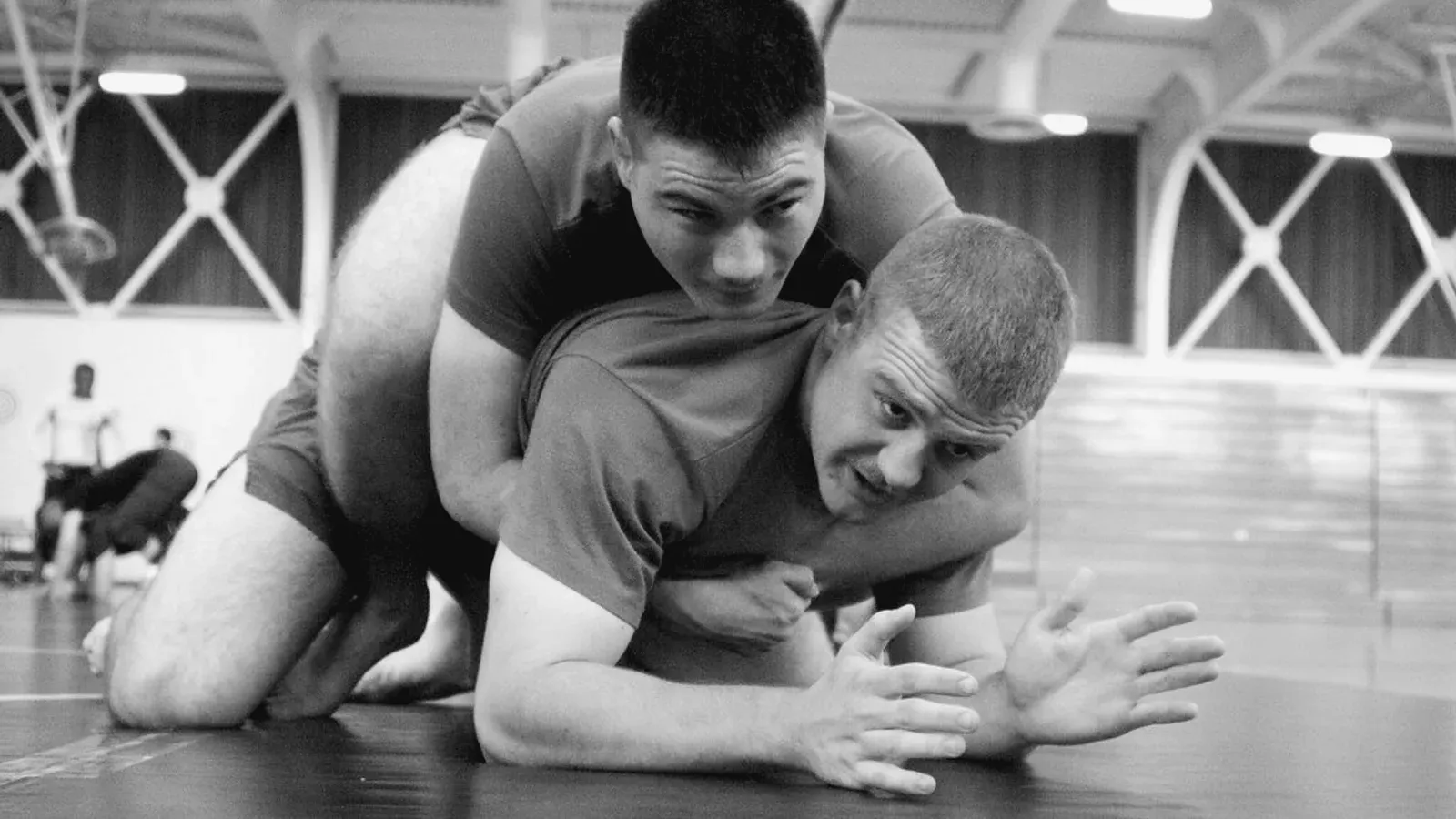
People arrive over a twenty-minute window, change, and start doing whatever they came to do. In practice a room usually contains all of the following at once:
- Pairs drilling something specific, often from a class earlier in the week.
- Pairs rolling full rounds, sometimes with a timer running, sometimes not.
- Two or three people sitting on the edge of the mat working through a position slowly, arguing about grips.
- Someone showing a training partner the thing that has been beating them.
- People chatting. A meaningful fraction of open mat is social, and that is not wasted time — it is a large part of why people are still training in three years.
Rounds are usually arranged by asking. There is rarely a queue system; you catch somebody’s eye between rounds and say “roll?”.
How to use it well
The single biggest difference between a productive open mat and a tiring one is whether you arrived with something in mind.
Bring one thing. One position you are stuck in, one escape that never works, one guard you are trying to build. An hour spent on one problem is worth five hours of unfocused rounds.
Drill before you roll. Fifteen minutes of repetitions while you are fresh, then rounds. Almost everybody does this the other way round and then has no energy left to practise anything.
Ask for the round you need, not the round you enjoy. “Can we start with you in mount on me?” is a completely normal request and gets you ten times the practice of starting from the knees. Positional rounds like that are the bridge between drilling and live rolling, and open mat is where you can actually run them.
Roll with people you avoid in class. The bigger ones, the sharper ones, the one whose guard you cannot pass. There is no coach watching and no reason to protect a record nobody is keeping.
Ask a question of somebody better. Most upper belts at an open mat will happily spend five minutes showing you why the thing you tried failed. Ask a specific question and you will get a specific answer.
Etiquette
Open mat runs on a small set of unwritten rules. They are not complicated and breaking them is noticed.
- Ask, and take no for an answer. People decline rounds for all sorts of reasons — injuries, fatigue, wanting to work with somebody specific. It is never personal.
- Do not dodge the beginners. A newer person asking you for a round has done something that took nerve.
- Say what is injured before you start, and respect what your partner tells you.
- Watch the space. Nobody is calling rounds, so it is on you to avoid rolling into the pair next to you. Whoever is standing usually moves.
- Hygiene. Clean gi, clipped nails, shower afterwards. Open mat is the session where standards slip because it feels informal, and it is precisely the one where the room is most mixed.
- If you visit another gym, message ahead, mention who you train with, wear a plain rashguard or a gi without another academy’s patches unless invited, and roll at the level of the room. You are a guest, and the first round is not the place to prove anything.
Should beginners go?
Yes — with one caveat. Open mat is not a class, so nobody is going to teach you, and a white belt who turns up with no plan can spend an hour being submitted and learn very little from it.
What makes it work early on is going with a purpose and a person. Arrange to drill with somebody at a similar level for the first half, then roll. If you have been training a few months, this is often where the sport starts making sense, because it is the first time you choose what to practise instead of being handed it.
If you are in your first few weeks, ask your coach whether they would rather you spent that time in the fundamentals class. Many would, and they are usually right — what to focus on early is narrow enough that structured classes do more for you.
What to bring
The same as any session, plus a little more of it: a spare rashguard or a second gi if you plan to stay for two hours, more water than you think, a mouthguard, and tape if your fingers are at that stage. Many open mats are mixed gi and no-gi, so it is worth having both if you have them — the two are different enough that a two-hour session split between them is a genuinely varied workout.
Common questions
Is open mat free? Usually included for members, and often free or a small drop-in fee for visitors. Check the academy’s page or message them.
Do I need to be invited? At your own gym, no. At somebody else’s, message first. Almost nobody says no, but turning up unannounced is bad form.
How long do they last? Typically one to two hours, and most people do not stay the whole time.
Is it just rolling? No, and treating it that way wastes it. The best open mats are half drilling and half live rounds, in that order.