
Guide
Position before submission — what it actually means
Control first, attack second. The phrase makes sense once you see the hierarchy of positions it is built on — and it has real limits worth knowing.
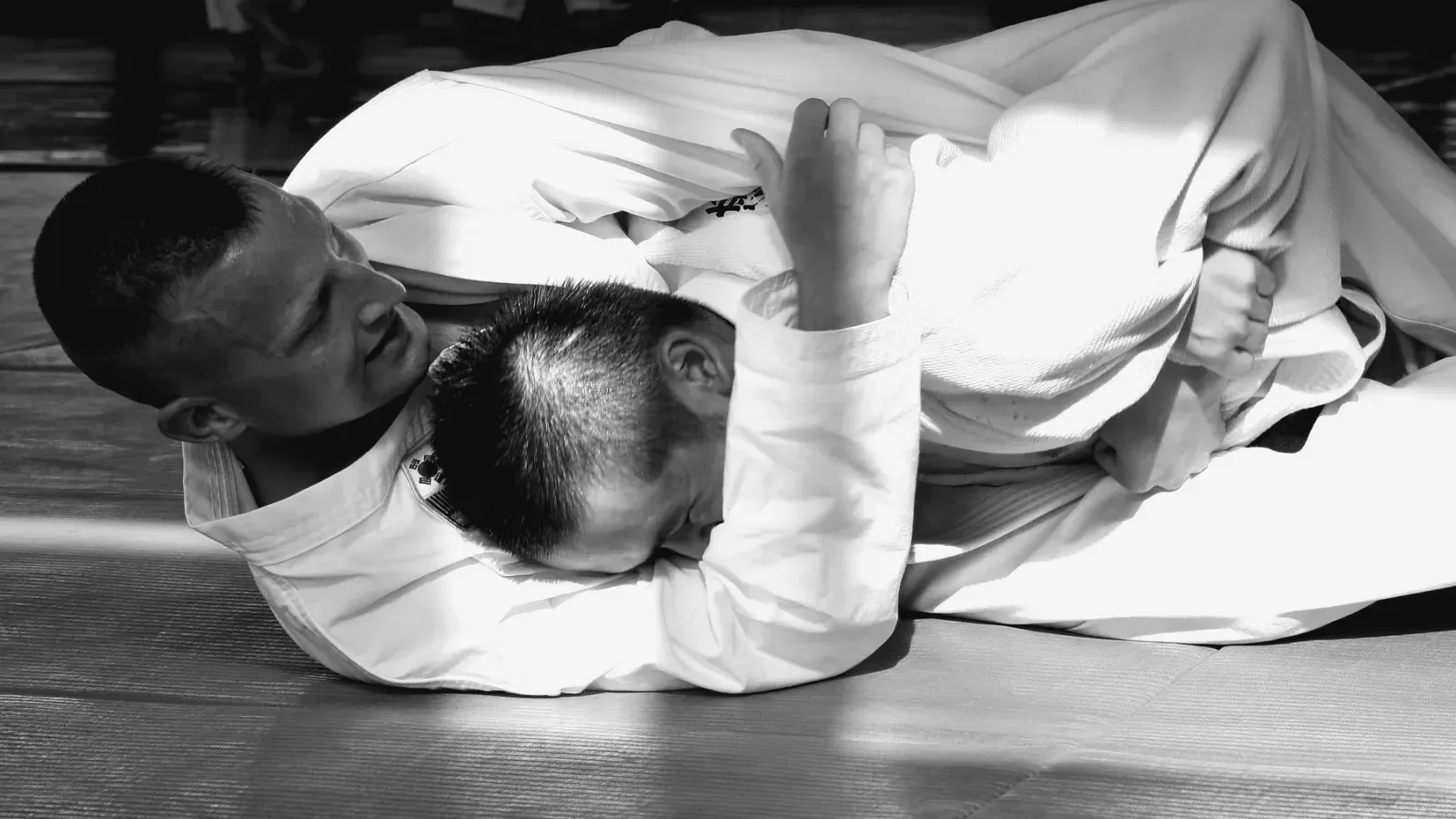
Secure a controlling position before you attack, because a failed submission usually costs you the position — and the position is what generated the chance in the first place. That is the whole of “position before submission”, and it is less a moral principle than a statement about odds.
Beginners hear it as “be patient”. It is more precise than that: it says the currency of Brazilian Jiu Jitsu is control, submissions are bought with it, and spending control on a low-probability attack is a bad trade.
The hierarchy it assumes
The maxim only makes sense against a ranking of positions. Roughly, from best to worst for you:
- Back control — behind them, chest to their back. The strongest position in the sport: you can attack their neck, they cannot see you, and they cannot attack you at all.
- Mount — on their chest, knees on the mat. Enormous pressure, several attacks, almost nothing coming back.
- Knee on belly and side control — pinning across their body. Strong, mobile, and one step from mount.
- Top half guard and top closed guard — you are on top, but one or both of their legs is involved. Working positions rather than winning ones.
- Standing, or a neutral scramble — nobody has anything yet.
- Bottom guard — them between your legs, you underneath. Not a bad place. You have frames, attacks and sweeps, and the sport is unusual in treating this as playable rather than lost.
- Bottom half guard, then bottom side control, then bottom mount — increasingly worse. Less space, less air, fewer options.
- Back taken — the mirror of the best position, and the worst place to be.
Competition scoring reflects the same order. Under IBJJF rules, taking the back with hooks and achieving mount are worth four points, passing the guard three, and a sweep or takedown two, with knee on belly at two. The scoring did not invent the hierarchy; it describes one that already existed.
Why the order is what it is
Three things decide where a position sits: how much of their movement you control, how much they can do to you, and how much your air and posture cost you to maintain.
Back control wins on all three at once. Bottom mount loses on all three. Everything else sits between, which is why the ranking is remarkably stable across gyms and rulesets — it is not a convention, it is a description of what the human body can do from each place.
This is the same mechanism that makes the whole art work against a bigger opponent: once the fight is on the ground, position determines what is possible far more than size does.
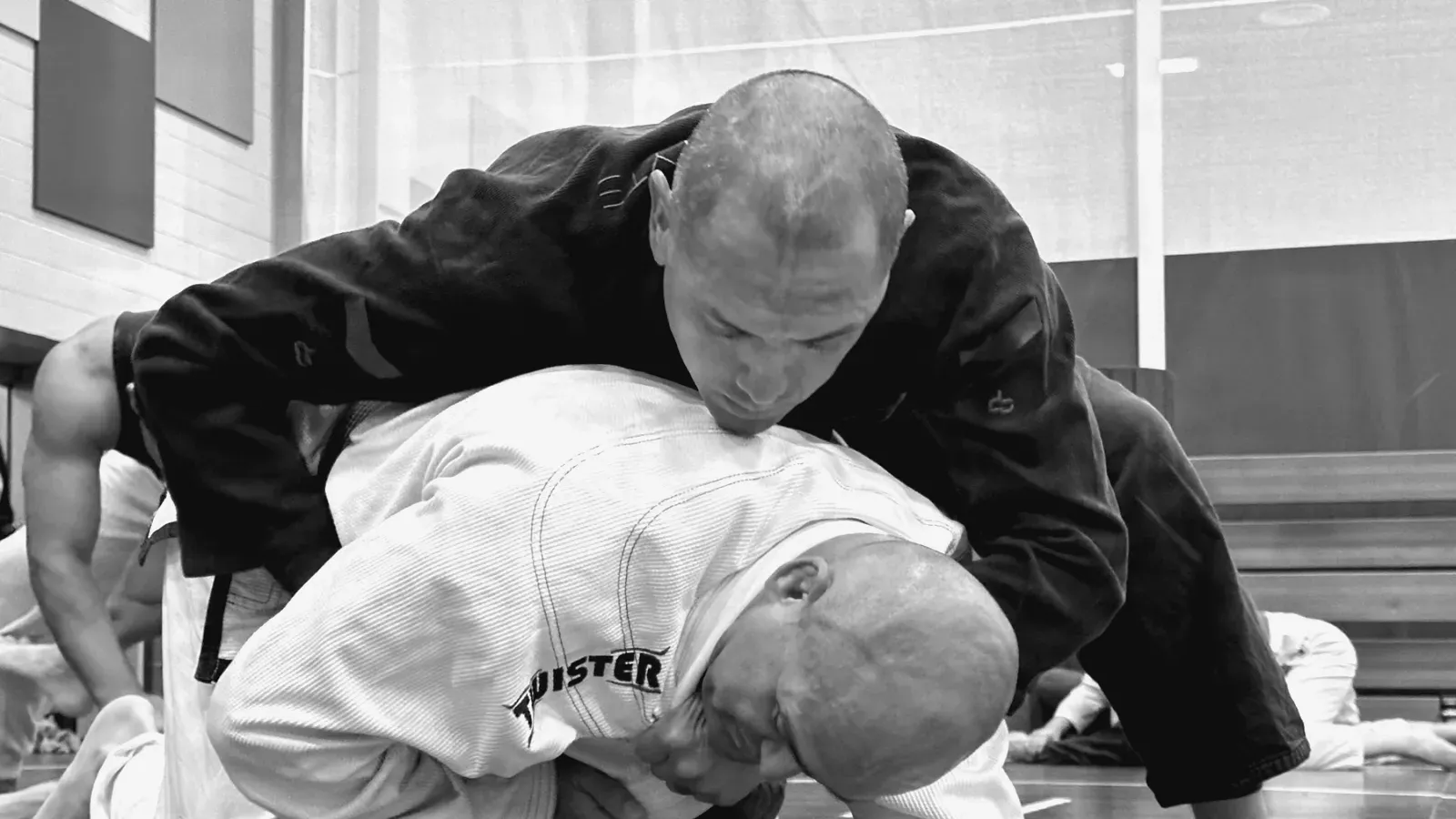
Back control makes the point plainly. Arrive there first and the rear naked choke is close to automatic, which is why taking the back is usually worth more than reaching for an armbar from somewhere worse.
What it changes about how you roll
You stop attacking from everywhere. The armbar available from bottom side control is available because you are losing. Taking it usually means giving up the little you had.
You start finishing the position first. A beginner in mount lunges for the first arm they see and gets rolled. A blue belt makes the mount unbearable, waits for the arm to come out on its own, and then attacks. Same submission, entirely different success rate.
Losing position starts to feel like the real loss. Once the hierarchy is internalised, being swept bothers you more than being tapped, which is a good sign.
Your escapes get an order. Bottom mount to bottom side control is progress. Bottom side control to guard is progress. You stop trying to go from the worst position to the best in one movement, which is the most common reason escapes fail for beginners.
When it does not apply
The maxim is a default, not a law, and treating it as a law will hold you back later.
Leg attacks broke the ranking. Modern leg-lock systems attack from positions the old hierarchy called neutral or even losing, and they do it deliberately. A person entering a leg entanglement is not being impatient; they are playing a different map. Whether your academy teaches this early varies enormously.
Scrambles do not wait. A submission that is available for half a second during a transition is often worth taking, precisely because nobody has position yet and nobody is going to.
Guard is not a losing position. Attacking from bottom guard is not a violation of the maxim. Guard is a working position with real offence, which is why the guard types you choose shape your game so much.
Competition clocks change the maths. Down on points with thirty seconds left, a low-percentage attack becomes the correct decision.
Where it still holds
For anybody in their first two or three years, the default is almost always right, for a reason that has nothing to do with tradition: you cannot yet tell the difference between a real chance and a hopeful one. The hierarchy is a way of borrowing that judgement until you have your own.
The practical version, worth carrying into your next session: when you find yourself reaching for a submission, ask whether you would still have this position if it fails. If the answer is no, and you are not sure it will work, improve the position instead. That single question is most of what a coherent game is built on.
Common questions
Is it outdated? No, but it is incomplete. It describes the safest default, and high-level grappling contains well-understood exceptions.
Should I ever attack from a bad position? In training, yes — that is how you find out what works. In a competition or a self-defence situation, far less often.
Does it apply in no-gi? Yes. The hierarchy is the same; what changes between gi and no-gi is how easily positions are held, not which ones are good.
Why do I keep losing mount right after I take it? Almost always because you attacked before the position was settled. Hold it for thirty uninteresting seconds first.