
Guard passes
Torreando Pass
The bullfighter pass — you move their legs out of the way rather than trying to get past them, and the whole thing is decided before you go anywhere.
Every other pass in the library goes through, over or around the legs. This one moves them. The torreando — toureando, the bullfighter pass — controls the opponent’s legs at the knees or the trouser cuffs, steers them to one side, and then runs past the space that opens up.
The name is the explanation: you are the bullfighter moving the cape, and their legs are the thing being steered rather than the obstacle being solved.
Where it comes from
Three sources in this model: standing passing, kneeling passing and headquarters. It belongs to the standing game above all — this is a pass for somebody on their feet against a guard player on their back or seated, and the standing version is the one worth learning first.
It is the natural partner to the knee cut. The knee cut goes through the middle; the torreando goes around the outside. Together they cover both answers to the same question, and a guard player defending one tends to open the other.
The grips
Two standard options, and the choice matters more than people think:
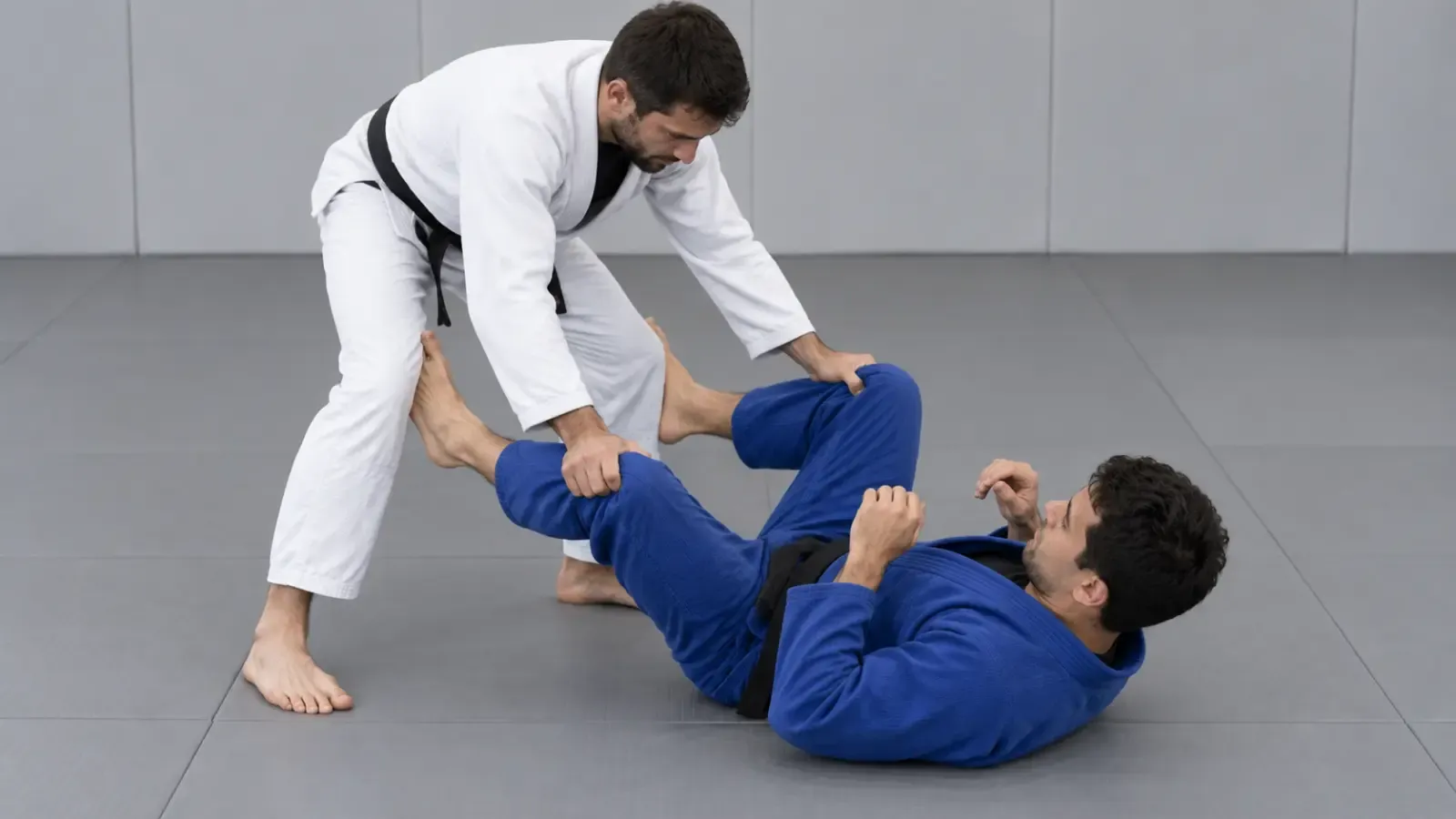
On the knees. Palms on the inside or outside of their knees, arms relatively straight. Works in both gi and no-gi, and gives you the most direct control of where the legs point.
On the trouser cuffs (gi). Gripping the fabric at the ankles. More control of the feet, which is what re-guards, but your hands are further from their hips and they have more room to move in between.
Either way, the arms stay reasonably extended. Bending your arms brings you into their range, which is where their feet, their hooks and their grips live.
Why the pass is won before you move
The single biggest misconception is that the torreando is a sprint. It is not. It is a redirection, and the sprint only works because the redirection already happened.
The sequence that makes it work:
- Control the legs and get their hips square to you, so they are not already angled.
- Push their legs to one side, across their own body. This is the redirection. Their knees go to the right, say, which means their hips have to turn and their feet are momentarily pointing away from you.
- Move the other way, fast, to the side their feet are no longer facing.
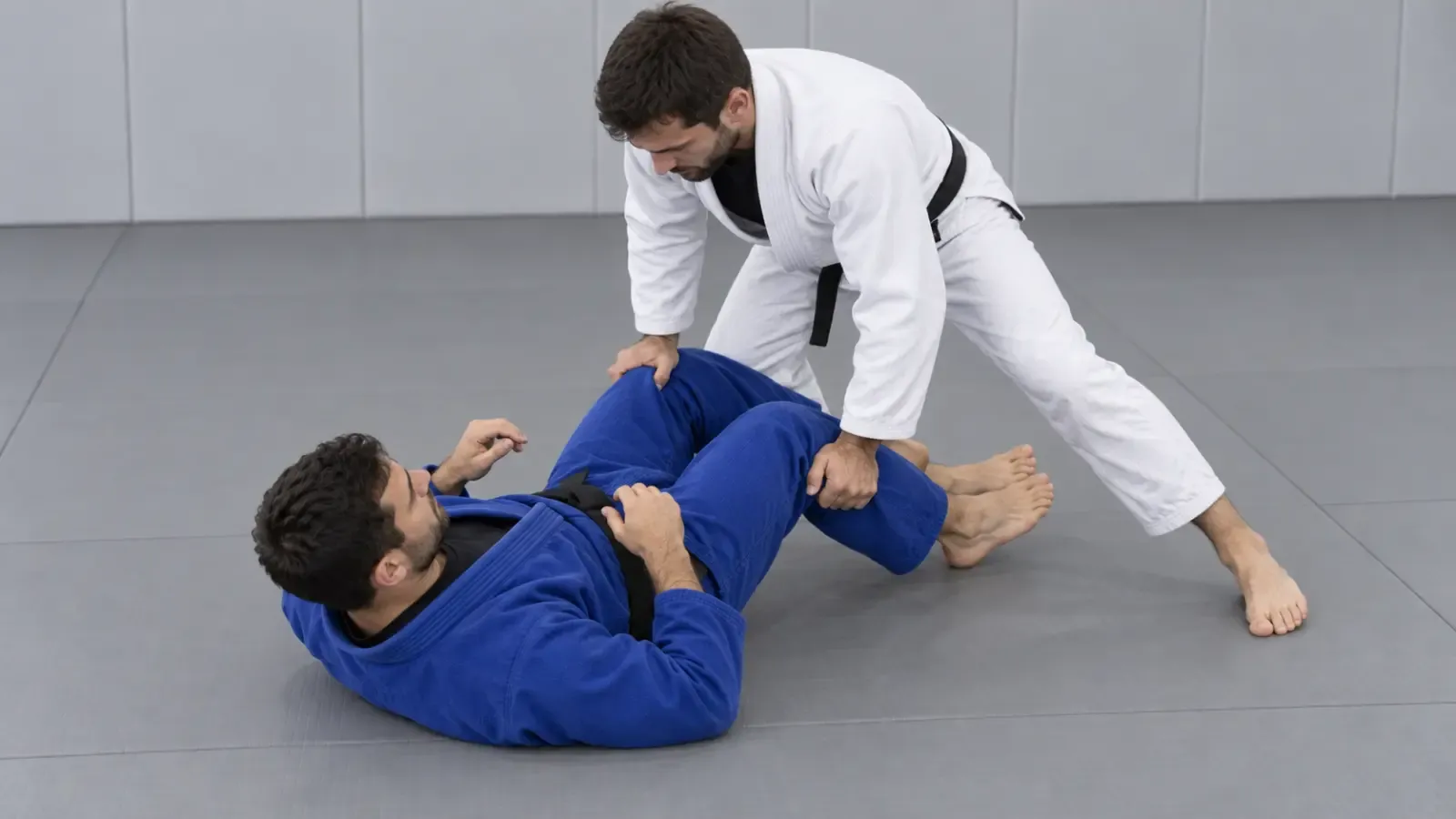
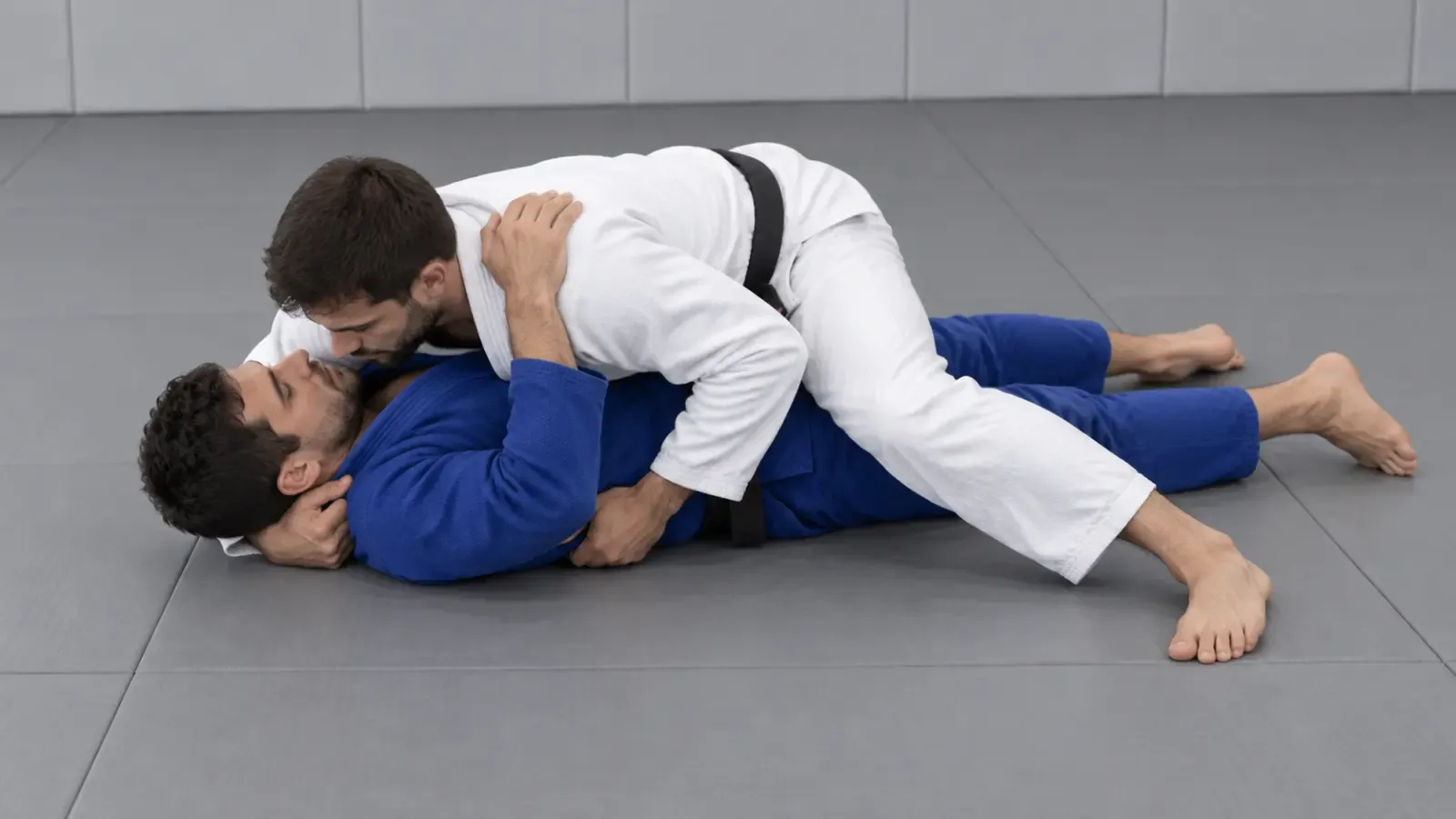
- Land the hip and the chest, not just the feet. Arriving beside them without pinning is how you get re-guarded immediately.
If you skip step two and simply run around, you are racing somebody whose legs are between you and where you want to be — and their legs are quicker than your feet over that distance.
The most common mistakes
- Running before steering. They just follow you with their hips and you end up back where you started, but more tired.
- Bending the arms. You come into range and they get a grip, a hook, or your collar.
- Letting go too early. The grips stay until your hips have landed. Releasing at the moment you start moving is what lets them re-insert a leg.
- Passing to the wrong side. Push the legs right, pass right — this is surprisingly common and it walks you straight into their guard.
- Standing too upright at the finish. Your weight has to come down onto them when you arrive, or you are standing beside somebody who still has free hips.
- Passing too wide. Going far around the outside gives them time. The pass should be tight — you are stepping past the hip, not jogging around the body.
What they do about it
- They follow with their hips. The standard answer. They turn to face you, and the correct response is usually to change direction and pass the other way — a torreando is more effective as two threats than one attempt.
- They insert a hook or a foot on your hip. Which is why the grips stay long and the arms stay extended.
- They sit up. A seated guard player is a different problem — the legs are no longer the main obstacle, and a torreando against a sitting opponent usually needs the sit-up dealt with first.
- They invert or spin. Against flexible guard players, the pass to one side can be met with an inversion that recovers guard on the other. Pinning the far hip as you land is what stops it.
Where it sits in a passing game
This library records the torreando and the knee cut as interchangeable — both are passes available from the same standing and kneeling sources, and the decision between them is made by what the guard player does:
- They keep their knees tight and their feet on you — the legs are available to steer. Torreando.
- They open up, or you are already inside one leg — you are past the outside, and the knee cut is the shorter route.
Passing games built on one pass fail against anybody who knows the counter. The pair is far more robust than either alone.
From underneath, recognising which pass is coming is most of the defence, and why your guard keeps getting passed is the same subject from the bottom.
Gi and no-gi
Both, and it is genuinely common in both, which is not true of every pass.
In the gi, cuff grips give you more precise control of the feet, and the extra friction means a guard player recovers more slowly. Passes tend to be more controlled and slightly slower.
In no-gi, you are gripping the knees or the legs themselves, which slip when sweaty, so the pass is faster and more committed, and the steering has to be sharper. The essential mechanics do not change.
Grips slipping while the mechanics survive is the usual pattern in what changes between gi and no-gi.
Drilling it
Drill the redirection with no pass at all: partner on their back, you standing with grips, just push the legs from side to side and watch their hips turn. Get a feel for the moment their feet stop pointing at you — that moment is the pass, and everything else is just moving.
Then drill it as a two-direction threat. Push left, they follow, pass right. A torreando drilled as a single-direction technique teaches a habit that good guard players read immediately.
Finally, drill the landing: arriving and immediately establishing side control or knee on belly, rather than stopping at “past the legs”.
Finishing in a position rather than at “past the legs” is the sort of detail that only gets fixed deliberately, which is what drilling is for.
Safety
Low risk for both people. The main thing to watch is your grip on their knees or cuffs — pushing a leg sideways while their foot is planted can twist a knee, so steer rather than shove, and be careful with cuff grips, which can catch fingers.
Technique varies with your body and your training partner. Ask your coach or instructor to check your distance; too close is the fault that is easiest to fix and hardest to notice.
Common questions
What is the torreando pass? A standing pass where you control the opponent’s legs, steer them to one side, and move past the space that opens — rather than trying to get through or around the guard.
Should I grip the knees or the trouser cuffs? Knees give more direct control of where the legs point and work in no-gi; cuffs give more control of the feet in the gi. Both are standard.
Why do they keep following me when I pass? Because you are running without steering first. The legs have to be redirected so their feet stop facing you before you move.
Which side should I pass to? The opposite side to the one you pushed their legs towards. Pushing right and passing right walks you into their guard.
Why do I keep getting re-guarded at the last moment? Usually because the grips were released early or your hips did not land. Hold the legs until your weight is on them.
Does the torreando work without a gi? Yes. The grips move from the cuffs to the knees and the pass gets faster, but the mechanics are the same.