
Guard passes
Double Under Pass
The heaviest pass in the standard curriculum, and the one that accepts a genuine risk in exchange for the pressure it applies.
This pass trades something real for the pressure it generates. You put both arms under the opponent’s legs, which means for the duration of the pass your arms are committed and your neck is available. Against somebody who knows that, the double under is a decision rather than a default — and understanding the trade is what makes it work.
Where it comes from
Standing passing in this model. You start from your feet in front of an open guard, and the pass is to close the distance, get both arms under the legs, and stack.
It belongs to a family of pressure passes — the over-under, the stack, the smash — that share the principle that a guard can be beaten by folding somebody rather than by out-manoeuvring them.
The idea
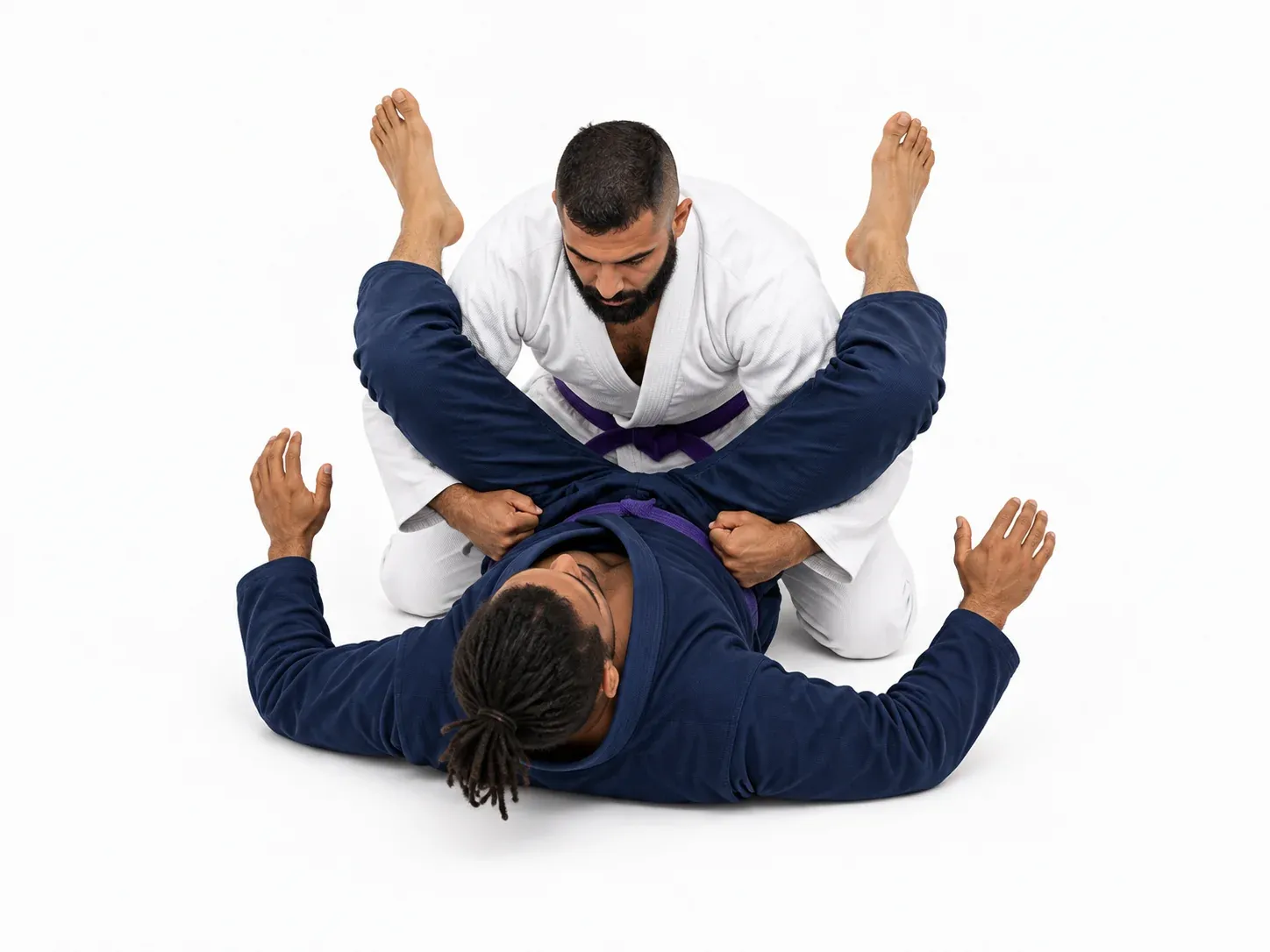
Both of your arms go under both of their legs, usually with your hands gripping their belt, their hips or joining behind their back. From there you drive forward and up, stacking their hips over their shoulders.
That position does three things:
- It removes their hips. A stacked opponent cannot shrimp, cannot turn, and cannot use their hips to recover guard — the hips are directly above them, loaded.
- It removes their legs as a defence. Both are trapped on your shoulders, so there are no hooks, no frames and no knee shield.
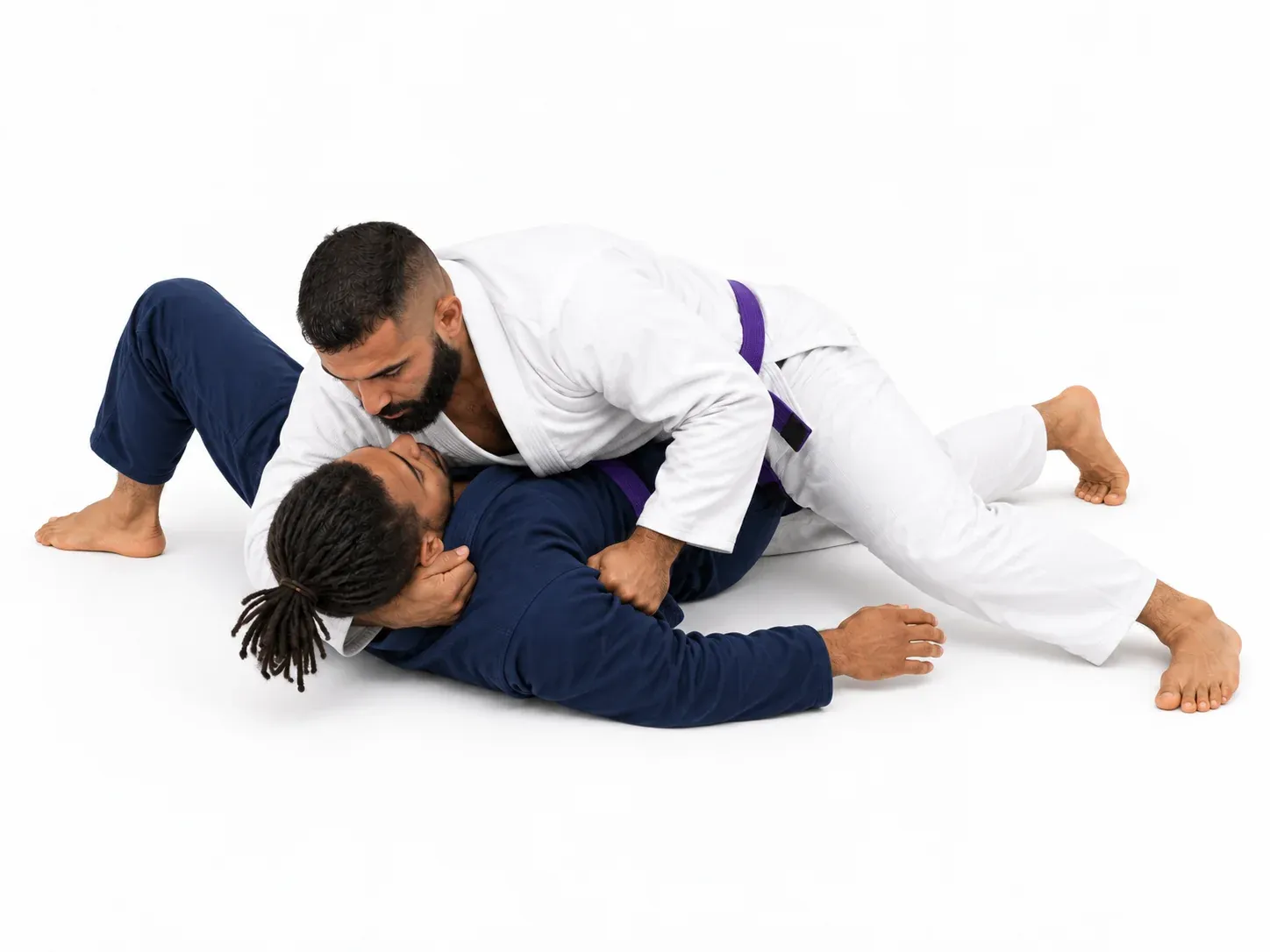
- It makes the pass a walk. Once they are folded, you step around to one side with your chest staying heavy, and arrive in side control.
The pressure is what people remember about it. It is genuinely uncomfortable to be underneath, and a significant number of passes happen because the bottom player simply gives up the position.
The details
Get the hips high. A stack where their hips stay on the mat is just a hug. Their weight has to come up over their own shoulders, which is what removes the base.
Chest to their thighs, head to one side. The chest drives the stack; the head position starts deciding which side you are going to.
Grip behind them, not on the legs. Joining your hands behind their back or gripping the belt makes the pass a single unit. Gripping the legs separately lets them be separated.
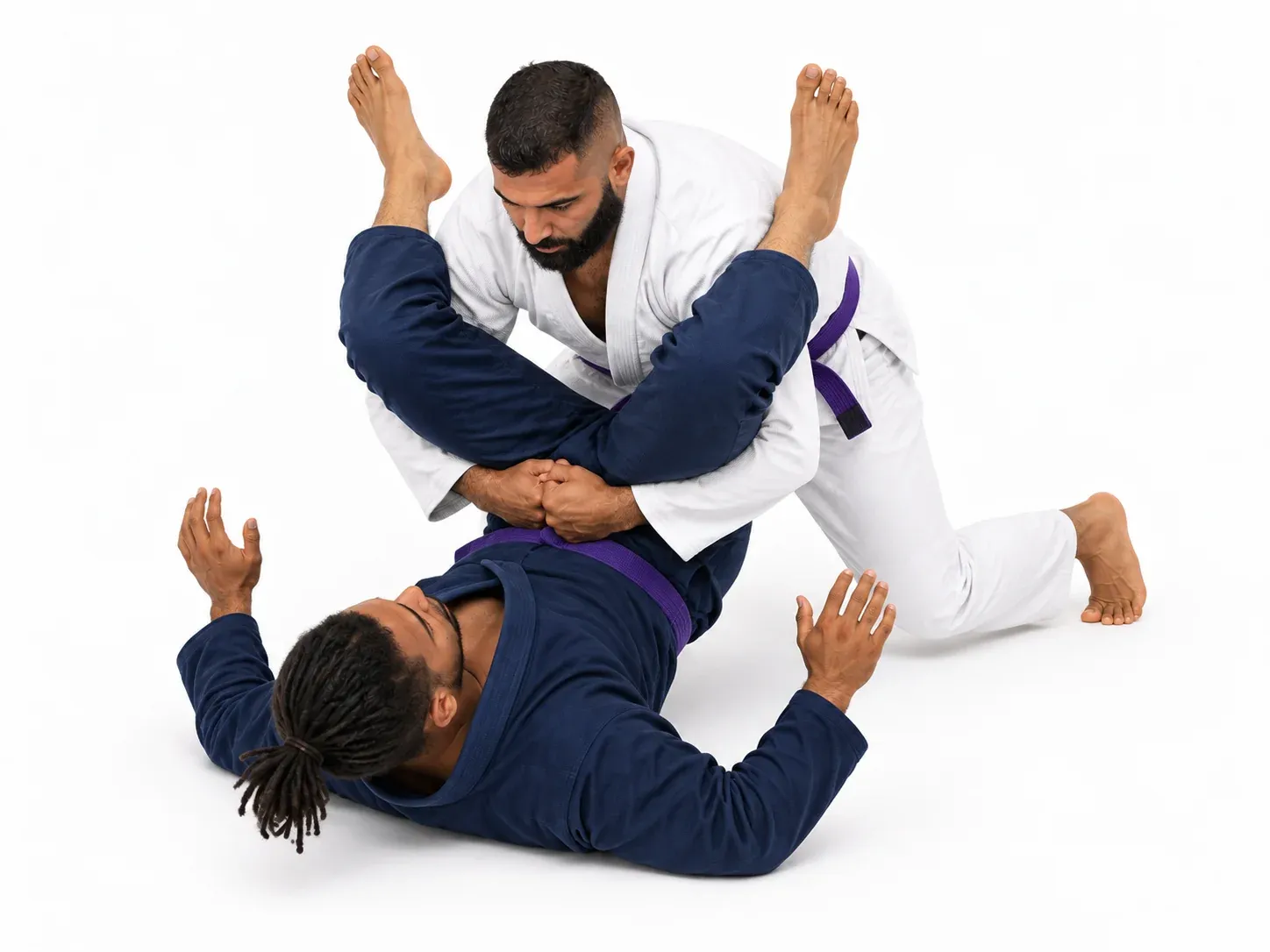
Walk, do not jump. The pass is finished by moving your feet around to one side while keeping the stack, and then dropping your hips as their legs come free. Trying to leap past tends to release the pressure at the exact moment it is doing the work.
What it costs you
This is the part usually left out, and it is the reason the pass is not simply the best one.
Your arms are committed. Both of them, under their legs, for the whole pass. You cannot frame, cannot post, and cannot fight a grip while you are there.
Your neck is available. Your head is down between or beside their legs, and your neck is close to their arms. Guillotines and front-headlock attacks are the standard punishment for a badly-timed double under, and a triangle becomes available if one arm slips out of position.
They can go to the back. If you lose the stack and they get their hips back to the mat while your arms are still under, turning to their knees and taking your back is available.
None of that makes it a bad pass. It makes it a pass with a price, and the price is why it is usually taught after the knee cut and the torreando rather than first.
Why it fails
- The hips did not come up. No stack, no pass — you are just holding their legs.
- You stood too upright. The pressure comes from your chest and your hips being forward and down, not from lifting.
- You released the pressure to walk around. The most common technical fault. The stack has to survive the movement.
- They got a frame in. Once a forearm is between your chest and their legs, the stack is broken.
- They defended with the legs early. A guard player who denies you the second underhook on the leg turns this into an over-under, which is a different pass.
- You held it too long. A stalled double under is where the counters live. If it is not passing, change.
Defending it
The bottom player’s answers are worth naming because they tell you what to protect against:
- Frame early. A forearm or a knee inside before the stack settles is the cheapest defence.
- Attack the neck. The guillotine, the front headlock, the darce — all available because the passer’s head is down and their arms are busy.
- Get the hips back down and turn. If the stack loosens, coming back to the mat and turning in leads to the back or at least to a scramble.
- Wait and defend the arrival. Some players accept the stack and simply defend the moment the passer tries to land, when the pressure is briefly released.
Being on the wrong end of this pass repeatedly usually has one of a small number of causes, and they are set out in why your guard keeps getting passed.
Gi and no-gi
Both, with a real difference in emphasis.
In the gi, belt and lapel grips make the stack far more secure, and friction means a stacked opponent stays stacked. This is a strong gi pass and it is common in competition.
In no-gi, sweat makes holding two legs much harder, and the counter-attacks on the neck are more available because there is no collar to defend and the passer’s head is exposed. The pass exists in no-gi but it appears less often and is usually held for less time.
A pass that is strong in one ruleset and marginal in the other is one of the clearer cases of what changes when the jacket comes off.
Drilling it
Drill the stack on its own — get both unders, bring the hips up, and hold it for thirty seconds without attempting to pass. Most people discover their stack is far less stable than they thought, and that is the thing to fix.
Then drill the walk-around with a partner instructed to frame, so you learn to move without losing the chest connection.
And drill it from the defending side, because the counters are the fastest way to understand what the pass actually requires.
Safety
Two specific things, and they matter more here than in most passes.
Stacking loads the neck and spine of the person underneath. Their chin can be driven into their chest under your bodyweight. Build the pressure gradually, listen for a tap, and release immediately — a stacked partner may not be able to make a clear sound or reach you to tap, so watch for a hand slapping the mat and stop at any signal.
Your own neck is exposed. Do not fight through a guillotine that is already locked to prove the pass; let go and restart.
Technique varies with your body and your training partner. Ask your coach or instructor to check your stacking angle, particularly with partners much smaller or less flexible than you.
Stacking somebody much smaller deserves particular care; the same ground is covered from the other direction in training across a weight gap.
Common questions
What is the double under pass? A pressure pass where both your arms go under the opponent’s legs, you stack their hips over their shoulders, and you walk around the top to side control.
Why is it risky? Both arms are committed and your head is down, which makes your neck available. Guillotines and front-headlock attacks are the standard punishment.
Why can I not finish the stack? Usually because their hips never came up off the mat, or because you released the chest pressure while walking around.
Should I grip their legs or behind their back? Behind the back, or on the belt in the gi. Gripping the legs separately lets them be separated.
Is it good in no-gi? Less so. Sweat makes the grips harder to keep and the neck counters are more available, so it is used more selectively.
How do you defend it? Frame before the stack settles, attack the neck while their arms are committed, or get your hips back to the mat and turn in.