
Escapes
Back Escape
Getting out of the worst position in the sport, in the order that actually works: the neck first, the hips second.
There are two problems here and they must be solved in order. The first is that you are being choked. The second is that somebody is on your back. Almost every failed back escape is somebody trying to solve the second problem while the first one is still happening.
Back control is the strongest position in Brazilian Jiu Jitsu — the attacker can see you, you cannot see them, and the highest-percentage submission in the sport is available to them and nothing at all is available to you. Escaping it is correspondingly difficult, and the discipline of doing it in the right sequence is most of the skill.
Where it comes from
Back control, defending. One position, and this model records no other, because there is only one.
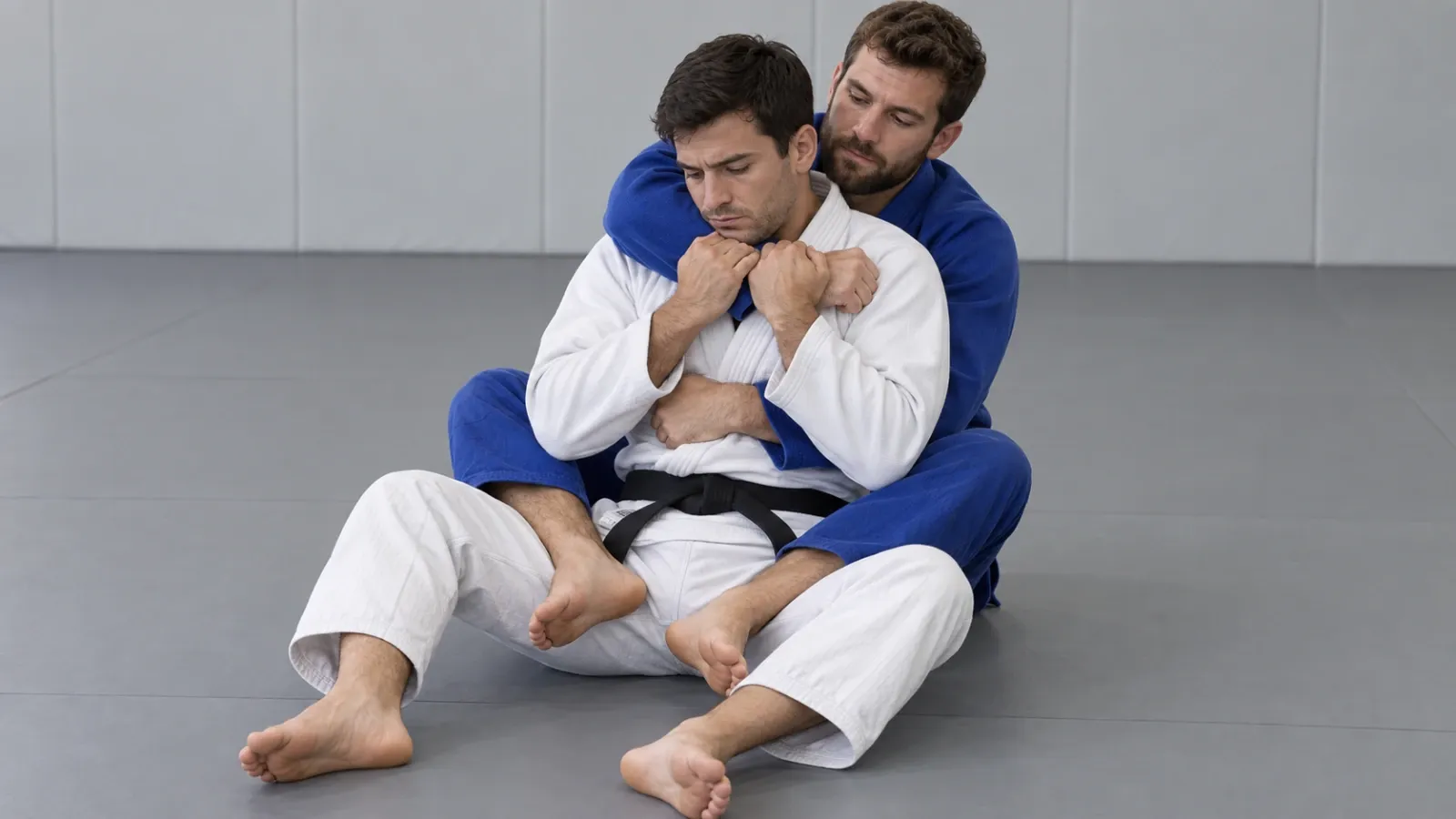
What you are usually facing: their chest on your spine, a seatbelt grip — one arm over your shoulder and one under your armpit, hands joined — and either two hooks inside your thighs or a body triangle locking their legs around you.
Phase one: do not get choked
Nothing else matters until this is handled.
Chin down. Tuck your chin hard into your own chest. The choke needs the crook of their elbow under your chin on your centre line; a tucked chin denies it. This is not a comfortable position and it is not supposed to be.
Two hands on one arm. Specifically the choking arm — the one over your shoulder. Both of your hands against one of theirs is the only favourable arithmetic available to you here.
Fight the hand, not the arm. Peeling their grip is achievable. Dragging their whole arm out is not; their back and shoulder are stronger than your arms. Attack the connection between their hands, or the fingers of the choking hand.
Do not turn your head to look. People instinctively turn towards the pressure. Turning exposes the neck on that side and often feeds the choke directly.
Only once the neck is genuinely safe does the escape begin. Beginners reverse this, start working the hips while an arm is still around the neck, and get caught on the way out. Being patient here is the technique.
Phase two: get your shoulders to the mat
You cannot be choked through the floor, and you cannot be held on a back that is flat.
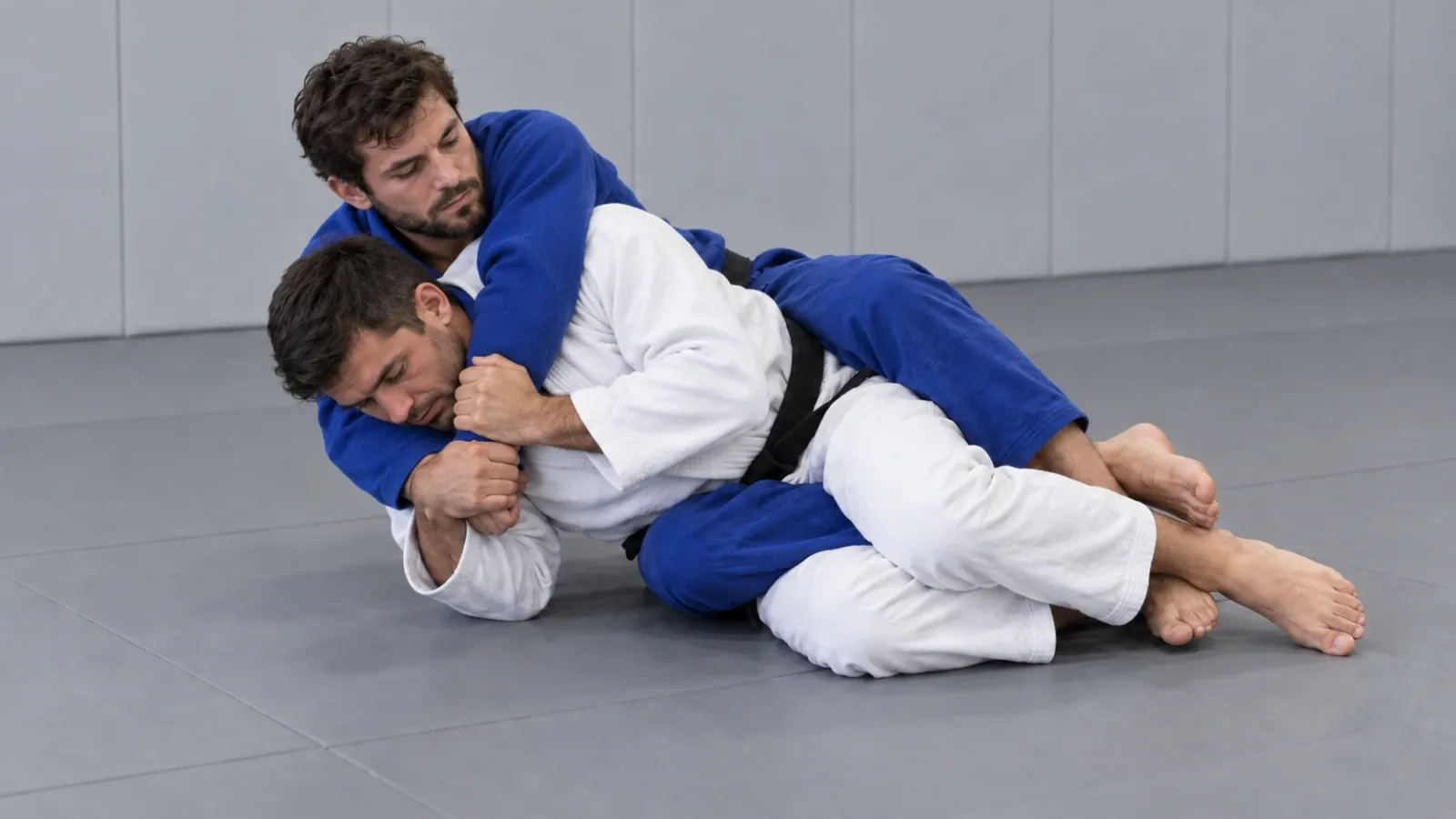
The core movement is to slide down and towards the choking-arm side — the side where their arm is over your shoulder — putting your shoulders and upper back onto the mat. Two things about it:
Go towards the choking arm, not away. This is counter-intuitive, and it is the detail that makes the escape work. Escaping away from the choking arm walks you into the choke; escaping towards it puts your shoulder under their armpit and takes the angle away from them.
Slide down, not out. Trying to peel yourself off backwards fights their whole body. Sliding your own body downwards, so your head ends up below their chest, is a direction their control does not resist well.
Once your shoulders are on the mat, their chest is no longer on your spine, and the position has already substantially degraded for them.
Phase three: deal with the legs
Hooks and a body triangle are different problems.
Hooks. Trap the hook on the side you are escaping towards — cross your leg over it, or push it down with your hand once your neck is safe — and then slide your hips past it. A hook that cannot follow your hips is a hook you have beaten.
Body triangle. Harder, and it does not come off by sliding. The usual answers are to attack the locked ankle, to turn towards the locked side where the triangle is weakest, or to use the fact that a body triangle costs them some mobility — many people escape a body triangle by turning in rather than sliding out.
Once the legs are cleared you should end up in their half guard or on top, never simply “out”. The escape finishes somewhere.
Why it fails
- Escaping before the neck is safe. The single biggest one.
- Escaping away from the choking arm. Feeds the choke.
- Turning your head towards the pressure. Same.
- Working only on the legs. You can clear both hooks and still be choked; the hooks are the last problem, not the first.
- Panicking and bridging wildly. Expends energy, generates space for them to improve their grip, and does not move you anywhere useful.
- Giving up on the tap decision. This position is where people get stubborn and go to sleep. See below.
The relationship to the choke
This library records the rear naked choke defence as the defence against the choke itself, and this escape as the technique for the position. They are two halves of the same job and they belong in that order: the choke defence buys the time in which the escape becomes possible.
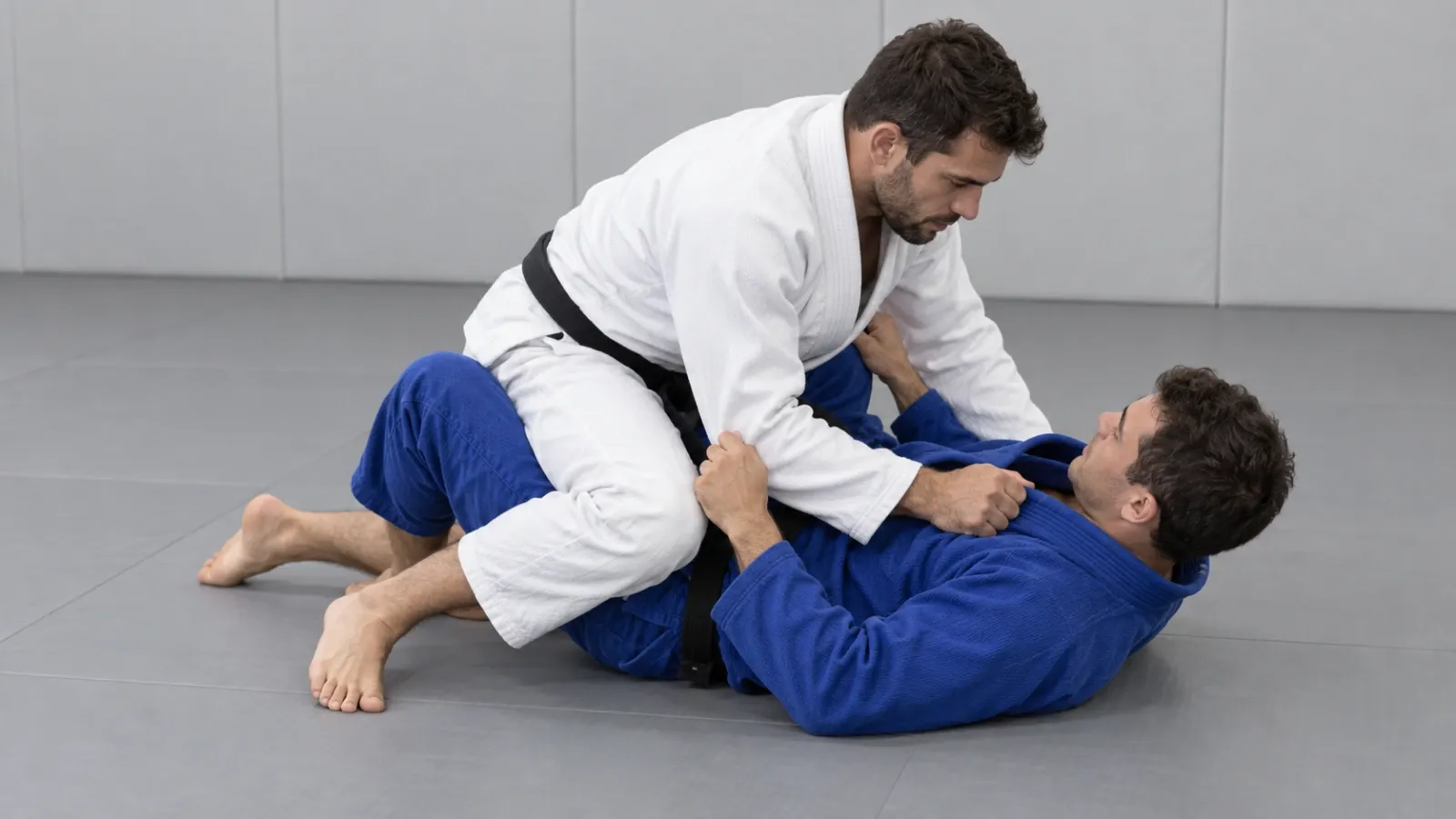
Training them separately is a mistake. A back escape drilled against a partner who is not attacking the neck teaches a sequence that will not survive a real attempt.
Drilling it
Ask your partner to take the back with the seatbelt and to attack the neck continuously rather than waiting politely. Then drill the phases:
- Hand fighting only. No escaping. Just survive and peel grips.
- Survival plus getting the shoulders to the mat. Stop there.
- The full escape, finishing in half guard or on top.
Also drill it from the worst version — body triangle, both hands already joined — rather than only from a loose back mount. The position you need the escape from is the one you are least likely to be given in a friendly drill.
Getting out of bad positions before learning to hold good ones is the ordinary order of learning, and most of what a white belt should actually work on.
Safety
This is the position where training injuries and unnecessary blackouts happen, almost always for one reason: people do not tap.
Tap early. A rear naked choke is a blood choke and it works quickly, and the last two seconds of resisting one teach nothing you could not learn from starting again. If you feel the choke settle under your chin and you cannot peel the grip, tap. Going out repeatedly is not toughness and it is not training.
Losing consciousness rather than a position is the entire practical argument in the case for tapping early.
Gi and no-gi
The mechanics are the same, with one significant difference: in the gi they have your collar, which means a choke does not require the arm to be as deep, and lapel chokes are available from angles the naked choke is not. Defence has to include the collar, not just the arm.
In no-gi, sweat makes their grips less secure and escapes correspondingly more available, but the seatbelt and body triangle do not depend on clothing and remain just as strong.
Control that survives the jacket coming off is the exception; most of what makes up a game does not.
Common questions
What should I do first when someone takes my back? Protect your neck. Chin down, two hands on the choking arm. Do not start escaping until the choke is neutralised.
Which way should I escape? Towards the choking arm — the side where their arm is over your shoulder. Escaping away from it walks you into the choke.
How do I get their hooks out? After the neck is safe and your shoulders are heading to the mat. Trap the hook on the escaping side and slide your hips past it; a hook that cannot follow your hips is beaten.
What if they have a body triangle instead of hooks? Different problem. Sliding does not remove it — the usual answers are to turn towards the locked side or to attack the locked ankle, and to use the mobility the triangle costs them.
Why do I keep getting choked while escaping? Almost certainly a sequencing error: you started moving your hips before the neck was safe, or you escaped away from the choking arm instead of towards it.
Should I just tap if the choke is in? Yes. Once a rear naked choke is properly under the chin with the grip joined, tap. There is nothing to be gained by riding it out.