
Guide
Best Brazilian Jiu Jitsu Guide
No single guide to Brazilian Jiu Jitsu covers starting out, training alone, competition rules and self-defence equally well, because these are genuinely different questions. This page explains what a general guide can and cannot tell you, and points to the specific guide that matches your actual question.
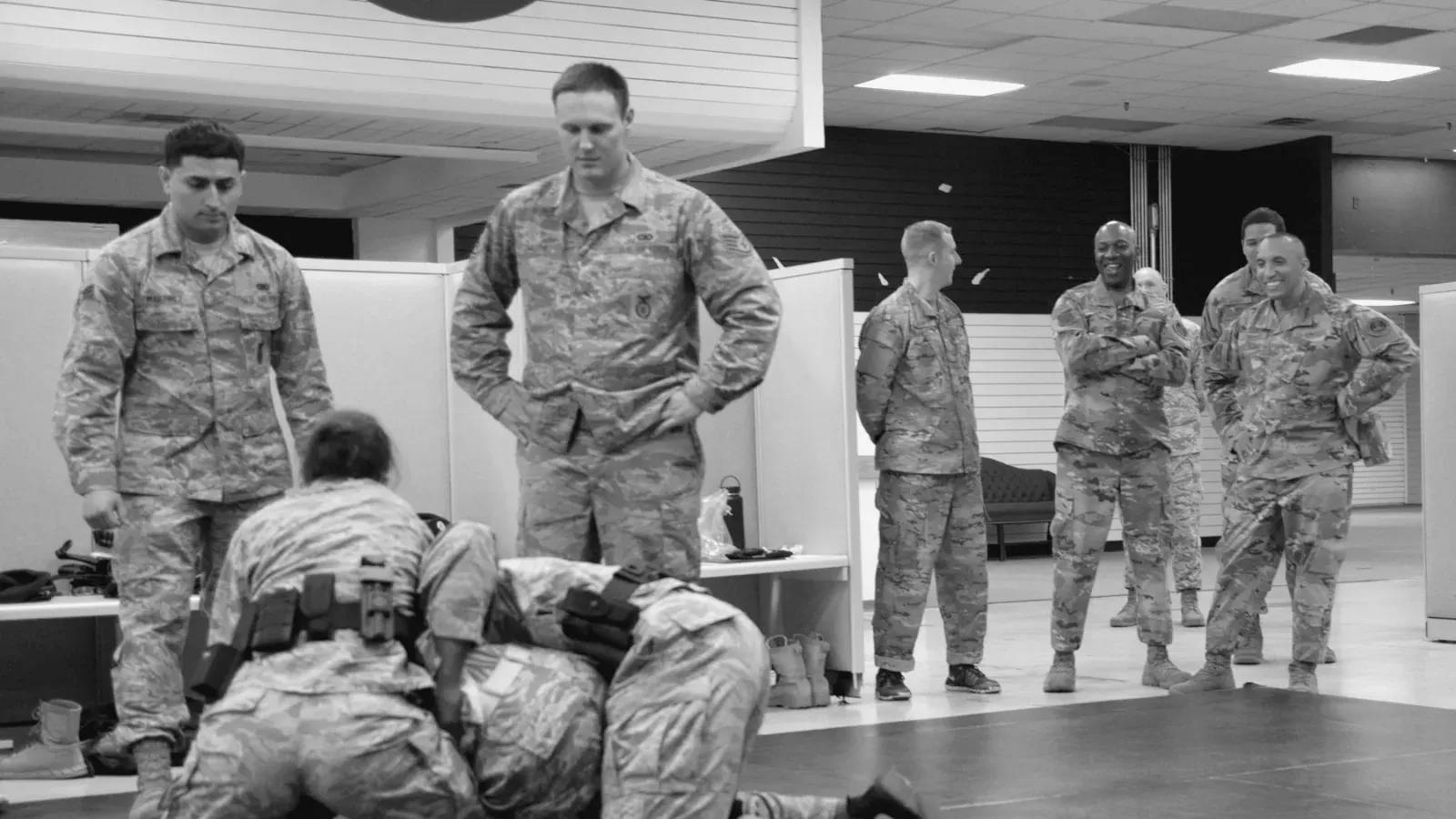
Brazilian Jiu Jitsu is a ground-based grappling martial art and combat sport. It centres on taking an opponent to the ground, gaining a dominant position, and using techniques such as joint locks, chokeholds and compression locks to force a submission, meaning the opponent taps to signal they cannot continue safely in that position. Because that description covers everything from a first lesson to world-level competition, no single guide explains it all equally well. The guide worth reading is the one that answers the question you actually have.
What a general guide to Brazilian Jiu Jitsu can tell you
A general guide is useful for orientation. It can explain that the art is practised either in a gi, the jacket-and-trousers uniform, or without one, known as no-gi, where a rash guard is worn instead. It can explain that live sparring is called rolling, and that this is where most of the skill in Brazilian Jiu Jitsu is actually built. It can also explain the underlying idea that a smaller or weaker person can control a bigger one through leverage and weight distribution rather than raw strength, which is the principle the whole art is built on.
This kind of guide is also the right place to learn vocabulary and positions before you set foot on the mat, so that a first class makes sense rather than feeling like a foreign language. It gives you enough to follow instruction, not enough to replace it.
Where a general guide stops being useful
A guide stops being reliable the moment it states a rule without naming the organisation that rule belongs to. Brazilian Jiu Jitsu does not have one universal rulebook. The IBJJF, the International Brazilian Jiu-Jitsu Federation, issues its own set of rules for no-gi competition, and even then the exact rules applied can vary from one competition to the next, so a guide that says “the rules are X” without naming IBJJF and the relevant competition is guessing. Other bodies run their own events under their own terms: the SJJIF, for example, runs its World Championship without advantage points or referee decisions deciding the outcome, which is a different scoring approach entirely. If you are training or competing for a specific event, the guide that matters is the rulebook for that event, not a general summary.
A general guide is also the wrong tool for building physical skill. Brazilian Jiu Jitsu is a live, contact skill developed through repetition with a resisting partner. Reading about a position tells you what it looks like; it cannot give you the feel of pressure, the timing of a partner’s reaction, or the correction an instructor makes when your hip placement is off. Text and video have a role in preparation and review, but they sit alongside training, not in place of it.
What people get wrong about a “best” guide
The most common mistake is expecting one article to serve a beginner and a competitor equally well. Someone choosing whether to start needs different information from someone preparing for a specific tournament under a specific ruleset. Treating these as the same question produces a guide that is too vague to help either reader.
The second mistake is assuming the rules of Brazilian Jiu Jitsu are fixed. They are not. Different federations, IBJJF and SJJIF among them, run their own competitions with their own scoring and procedures. A guide that describes “the rules” in general terms, without saying whose rules, cannot be trusted for anything you plan to compete under.
The third mistake is treating competition rules as if they describe the whole art. Brazilian Jiu Jitsu is also practised for self-defence, for fitness, and simply as a long-term hobby, and a guide focused entirely on tournament scoring will not answer a question about whether the art works outside a competition mat.
Guides matched to the question you actually have
If you are deciding whether to start, How to learn Brazilian Jiu Jitsu sets out the sequence a beginner actually follows. If you already train but want to work on your game without a partner, How to train Brazilian Jiu Jitsu solo covers what solo practice can and cannot achieve. If you are wondering whether being smaller or physically weaker rules you out, Technique vs strength in Brazilian Jiu Jitsu addresses that directly rather than in general terms.
If you are choosing a class and want to know what a first session involves, What is a Brazilian Jiu Jitsu fundamentals class? explains the format beginners are actually taught in. And if your interest is self-defence rather than sport, two guides cover that from different angles: Does Brazilian Jiu Jitsu Work in Real Life? looks at how the art performs outside a competition setting, and Is Brazilian Jiu Jitsu Legit? addresses the credibility question directly.
Each of these answers a narrower question properly, which is more useful than one guide trying to answer all of them at once.