
Guide
Can an Armbar Dislocate a Shoulder?
An armbar is designed to hyperextend the elbow, which is why a tap or injury normally happens there long before the shoulder is affected. Shoulder stress becomes possible mainly when the position breaks down, such as when the trapped partner turns or resists at the wrong moment.
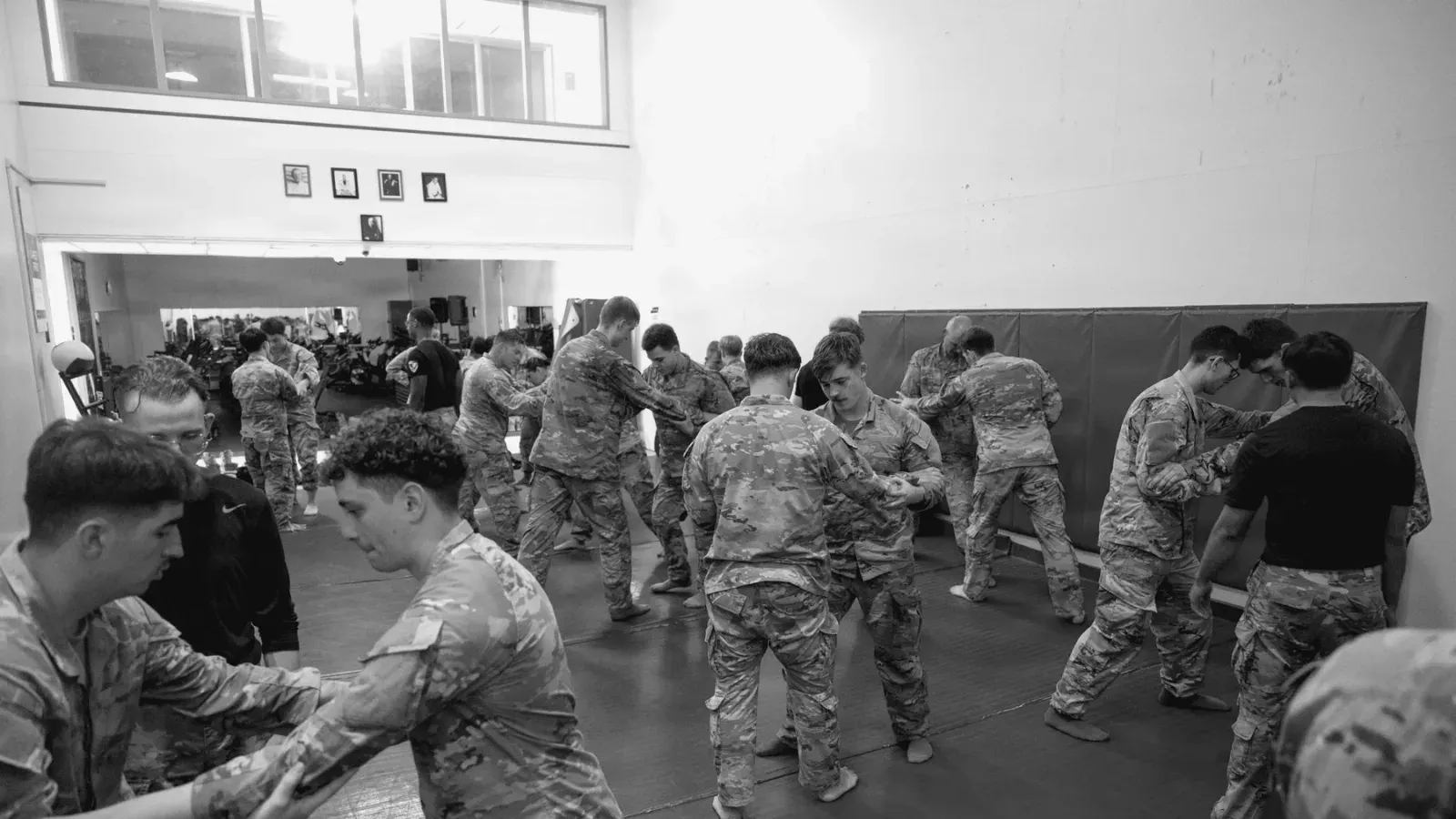
What an armbar actually targets
An armbar, also called a straight armlock or juji-gatame, works by trapping your training partner’s arm and using your hips and legs to straighten it past the point the elbow wants to stop. This is called hyperextension: forcing a joint beyond its normal range of motion. The elbow is a hinge joint, built to bend and straighten in one plane, which makes it the natural point of failure when a straight pulling force runs down the length of the arm.
You can apply an armbar from several positions, including mount, side control, and guard. The setups differ, but the mechanical target is the same: the arm is isolated, the elbow is lined up straight, and pressure is applied through the hips against the joint. Guides on how to armbar from mount and how to armbar from side control cover those setups in detail, and there is a further variation in arm bar from bottom side control for when you are underneath rather than on top.
The shoulder is a ball-and-socket joint with a far greater range of motion than the elbow. A straight line of force along the forearm, which is what a correctly finished armbar applies, reaches the limit of the elbow long before it comes anywhere near the limit of the shoulder. That is why the tap, or the injury when the tap comes too late, happens at the elbow in the overwhelming majority of cases.
When the shoulder comes under stress
Shoulder dislocation from an armbar is not typical, but it is not impossible either, and it usually happens for a specific reason: the mechanics of the position have broken down. If your partner turns their body while the grip on the wrist and elbow is still locked, the direction of force changes. Instead of a straight pull along the forearm, it becomes a rotational or lateral force running up through the shoulder, which is a joint far less tolerant of being wrenched sideways than of being pulled straight.
The same shift can happen if the trapped arm is caught away from the body’s midline before the armbar is fully locked in, or if the person being submitted resists explosively at the exact moment the elbow has already reached full extension. In that instant, any extra force has nowhere to go but further along the arm, into the shoulder.
Ronda Rousey is well known for her skill in grappling and is particularly noted for her string of victories by armbar. Her results are a useful illustration of how the technique is meant to work: opponents tapped once the elbow reached its limit, which ended the exchange before force travelled any further up the arm. That outcome, a tap at the elbow, is what a correctly applied armbar is designed to produce, whether the setting is mixed martial arts or Brazilian Jiu Jitsu.
What people get wrong about armbar safety
A common misunderstanding is that the armbar is primarily a shoulder attack, because the arm is stretched across the body and the shoulder is visibly under tension throughout. What is actually being loaded is the elbow. The shoulder muscles and tendons feel stretched, but they are not usually anywhere near their limit unless something has already gone wrong with the position.
Another mistake is assuming that a slow, controlled application removes all risk. Speed on its own is not what causes injury here. What matters is the direction of the force and how late the tap comes. A slow armbar applied after the arm has been pulled into an awkward angle can still put the shoulder at risk, while a fast, clean armbar finished the moment the elbow straightens rarely troubles the shoulder at all. This is why position before submission matters as much as the submission itself: securing full control of the arm and the body before you apply pressure keeps the force travelling in the direction the joint is meant to resist, rather than sideways into the shoulder.
Reducing the risk
The person applying the armbar controls most of the risk by keeping the trapped arm aligned with the body and finishing the submission before the opponent has a chance to turn out of position. The person defending controls the rest by tapping as soon as the elbow reaches its limit rather than waiting to see how far the pressure goes, a habit covered in when to tap in Brazilian Jiu Jitsu. Once the elbow is fully extended and pressure continues, there is very little time between discomfort and injury, and even less time for the shoulder to become involved if the tap comes early enough to end the exchange at the elbow.