
Guide
Is Armbar One Word?
Armbar is written as one word in English-language grappling writing, matching how the technique and its variants are documented. The name pairs the English word bar, for the opponent's trapped arm, with jūji, the Japanese term describing the crossed shape of the hold.
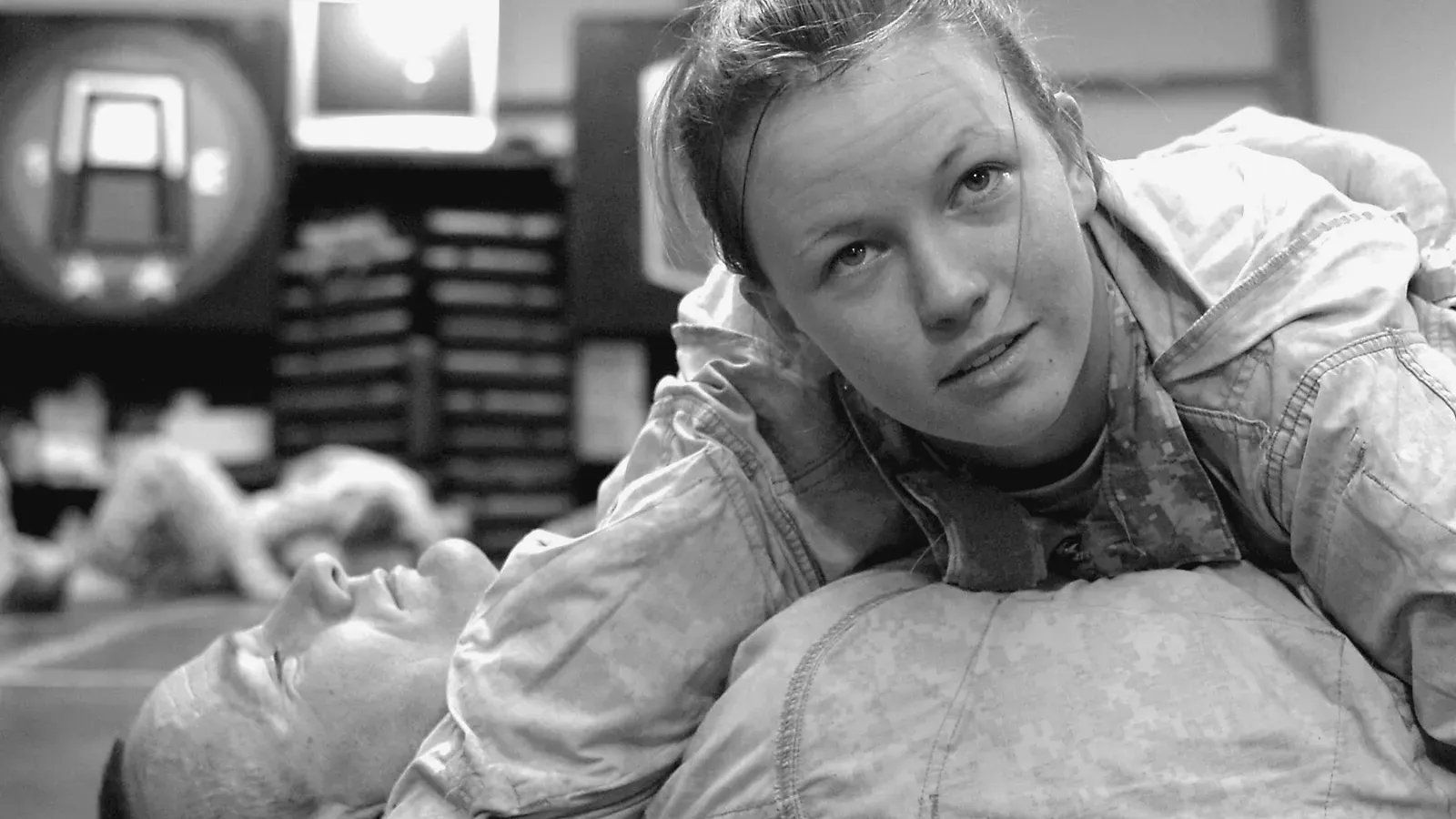
“Armbar” is written as one word in English-language grappling writing, not as two words or with a hyphen. Reference material on the technique writes it this way consistently, and the same one-word form carries over into its main variants, the flying armbar and the helicopter armbar. The name behaves as a single technical term rather than a plain description built from two separate words.
Where the word armbar comes from
The Japanese name for the standard armbar is jūji-gatame (十字固め), which translates to something close to cross pin or cross hold down. In English the same technique is also called the cross armbar or straight armbar, though armbar is the common short form. The English half of the compound, “bar,” refers to the opponent’s extended arm, held straight. The Japanese half, jūji (十字), describes the crossed shape formed during the hold by referencing the shape of the kanji character itself, in the same way that jūjika (十字架), the Japanese word for crucifixion, uses that same character to picture a cross.
Where the armbar applies
An armbar is one type of armlock, a joint lock that hyperextends, hyperflexes or hyperrotates the elbow or shoulder. An armbar specifically hyperextends the elbow, forcing it straight past its normal range. Locking on any armlock takes full-body leverage to control the arm while stopping the opponent from escaping it, which is why the technique is far easier to apply on the ground, from positions such as mount, side control or guard, than from a standing exchange where both people are still on their feet. This is also why you are more likely to meet the armbar from full guard or from bottom side control than as a standalone standing technique.
How the standard armbar is finished
Starting from mount, guard or side control, the finish works the same way. You secure the opponent’s arm at the wrist and trap it by squeezing your knees together, with one leg across the opponent’s chest and the other leg’s calf crossing the opponent’s face, hips held tight into the armpit and the arm pinned between your thighs so the elbow points against your hip or thigh. Holding the opponent’s wrist to your chest, pinky toward the sternum and thumb facing up, lets you extend the arm and hyperextend the elbow, and arching your hips against the elbow increases the pressure further. Because this places direct force on a joint, the technique is normally applied slowly and with control, giving the opponent room to tap before any injury sets in; applied fast or with excess force, the same hyperextension risks tendon or ligament damage.
The variants keep the one-word spelling
The flying armbar, or tobi-jūji-gatame (飛び十字固め), is a version of the jūji-gatame performed from standing rather than from the ground, usually set up from a collar tie and arm control before the attacker swings a leg over the opponent’s head to land in the standard jūji-gatame position while still airborne. A modification that threads the lower leg between the opponent’s arm and trunk, knee close to the armpit, brings the attacker’s hips closer to the defender’s shoulders, which makes the submission easier to finish, though it also raises the attacker further off the ground and adds risk if the entry fails. The flying armbar is one of the most visually spectacular joint locks in grappling, but it stays uncommon because a failed attempt leaves the attacker in a poor position.
The helicopter armbar starts from a standing clinch, facing the opponent, and combines an armbar entry with tomoe nage, a throw. It appears across wrestling, Judo and Brazilian Jiu Jitsu. Despite describing an airborne entry rather than a ground finish, the name still stays one word, matching the standard and flying versions.
Armbar and armlock are not the same word
The two terms get treated as interchangeable, but armlock is the broader category. An armlock covers any joint lock that hyperextends, hyperflexes or hyperrotates the elbow or shoulder. Within that category, an armbar is specifically the hyperextension version; a hyperrotation version is called an armcoil, a group that includes the Americana, the kimura and the omoplata. Calling every arm submission an armbar blurs that distinction, and the distinction matters beyond vocabulary, since different arm submissions carry different risks to the joint, and a mishandled armbar can progress from a controlled tap into a genuine dislocation if it is not released in time.