
Guide
Guard Pass Drills: How to Drill Passes So They Work in Sparring
Use concrete solo movement drills and partner rounds to improve guard passing, then log the connection that needs work.
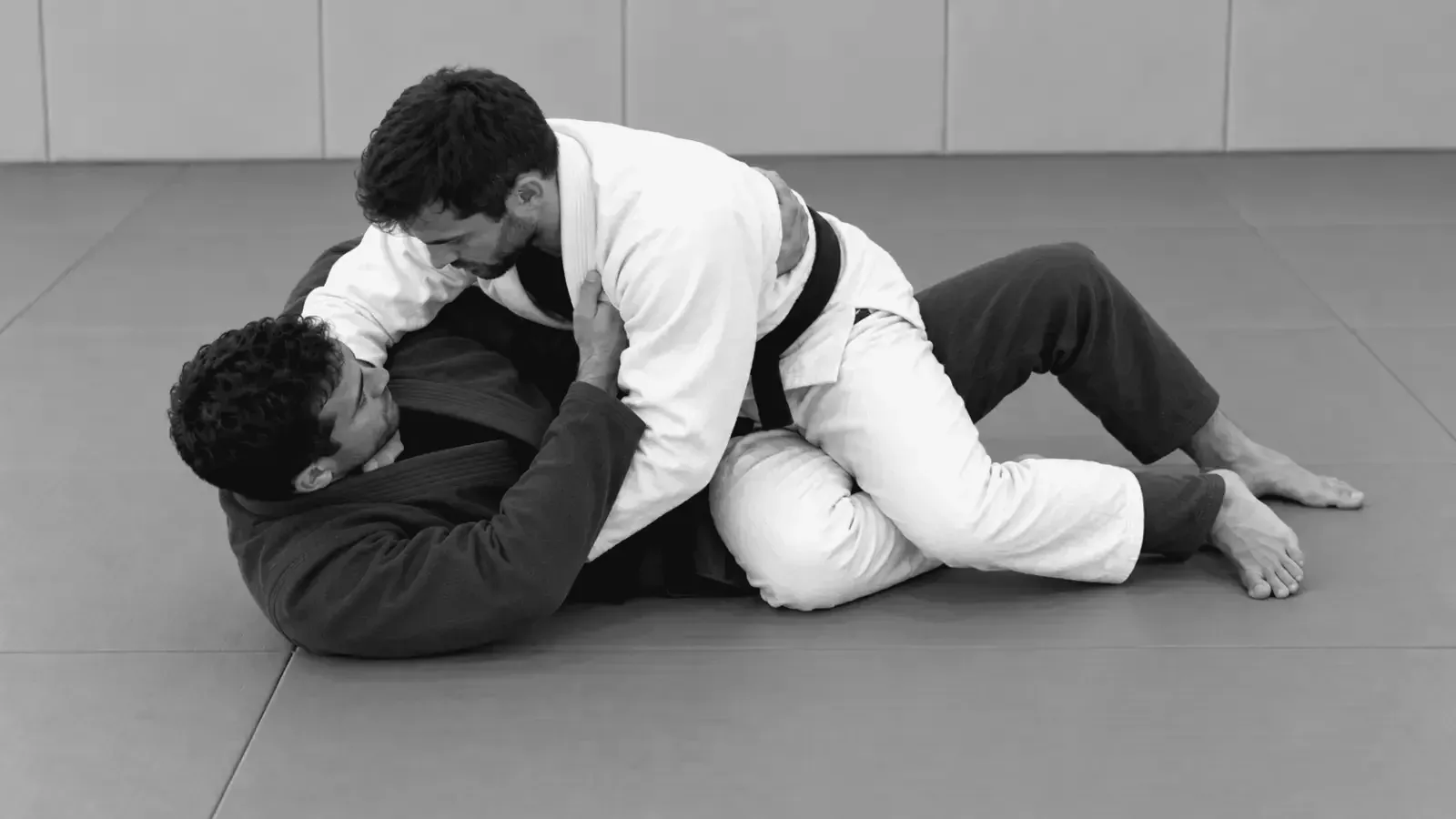
Guard passing drills should give you a movement to repeat, a starting position and a way to tell whether the repetition worked. Use solo movement to practise coordination, then partner rounds to test grips, reactions and control. A fast solo movement is not evidence that you can pass someone’s guard.
The session below uses two specific knee-cut movement drills and a pass-and-defend round. Keep the first attempts slow enough to notice where your balance changes.
Drill 1: compact knee-cut hip switches
Start on your hands and toes with your knees hovering. Keep both palms on the mat. For a left-leg repetition, move your left knee underneath your torso towards your right and turn the hips towards the same right-hand side. Keep both hands supporting the compact switch, then return to the starting base. Return to the base before mirroring the movement on the other side; avoid sitting all your weight on the floor.
The aim is a compact, controlled hip switch. Avoid twisting around a knee that is planted and unable to turn. If you cannot maintain the support, make the movement smaller and stop to check it with your coach.
The short knee-cut demonstration shows the compact shape. Watch it before practising and use the same support points rather than inventing a spinning movement.
Practice checkpoint: can you return to your hands-and-toes base on either side without collapsing or rushing the reset?
Drill 2: knee cut with a follow-through
Begin on your hands and toes with space beside you. The illustrated repetition sends the left leg across underneath you towards the right, then follows with the right leg moving over as you turn. Finish the movement beside your imagined partner’s torso, representing the arrival in side control, and return to the supporting hands-and-toes base before repeating. Use the illustrated follow-through drill to see the two leg actions separately.
Move slowly first. The second leg should be a deliberate follow-through, not a kick at a partner. Practise this solo with enough clear mat space. It rehearses a passing-to-side-position movement; it does not supply the grips or upper-body control of a complete pass.
Practice checkpoint: can you identify the first leg action, second leg action and destination instead of treating the drill as one uncontrolled scramble?
Drill 3: repeat one complete pass with a partner
For a concrete gi repetition, use the legs-to-floor variation of the torreando pass. Bottom lies in open guard with the feet raised; top stands facing the legs. This is a cooperative start, not a guarantee that the grips will be available in sparring.
- Grip both pant legs just below the knees.
- Step backwards enough to straighten the arms and direct both feet down to the mat. Keep the pressure on the legs; do not fold bottom onto the neck.
- Circle around the outside of the legs towards one hip. For a repetition to bottom’s right side, travel past the outside of bottom’s right knee towards the right hip; mirror that route for the left side. Keep the legs directed down so that a knee cannot simply rise into your path.
- Lower your shoulder onto the belly under control, keeping your weight supported as you arrive. Adjust the grips and settle alongside the torso in side control. Do not drop onto your partner or count the pass if a knee immediately re-enters between you.
See the original illustrated legs-to-floor torreando lesson, variation 2. A defender who sits up and closes the knee-elbow space changes this starting problem: reset the cooperative drill instead of forcing the same route. The solo knee-cut movements above and this standing pass train different parts of passing practice, so keep their mechanics separate.
Set a short timer rather than racing to a large rep total. The original coach’s drilling session uses roughly one-and-a-half to two minutes per drill, practising unfamiliar movements separately before combining them. Adjust the interval to keep the movement controlled.
Your partner first gives a predictable start. Perform the entry, clear the legs and pause at the intended pin. Reset together. Switch roles so both of you experience the guard player’s side.
Track three separate outcomes: the entry control, leg clearance and stable landing. Reaching the last outcome without the first two is usually a scramble, not the repetition you intended to test.
Drill 4: pass-and-defend positional rounds
Begin with bottom in the same open guard and top standing as in the torreando repetition. Top works to pass; bottom works to keep or recover guard, sweep or submit. Use light resistance at first and increase it by agreement. Reset after a clear outcome, and stop immediately on a tap or distress.
Use three-minute rounds as a starting format, as in the linked drilling session; use a shorter interval if that keeps the round deliberate. The useful change from Drill 3 is that the defender can now choose a response.
If you are the bottom player, the guard retention guide explains the other half of that task. Keep submissions out of a simpler first version if either partner is still learning the start.
Practice checkpoint: do your entry and finish survive a real reaction, or does the first obstacle turn the round into unrelated movement?
Combine drills only after the parts are recognisable
Practise a new movement separately before chaining it. Once two coach-taught passes have compatible starts and finishes, ask the partner for the reaction that connects them. Do not invent a backup by joining two favourites that begin in different positions.
A short session can contain a solo movement block, cooperative partner repetitions and a few positional rounds. You do not need to reproduce a long workout to test one connection. Change one part of the session at a time so you can tell what helped.
Use mistakes to choose the next practice
You lose balance in the solo drill. Keep the smaller hip switch and postpone the follow-through. Check the hand support and reset with your coach.
You cannot earn the entry grips. Return to cooperative entry practice. More speed after a missed entry will not repair that missing connection.
You clear the legs but lose the pin. Pause at the landing and identify which space allows the guard to return. See why your guard keeps getting passed for the defender’s perspective on these gaps.
Everything works cooperatively but fails in a round. Reduce the defender’s options to one agreed reaction, then reintroduce choices. This gives you a specific problem to solve rather than a larger collection of techniques.
Keep pressure controlled. Do not fold a partner onto the neck or spine, wrench a trapped knee or use speed to override a tap. Use mat space appropriate to the movement and stop when control deteriorates.
Save a useful training note
Record the drill, starting guard, first lost checkpoint and one task for next time. For example: “Knee-cut practice; entry grip lost before the knee moved; partner recovered a knee. Next session: isolate the entry before adding resistance.” This is an original sample note, not a quoted training result.
Save the checkpoint in your training notes and connect it to the pass you are developing. The next session should answer the problem you actually observed.