
Guide
Demi Lovato and Brazilian Jiu Jitsu rolling: what can and can't be said
This guide has no verified source about Demi Lovato's Brazilian Jiu Jitsu training, so it makes no claim about it. It explains what rolling is and how to tell whether a clip of anyone on the mats shows rolling at all.
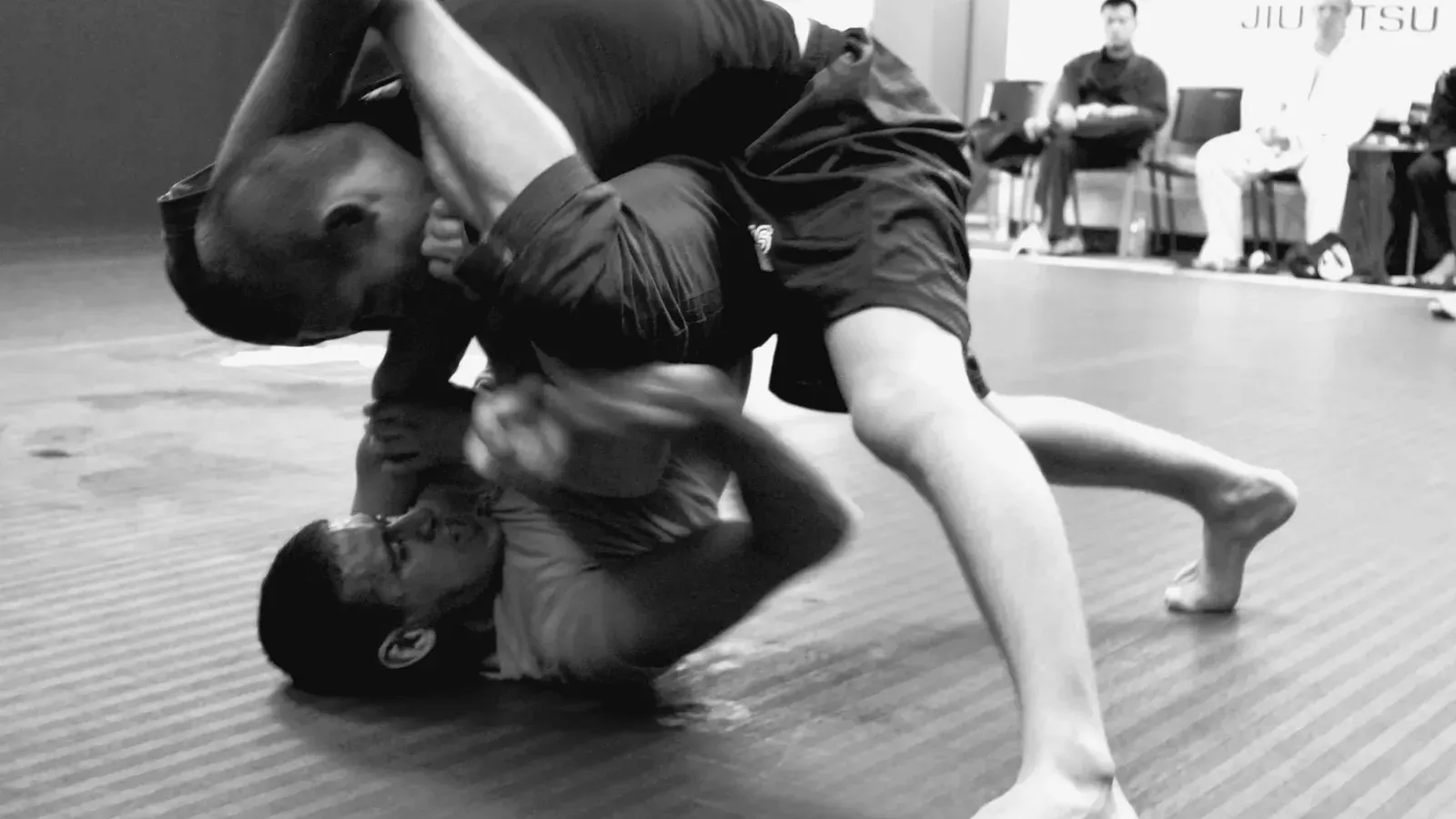
Mark Bonica from Durham, NH, USA · Wikimedia Commons · CC BY 2.0
.jpg)
Rolling is the Brazilian Jiu Jitsu term for live sparring: you and a partner each try to pass, sweep, control or submit the other, and both of you resist. We have no verified source on whether Demi Lovato rolls, so this guide does not say that she does or does not. What it can do is give you the test for deciding whether anything you read about anyone, celebrity or not, describes rolling.
When the phrase applies
The word “rolling” applies when three things are true:
- Both people are resisting and trying to win a position or a submission.
- Nothing is pre-arranged, so neither person knows what the other will do next.
- The round has a start, a finish and a way to stop it, which is the tap.
If a source describes that, it describes rolling. If you want the full definition, see what rolling means in Brazilian Jiu Jitsu.
Rolling usually happens in the sparring part of a class or at an open mat, where there is time for several rounds with different partners.
When it does not apply
The phrase does not apply to a lot of what appears on camera when a well-known person visits a gym. These are all different activities:
- Drilling: repeating a technique with a cooperative partner who gives only partial resistance. The difference is covered in drilling versus rolling.
- A private lesson: an instructor demonstrates and guides, and the student is not trying to beat them.
- Pad work or fitness classes: striking or conditioning that has no grappling contest in it.
- A posed photo: a single frame in a gi or on the mats tells you nothing about what happened before or after it.
A caption saying someone was “training” is not evidence of rolling. Rolling needs live resistance, and a still image or a short clip rarely shows that.
What people get wrong
Treating any mat time as rolling
Being on the mats, wearing a gi, or practising a hold does not make something rolling. Many beginners spend their first sessions only drilling and learning to move, and that is a normal start.
Treating a name as a source
A search that pairs a famous name with a Brazilian Jiu Jitsu term often returns pages that repeat each other. Repetition is not confirmation. Look for a primary source: the person’s own account, or the gym or event where it took place. If you cannot find one, treat the claim as unconfirmed.
Assuming rolling means competing
Rolling is training, not a match. Nobody is trying to injure anyone, and the aim for most people is to learn. Partners adjust their intensity to each other, and a round can be light and technical or hard and fast.
Forgetting the tap
The tap is what makes live resistance safe. When a submission is locked in, the person caught taps the mat or the partner, and the person applying it releases at once. If you are applying a hold, control the position and the pressure so your partner has time to tap. If you are caught, tap early rather than waiting for pain. More on this is in when to tap.
How to check a claim about a public figure
Before you repeat that someone rolls, ask four questions:
- Who is saying it, and were they there?
- Does the source describe live sparring, or only the person being at a gym?
- Is there a date and a named place?
- Does anything beyond a photo back it up?
If the answers are weak, the safest wording is the plain one: the person was seen training or visiting a gym. That claim is smaller, and it is the one a photo can actually support.
If you want to start rolling yourself
You do not need a famous example to begin. Join a beginner class at a gym with a clear structure, learn the basic positions and the tap, and ask your coach when you are ready for light rounds. Most gyms start new students with drilling and positional sparring, where the aim is limited, before moving them to full rolling. Go at the pace your coach sets, and tell your partner about any injury before the round starts.