
Guide
Best No-Gi Brazilian Jiu Jitsu Gear
No-gi Brazilian Jiu Jitsu gear is built to work without a kimono to grip, so the essentials are a fitted rashguard, grappling shorts or spats, and a mouthguard. Extras such as ear guards or knee sleeves are additions people make once they know what their own body needs, not requirements for training.
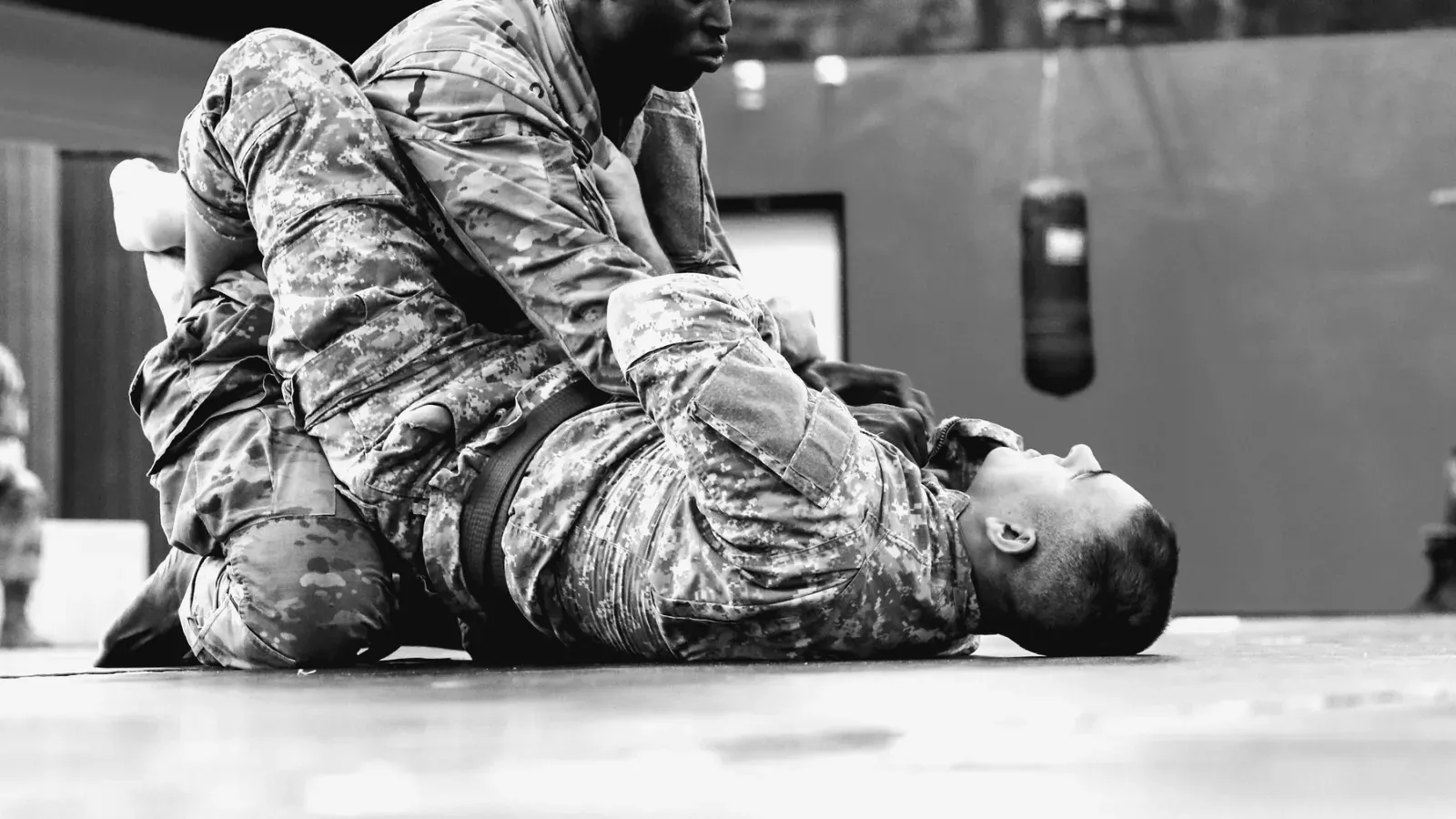
What no-gi training actually needs
No-gi Brazilian Jiu Jitsu is jiu jitsu practised without the kimono - the heavy cotton jacket and trousers, known as a gi, that the gi ruleset is built around. Take the gi away and the grips, chokes and sweeps that rely on grabbing cloth stop working, which is why techniques such as the scissor sweep are adapted to rely on arms, legs and underhooks rather than a sleeve or collar, an adaptation covered in the guide to the scissor sweep in no-gi. The gear follows the same logic: nothing you wear should give a training partner anything loose to grab, and nothing should slip or ride up during a scramble.
That leaves three items as the actual minimum: a rashguard, a pair of grappling shorts or spats, and a mouthguard. Everything beyond that is a personal addition rather than a requirement.
Rashguard: fit before anything else
A rashguard is a tight-fitting synthetic top, usually a spandex-polyester blend, worn instead of a cotton t-shirt. Cotton absorbs sweat, stretches as it gets wet, and gives an opponent a loose handful of fabric to grab - three problems a properly fitted rashguard avoids. The fit matters more than the fabric weight: it needs to stay flat across the shoulders and lower back when you move, because a loose rashguard behaves almost like a mini gi top once someone gets a grip on it. Long sleeves guard against mat burn on the forearms during scrambles; short sleeves suit warmer rooms or the start of a session before you have warmed up.
Shorts or spats: what actually matters
Grappling shorts sit higher at the hip and use a stretch fabric so they do not restrict the range of motion needed for guard passing or hip escapes. The detail that matters most is the absence of pockets, exposed zips, or hard fasteners: these create gaps and loops that fingers and toes can catch on during a scramble, which is why grappling-specific shorts are cut without them. Spats - full-length compression leggings worn under shorts - add coverage against mat burn and suit anyone with sensitive skin or a mat surface that grips more than it should.
Mouthguard
A mouthguard protects your teeth from the accidental clashes of heads, elbows and knees that happen in any live grappling session, no-gi or gi. A boil-and-bite mouthguard, softened in hot water and moulded to your own teeth at home, covers this need for most training. A custom-fitted mouthguard from a dentist is worth the extra cost if you compete often or clench your jaw under pressure.
Extras worth considering
Ear guards help prevent cauliflower ear, the swelling and thickening caused by repeated friction and impact to the outer ear, and are worth considering if you come from a background in wrestling, where the same injury is common; the guide on carrying wrestling into Brazilian Jiu Jitsu covers more of that crossover. Knee sleeves give light compression and support to anyone carrying an old knee issue, though they are not a substitute for rehabilitation. None of these are needed to start training; people tend to add them once they know what their own body needs from repeated rolling.
Where MMA gear and no-gi gear diverge
If you also cross-train in mixed martial arts, it helps to know where the kit lists split. Amateur mixed martial arts is practised in board shorts with approved protective gear such as shin protectors and amateur MMA gloves, because it includes striking. No-gi Brazilian Jiu Jitsu grappling does not include striking, so shin protectors and gloves have no role in it. Board shorts are sometimes used for grappling too, but they are not built for it in the same way as dedicated grappling shorts, since they tend to be baggier through the hip and less suited to the range of motion grappling demands.
When you don’t need any of this
None of this gear is required for a gi class, where the kimono and belt are the uniform and a rashguard, if worn, goes on underneath simply for comfort rather than because the ruleset needs it. It is also unnecessary for solo drilling at home, where a t-shirt and shorts are enough if you are working through positions alone rather than rolling live with a partner, a situation covered in the guide to training without a partner. The gear becomes necessary the moment you are grappling live with someone else, because that is when sweat, grip and friction turn casual clothing into a liability.
What people get wrong
The most common mistake is buying a rashguard or shorts sized for how they look rather than how the fabric behaves once it is wet and under load. A rashguard a size too large will bunch at the back within a few minutes and give an opponent something to grab, while one bought to fit close will stay flat through a whole round. The second mistake is treating gear as optional in the early weeks and training in a plain cotton t-shirt, which stretches out of shape after a handful of sessions and tends to tear at the seams under grip pressure. The third is skipping the mouthguard because a session feels low-intensity: contact in grappling is often unplanned rather than absent, and an accidental knee or elbow can happen in any live round regardless of pace.