
Guide
Brazilian Jiu Jitsu Gi Pants: What They Are, When They Apply and Common Mistakes
Gi pants are the reinforced drawstring trousers that form part of the Brazilian Jiu Jitsu gi, and they matter in gi classes and gi competition but not in no-gi training. This guide covers when they apply, what the IBJJF requires of them and the mistakes people make when buying them.
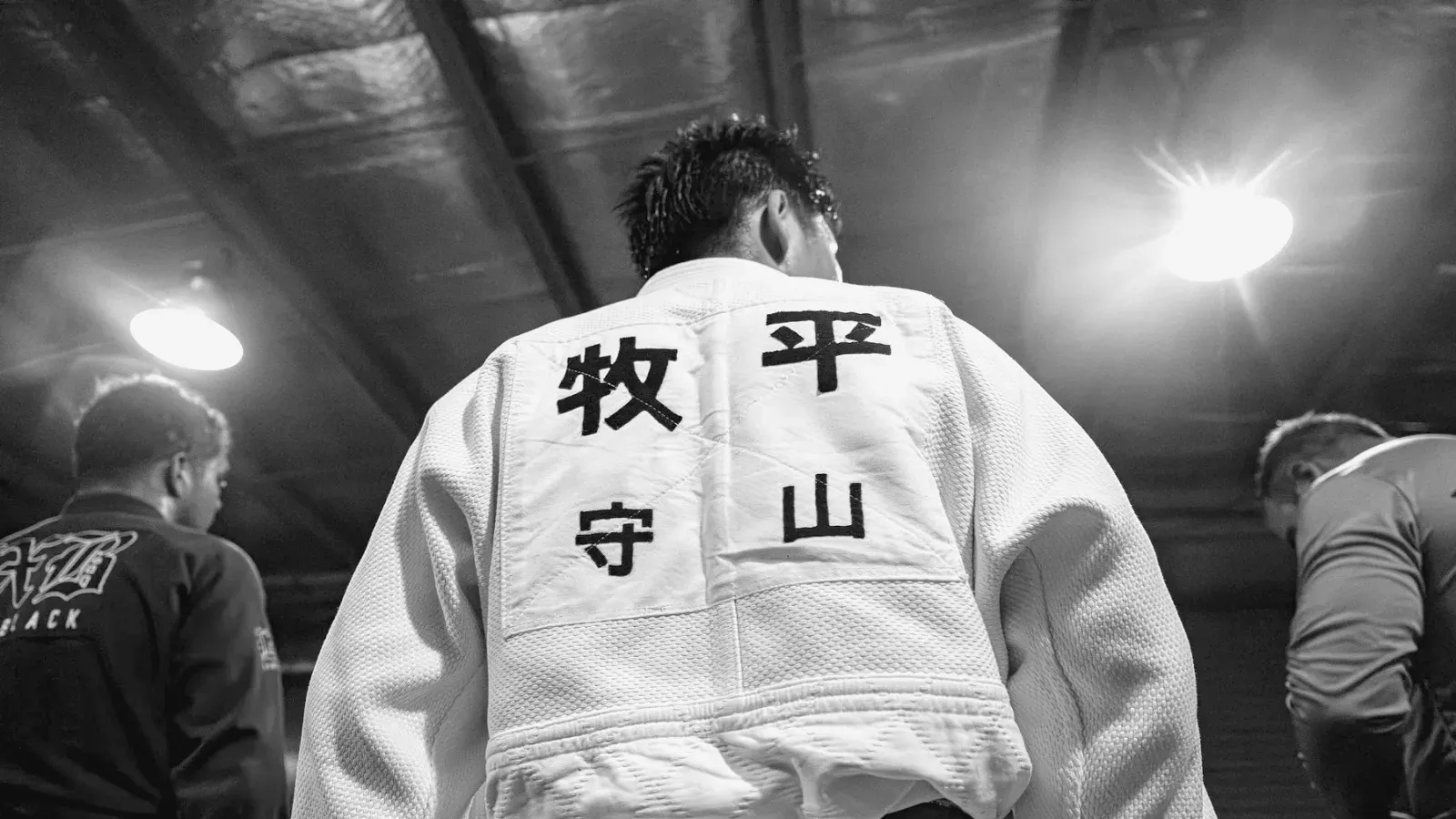
Gi pants are the reinforced drawstring trousers that make up one third of the Brazilian Jiu Jitsu gi, alongside a heavy cotton jacket and a belt that communicates rank. You wear them whenever you train or compete in the gi. You do not wear them in no-gi training, and you do not need them for sambo, which typically uses a jacket without gi pants.
When gi pants apply
The gi (着, meaning dress or clothes) is the traditional training uniform of Brazilian Jiu Jitsu. It is adapted from the judo keikogi, and the pants are part of the set. If your class is a gi class, you wear them.
They also apply in gi competition, where they are regulated. The rules below come from article 8 of the IBJJF (International Brazilian Jiu-Jitsu Federation) rules. Other organisations and events may set their own.
Some schools also have house rules. Some require the jacket and trousers to be the same colour, while more relaxed schools do not enforce matching. That is a school preference, not a universal rule.
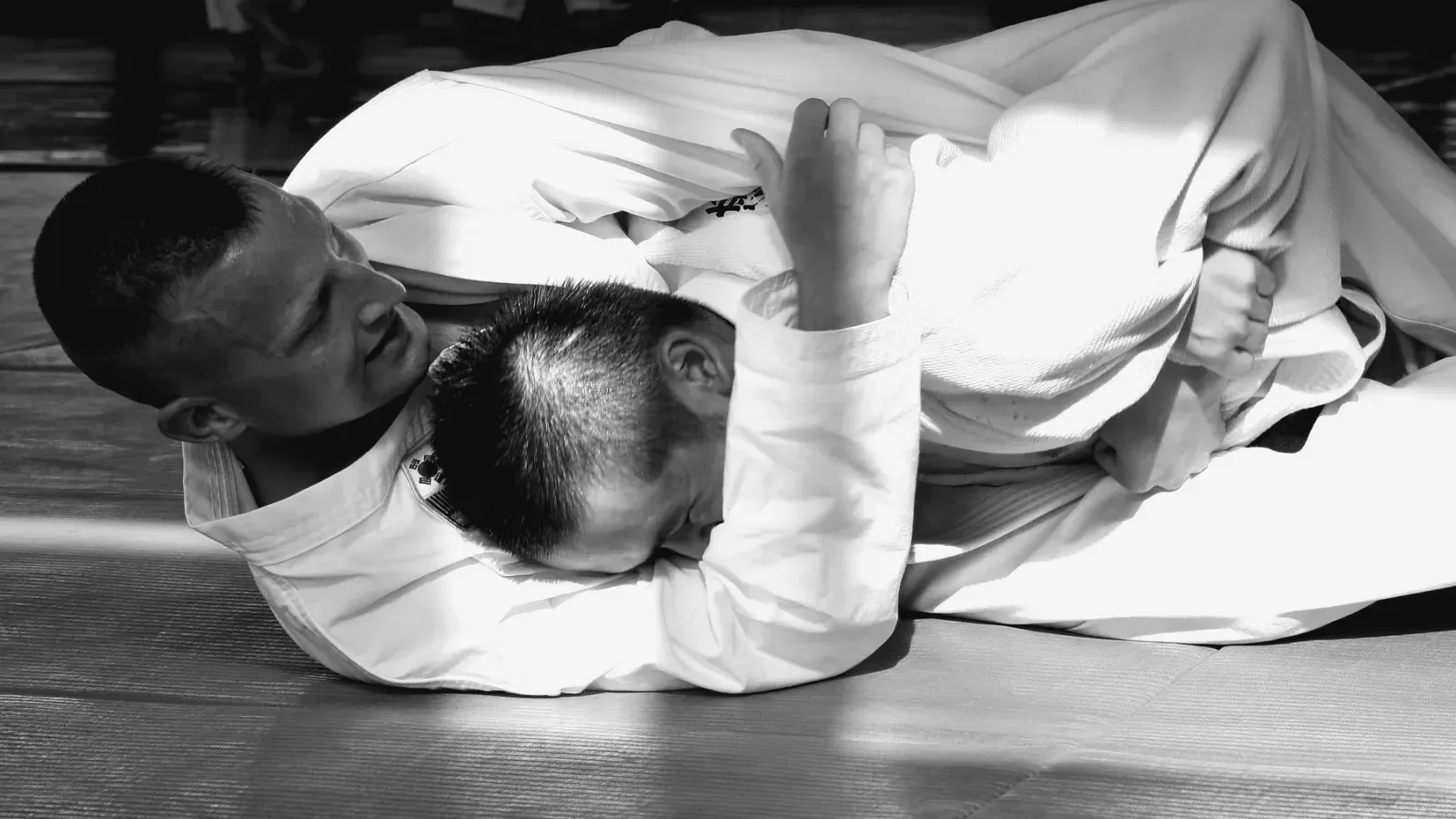
When gi pants do not apply
No-gi
No-gi refers to training and competition without the gi. Brazilian Jiu Jitsu can be practised with or without one, and for no-gi people wear rash guards. Shorts take the place of gi pants. Some schools avoid the gi altogether and focus on no-gi, and 10th Planet Jiu Jitsu is one example.
Sambo
Sambo is a Soviet (Russian) style of grappling. It typically uses a jacket but no gi pants, so the trousers do not carry over to it.
Grappling events with mixed divisions
FILA grappling, now run by United World Wrestling as UWW Grappling, has historically offered both gi and no-gi divisions. Its gi uniform was similar to a judogi, often with tighter cuffs on the pants and jacket. Which pants you need therefore depends on the division you enter.
What the IBJJF requires of competition pants
Under the IBJJF rules, a competition gi must be made of cotton or similar material and be in good condition. It may not be so thick or hard that it obstructs the opponent.
Three requirements bear directly on your pants:
- Colour must be black, white or blue, with no combined colours. A white jacket with blue pants is not allowed.
- Pants must be of proper length. Athletes may not compete in pants that are not.
- Torn kimonos are not allowed, so torn pants will not pass either.
Pockets of any kind are not allowed on a gi used at tournaments, which applies to the trousers as much as the jacket.
Patches on pants are also limited to set positions. The IBJJF lists locations above and below each front knee and along the back of each leg. Patches below the knee must leave at least 15 cm of space to the floor without a patch, so the fabric can be grabbed.
Fabric
Traditionally, gi pants are made of sturdy cotton canvas, or denim with reinforced seams and knees. Tough, lightweight materials have become more popular in recent years, as cooler gis for hot weather have caught on.
Ripstop is the best-known example. It is common in tournaments to see competitors wearing ripstop pants with a standard cotton gi top. Ripstop fabrics are woven from a mixture of materials to be strong, light and hard to tear. A gi top made from the material is woven thinner than cotton, so an opponent can more easily grab and manipulate it. That last point is stated for jackets, but it is a fair thing to weigh when choosing pants too.
Fit and cut
Brazilian Jiu Jitsu gis are similar to a judogi, but with slight differences in dimensions. They are often made of lighter material, with tighter cuffs on the pants and jacket. Jiu Jitsu regulations allow those tighter cuffs. If you are coming from judo, expect a closer fit at the ankle.
What people get wrong about gi pants
Thinking any colour combination is fine
Many people assume that a mismatched set is acceptable everywhere. Your school may not mind, and some jurisdictions relax the colour rules to allow any single solid colour. At an IBJJF competition, though, a white jacket with blue pants breaks the rules, and the only colours allowed for international championships are white, black or blue.
Assuming the pants are only for training
Some people treat the pants as the casual half of the uniform. They are regulated in competition just as the jacket is. Pants that are torn or not of proper length can stop you competing.
Treating ripstop as a rule
Ripstop pants are common at tournaments, but common is not required. Traditional canvas and denim pants remain valid, and the choice is one of comfort, weight and durability.
Treating no-gi and gi kit as interchangeable
No-gi uses shorts and a rash guard, and gi uses the full uniform. Entering a gi division in shorts, or a no-gi division in gi pants, is a kit error to avoid. Check the division before you pack.
Believing all pants are the same
The fabric, cuff and cut differ. Heavier canvas is tough, while lighter ripstop suits hot conditions and tournaments. Neither is right for everyone.
Looking after them
The gi is typically washed after each class, because close contact between people can spread disease. As with most cotton products, a cotton gi should be laundered in cold water and line dried to avoid shrinkage, since even pre-shrunk material can shrink further in hot water and a hot dryer cycle. Bleaching is highly discouraged, as it can weaken the fibres and make the material tear more easily.
Because torn pants are not permitted in IBJJF competition, keeping the fabric strong is a practical concern as well as a matter of hygiene.